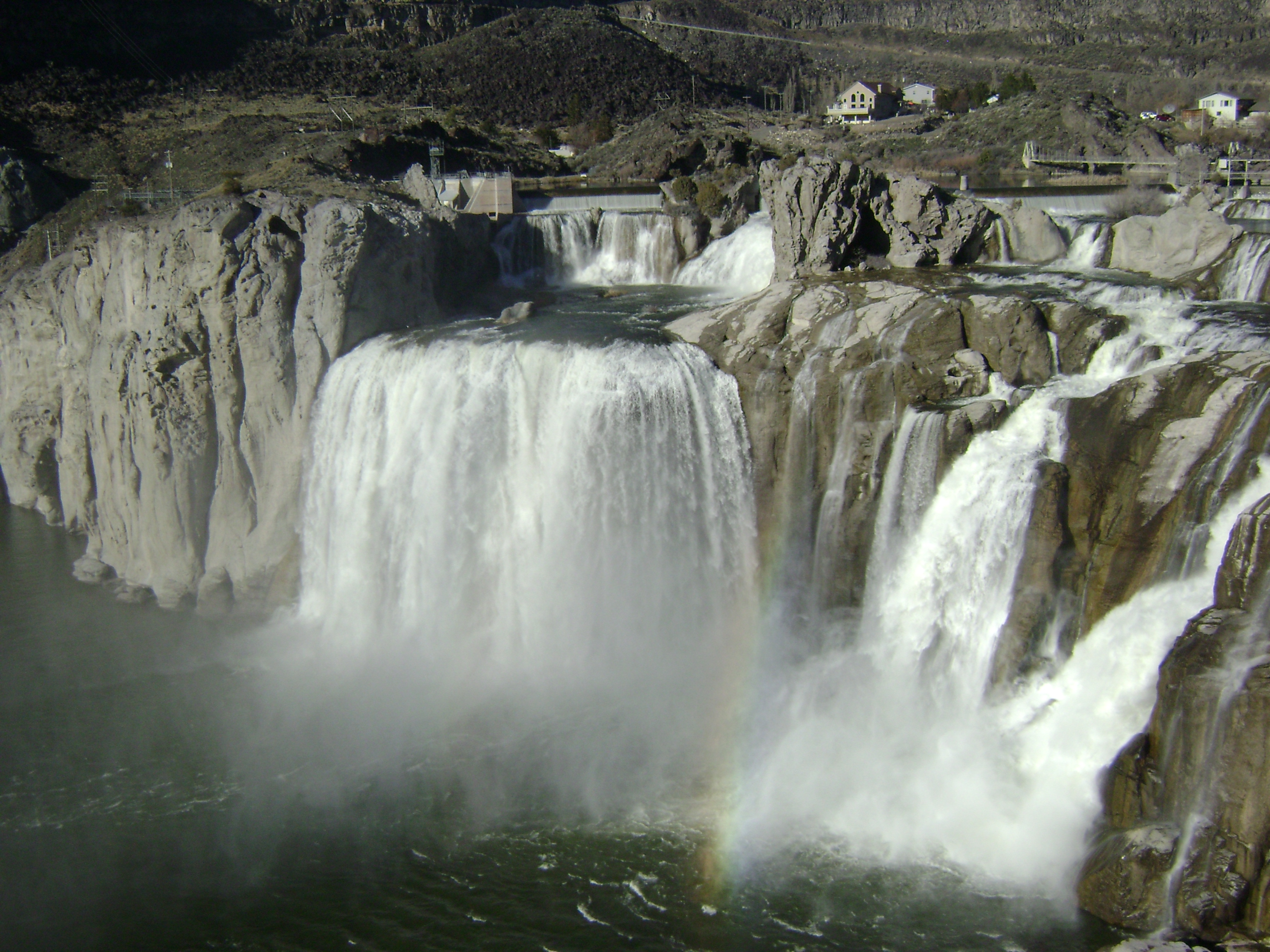
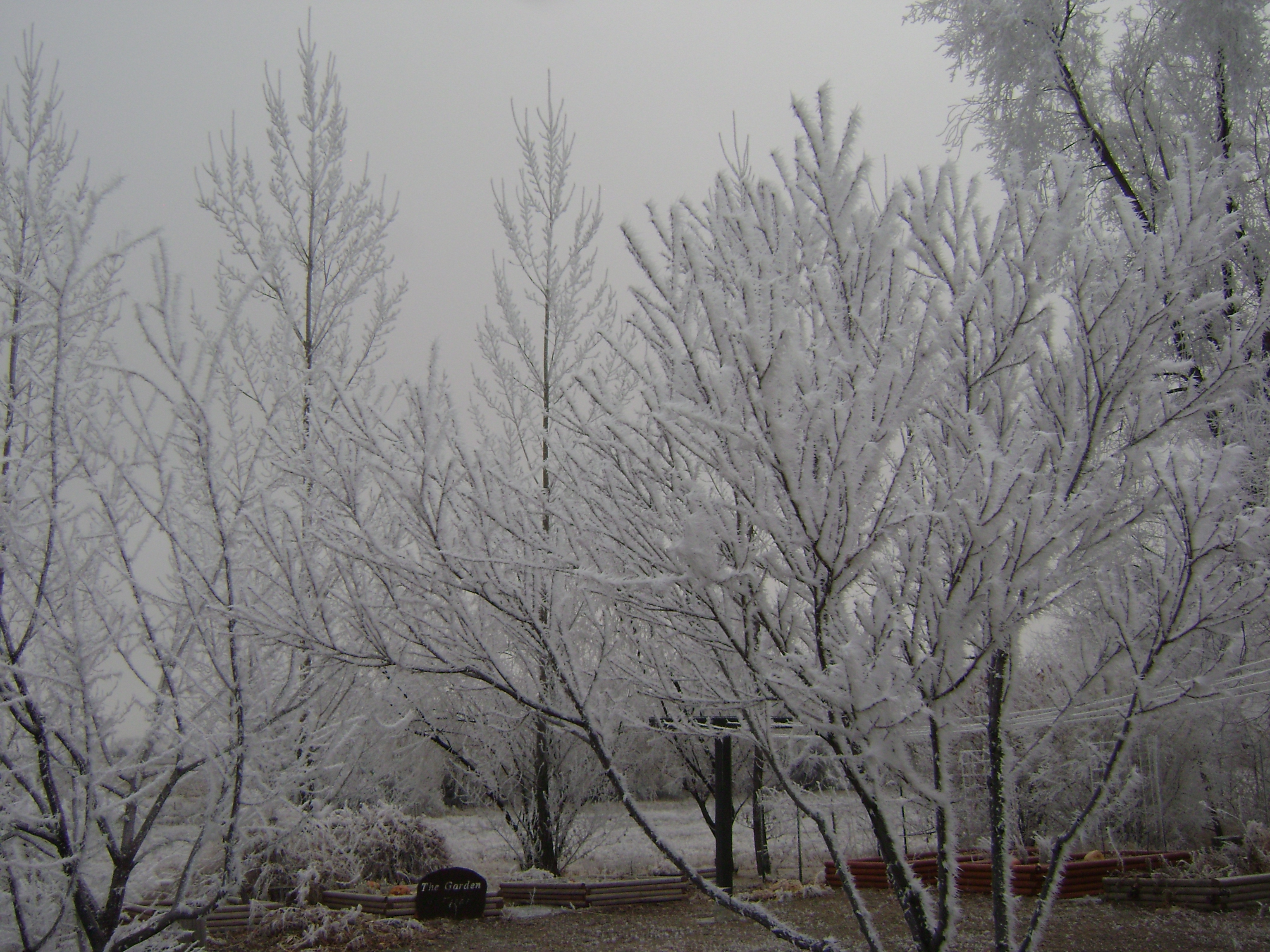
Spring in southern Idaho can be treacherous, or it can be beautiful. Usually the wind blows so hard you think you are in Kansas, but today it is beautiful, so beautiful I wandered down to Shoshone Falls.
Sometimes called the “Niagara of the West,” Shoshone Falls is 212 feet high—45 feet higher than Niagara Falls—and flows over a rim 1,000 feet wide. Because water is diverted for irrigation and hydroelectricity, water levels diminish in the summer and fall making spring the best time to view the falls. Here is what it looked like today. As soon as the snow melts in the mountains, the water pouring over the falls will double.
This high desert isn’t always dry and boring. Today it is splendid and boasting of spring.
January is a month for new beginnings. While everyone is setting goals and making resolutions, I have a few of my own I’d like to share. Years of writers’ conferences, workshops, and book signings have taught me what to do as well as what not to do as I try to present myself as a professional writer.
Professional writers listen and observe. At workshops, they don’t talk unless they are the keynote speaker. They respect the presenter even if they think they know more than the speaker. They don’t hog the time or offer their opinions unless they are specifically asked.
Dress appropriately. Professional writers don’t show up in pajamas even if they write most of their books in pjs. They pay special attention to their appearance and put their best self forward. They brush their teeth, comb their hair and wear clean conservative clothes at presentations and book signings.
Be courteous. At book fairs, professional writers don’t shout out, “Hey you, buy my book.” Nor do they interrupt other authors talking about their own books by saying, “Hey, I’m a writer too.” Or “Hey, I take credit cards.” They wait their turn and are considerate.
Don’t gossip or complain. Professional writers are mindful of what they say in public. They don’t gossip or burn bridges. They know that the writer they pan today may be the best-selling author they’d like a back cover blurb from tomorrow. They know that the writer they berate may be the person they may have to chair a committee with some day.
Be on time. Professional writers realize that time is a precious commodity. They don’t make others wait. They call when they know they are going to be late and stick to schedules, no matter what.
Continue to learn. Professional writers know that writing is an ever-changing industry and that what worked five years ago isn’t going to work today. They read, study, and attend meetings and conferences to stay current in their industry.
Don’t brag. Professional writers check their egos at the door. They realize that everyone has an opinion or something to boast about. They don’t pontificate or shove their personal opinions on others.
Be dependable. Professional writers keep their promises. If they sign on to do something, they do it. They are honest and reliable. They finish what they start.
Exercise self-control. Professional writers control their emotions. They realize that writing is a subjective career. They know how to handle rejection. They don’t shout or scream in public if their feelings are hurt, or if they have a problem with another writer. They settle disputes privately with discretion.
Be present and give your all. Professional writers believe in themselves and write even when the writing is going badly. They believe in the process and they always do their best, knowing that their audience deserves only the best.
And lastly, professional writers know the difference between work and play, and count themselves blessed that they get to do something they love every day. As you begin the New Year, put your best foot forward. Be professional and enjoy the journey.
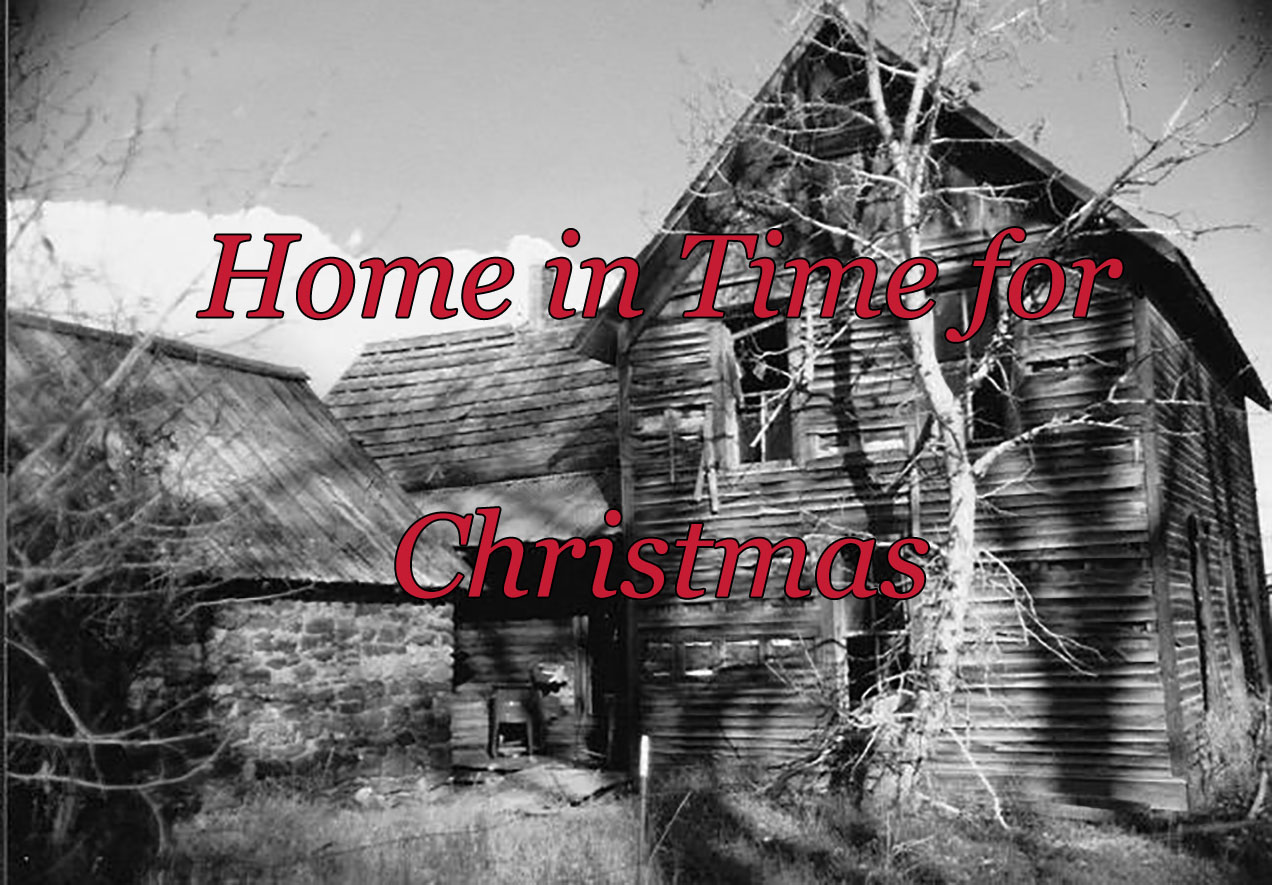
Cassie stood at the kitchen window, her hands wrapped around a coffee cup for warmth. Outside, snow swirled in a series of mini tornadoes, not that she’d ever seen a tornado, or snow, either, for that matter. A snow tornado, that’s how she’d describe it to her mother back home in Seattle. Between the steam from the coffee fogging her glasses and the swirling snow outside it was impossible to see the corral let alone her husband Jim.
“I need to put Ole Henry in the barn,” he had said as the snow started to fall. That was thirty minutes ago. She was sure the horse was no longer outdoors, but that gave Cassie little comfort as she watched the sky thicken with snow. She shivered while upstairs the twins squealed as they wiggled into their new snowsuits.
“Hurry up,” Tracey said. “We need to build a snowman before the snow goes away.”
Cassie smiled. As if this snow was going anywhere, not if you believed the meteorologist on Channel 7. If she’d been more of an outdoors’s girl she’d button her coat and join her children. But she was a city girl, more in love with Seattle than the Idaho prairie, so she let them enjoy the excitement of their very first snowfall without expressing her discontentment.
She turned as the door squeaked opened flooding the kitchen with cold blustery wind. Jim was covered in snow, his face redder than the barn. He warmed his hands over the wood stove and called upstairs. “Girls? What are you waiting for, Christmas?”
They giggled their way toward the kitchen. Tracey had her stocking hat on inside out and Stacey had her scarf wrapped so tight around her neck all Cassie could see were her eyes.
“Yes,” they cried in unison. “We can’t wait for Christmas in Idaho.” Tracey pointed to the calendar. “Only twenty more days.”
It was hard to believe Christmas was less than three weeks away. In the four short months they had been on the Camas Prairie, Cassie’s sickly-looking six-year olds had blossomed into sturdy pioneer stock. Freckles bridged their noses, and their once pale faces were now the golden color of honey. If only their grandmother could see them, Cassie thought. She wouldn’t believe their transformation.
“Cass?” Jim straightened Tracey’s hat and tugged the twins’ zippers tight. “Aren’t you going to join us?”
Cassie shook her head. “No thanks. I can watch from the window.”
Tracey pulled at her mother’s hand. “Awe, come on, Mom. It’ll be fun.”
Cassie gave her daughter a hug. “I’ll come out later and take pictures to send to Nana.”
Closing the door behind them, Cassie brushed at the tears threatening to fall. The thing she wanted most wasn’t going to happen. She wouldn’t be spending Christmas with her mother in Seattle. She wouldn’t see the city decked out in holiday fare from the top of the Space Needle, or stop for hot cocoa at the Fairmount Olympic after riding the Holiday Carousel at Westlake Park. She would miss the hubbub at Pike Place Market and the horse-drawn carriage rides. Just last week she had begged, even pleaded. “Please, Jim. Can’t we go home for Christmas?”
“This is our home,” he’d said without looking up from his newspaper. “I want to have Christmas here. So do the twins.”
Cassie bristled. This stupid farm was driving a wedge between them. What did they think they were doing anyway, a Seattle attorney and accountant on a run-down farm in the middle of nowhere? Her poor attempt at a garden had proved a disaster. Mending fences filled her hands with calluses and broken fingernails. And the grasshoppers and rabbits ate better than she and her children.
“It will bring us closer as a family,” Jim had promised as he transported them from Washington to Idaho. Fairfield, Cassie thought the moment she saw the farm. Nothing was fair about Idaho or the abandoned ranch either where cell phone reception was spotty at best. Four months, but it felt like years.
She finished her coffee, then pulled her camera from the top of the closet, buttoned up her coat and joined her family outside.
“Watch out, Mom!” Tracey said, as a snowball whizzed over Cassie’s head. Before Cassie could duck, another hit her square in the face. Cold and icy, the snowball fight was anything but fun.
She brushed the snow from her eyes and interrupted their game by pulling a carrot from her pocket. “Here. Frosty needs a nose.”
“Thanks!” Stacey’s cheeks were red; her eyes sparkled like fairy dust. The only thing that would make them shine brighter was Tinker Bell appearing with her magic wand.
Positioning her twins beside the finished snowman, Cassie said, “Say, Cheese.”
“Cheese.” Her twins smiled as Cassie clicked the camera.
“Wait. One more. So I can put it in a frame for Nana so she’ll have something to admire this Christmas.”
Jim looked pointedly at her. Without a word he walked toward the barn.
Go, she thought. Go talk to your stupid horse.
That night at dinner she tried again. “Please. One week. Surely you can spare one lousy week.”
Jim put his fork down and kept his voice even. “I promised Roger I’d help reroof his barn.”
Cassie scoffed. “Who roofs a barn in the middle of winter?”
“Farmers since they’re too busy any other time of the year.” She looked at her plate, and they finished the meal in silence.
While Cassie cleaned up the kitchen and washed the dishes, she made a decision. She was going home for Christmas, even if she had to go alone.
The next morning, after the twins were safely in school, Cassie stopped at the library. A large sagebrush sprayed white and decorated as a Christmas tree stood in the middle of the lobby making everything smell pungent instead of like pine.
“Isn’t it lovely,” the librarian said when she saw Cassie looking at the tree. “Just last week the first grade elementary kids helped decorate. Look. Aren’t these just the sweetest?”
All the decorations were homemade, including the paper garland and tissue paper snowflakes. Ornaments in the shapes of stars and candy canes cut from paper plates hung from the twisted branches. Pretending to admire the artwork, Cassie turned a glittery pink star over, startled to see her child’s name written in bold red letters: Tracey Ann Mink – 1st grade.
She searched until she found the other, a candy cane colored red and green: Stacey Marie Mink – 1st grade. Beside her name, Stacey had added a smiley face wearing a Santa’s hat. They hadn’t mentioned decorating a sagebrush, had they? No, she would have remembered. Cassie chewed the inside of her cheek while she waited for her computer to connect to the Internet. Why was she the only one who couldn’t seem to bond with this stark Idaho landscape?
As soon as she was on the Internet, Cassie purchased three plane tickets to Seattle. After checking email and her Facebook page, she turned off her computer and drove the ten snowy miles home, all the while humming, “I’ll Be Home for Christmas.” The storm had passed, leaving everything glittering white. The contrast between the blue sky and the white trees was striking she had to admit, prettier than the dreary gray skies she knew her mother was experiencing in Seattle.
That night as they settled around the kitchen table slurping tomato soup and devouring grilled cheese sandwiches, Cassie broke her news. “Jim,” she said, “I’m going home for Christmas, and I’m taking the twins with me.”
Everyone stopped eating. The only sound in the kitchen was the refrigerator running.
“I thought we were staying here for Christmas,” Tracey said. “That’s where I told Santa to bring my presents.”
“He can still bring your presents here. That way you can celebrate Christmas twice,” Cassie negotiated.
“It won’t be the same,” Tracey pouted.
Stacey folded her arms across her chest. “I’m not going. I promised Miss Miller I’d help hang the star at our Christmas pageant.”
“I’m sure someone else can help her out,” Cassie coaxed.
“Maybe they can,” Stacey said. “But I said I was gong to do it. And I am.”
Cassie looked at her husband. “Jim, help me out here.”
He pushed away from the table and grabbed his coat. “You’re own your own,” he said. “I need to check the livestock.”
Stacey finished her sandwich and said, “ I’m staying here for Christmas.”
“Me too,” Tracey said.
“But what about Nana?” Cassie said. “She will miss you.”
“No, she won’t,” Tracey said. “She already said it would be all right. Don’t you remember, when we talked to her on the computer?”
“Fine.” Cassie was disheartened but she wasn’t defeated. The following Monday she drove into Fairfield. Again using the library Internet, she cancelled the twins’ tickets and changed her ticket from a week to a long weekend. She’d spend Christmas Eve with her mother at Westlake Park and fly back Christmas day in time to wish her children Merry Christmas.
With Christmas coming the twins were so excited their happiness was contagious. All week long they practiced the songs they would sing in the Christmas assembly at school. What Cassie had convinced herself would be easy, was proving hard to do. She didn’t want to be away from her children at Christmas, but she didn’t want her mother to be alone, either. As she backed out of the driveway and pointed the car toward Boise, she tried to mimic the twins’ holiday spirit. “Oh Christmas tree,” she sang as she maneuvered the icy roads. “I’ll be home for Christmas.” In spite of the happy songs, her heart was heavy. But the surprised look on her mother’s face would make the sacrifice worthwhile. She’d be back soon. She wouldn’t miss their Idaho Christmas.
Her parting with Jim had been icy at best. He didn’t kiss her goodbye; he didn’t wish her a Merry Christmas. “Watch the roads,” he’d said before walking off to the barn. She knew in her heart if something didn’t change soon her marriage was doomed. But she would worry about that next week after the holidays. Next year was soon enough to decide how to resolve their differences.
Arriving early for her flight, Cassie stopped at Starbucks in the Boise Airport and enjoyed a real cup of coffee. Along with their festive display Starbucks was selling holiday coffee cups: Snowmen, candy canes and reindeer. She selected two cups, each painted green and red to look like elves’ shoes. She envisioned filling the cups with hot chocolate on Christmas Eve and settling down to a movie on TV, maybe “It’s a Wonderful Life” with her mother. The thought made her smile. Why, then, was she so close to crying?
Christmas was everywhere, in the corridors, on the escalators, and especially in families reuniting again. Cassie watched as family members greeted holiday travelers with hugs and kisses. She almost cried when a young woman holding a baby embraced her husband returning from active duty. She kissed her husband repeatedly, “This is the only thing I want for Christmas. I’m so glad you made it home. Just like you promised.” The soldier smothered the baby with kisses and Cassie had to look away to stop her tears.
Finally they called her flight. As she stood in line to board the plane the anticipation in the air was catching. Everyone was headed home for Christmas.
Cassie squared her shoulders. My mother needs me.
She dug through her purse and found her ticket. My husband needs me.
Ticket in hand for scanning, Cassie knew instantly no matter how much she hated Idaho, no matter how much she missed her mother, she loved her husband and children more.
“Miss?” The attendant said. “Your ticket?”
Cassie fumbled with her purse. “Oh, I think I lost it.” She picked up her carryon and stepped out of line.
As Cassie passed Starbucks she stopped and picked up two more coffee mugs. She’d fill them with hot chocolate Christmas Eve after they decorated the tree. It could even be a scrawny sagebrush sprayed white, it wouldn’t matter as long as they were all together. She’d be home to hear Tracey sing and to see Stacey hang the star. She’d be home in time to kiss her husband good night and tell him how much she loved him.
Cassie pulled away from the airport and onto the interstate highway. She wouldn’t wait to see their faces. “Oh Christmas tree,” she sang. Only two more hours. She’d be home in time for Christmas.
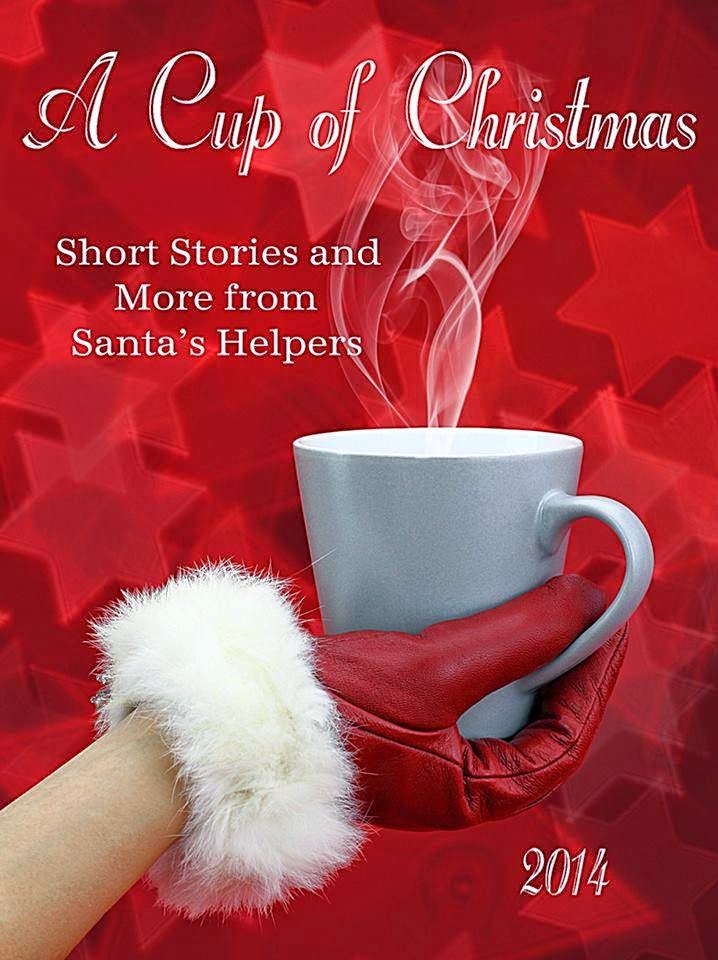
Promotional Pricing: Free 12/02/2014 to 12/05/2014 Pricing: $1.99 (after 12/05/2014)
A Cup of Christmas is a lovely mixture of award winning authors. My story, “Home in Time for Christmas” is a story about Cassie and Jim Mink from my Fairfield, Idaho, collection. Cassie wants to return to Seattle to spend Christmas with her widowed mother while Jim wants his family to experience their first Christmas in Idaho. Other stories include Christmases remembered through the years and family traditions. Just how did Daddy shoot the Christmas tree? Romance, an urban fantasy, a mysterious ethereal boy, an elderly man with a new lease on life, a dog wedding, Santa in love, a Texas beauty pageant, Rich’s Department Store remembered, a Vietnam Christmas, and a fairy tale about wanting your heart’s desire . . . the list goes on.
All proceeds from the sale of A Cup of Christmas will be donated to the children’s literacy charity, First Book. First Book addresses one of the fundamentals affecting literacy with children – access to books. To date, they have distributed over 120 million new books to children in both the United States and Canada. (www.firstbook.com)
Contributing authors to A Cup of Christmas include: Kimberly Brock, Jackie Bouchard, Karen E. Martin, R. Leonia Shea, Jane-Ann Heitmueller, Renea Winchester, Audrey Frank, Tori Bailey, Cynthia Graubart, Morgen Bailey, DJ Thomason, Beth Crews Rommel, Jackie Rod, Georgia Lee, Rosemary Dixon, Jamie Salisbury, Kerry Alan Denney, Lane Sebesta, Ramsay Brown, Doug Dahlgren, Penny White, Amie Ray Davis, Bonnie Dodge, Michael W. Paul, Deborah Myers Lewis, Tara Joyner Haussler, Rena Blain, Helen Ross, Howard Johnson, Karen Brown and Barbara Barth.
DON’T MISS OUT. MARK YOUR CALENDARS TO GRAB YOUR FREE COPY NOW!
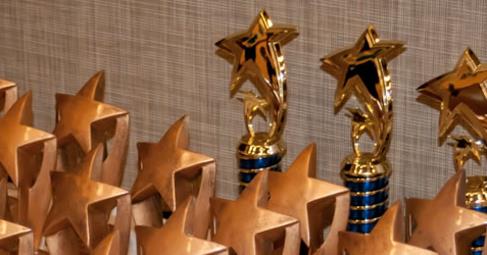
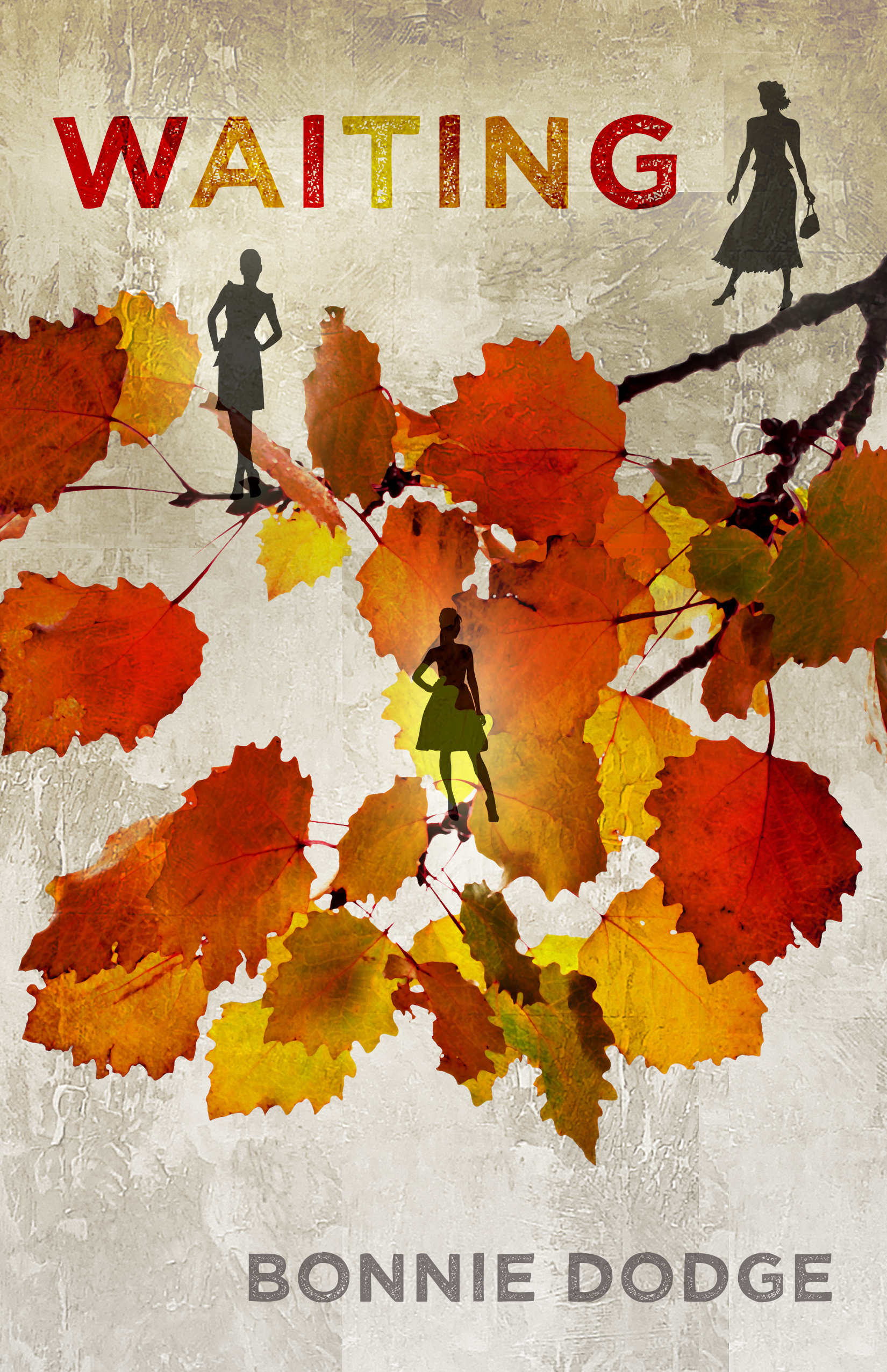
My book Waiting,a novel about three generations of Idaho women, was named one of the 2014 Top Ten Fiction books the Idaho Book Extravaganza last week in Boise, Idaho.
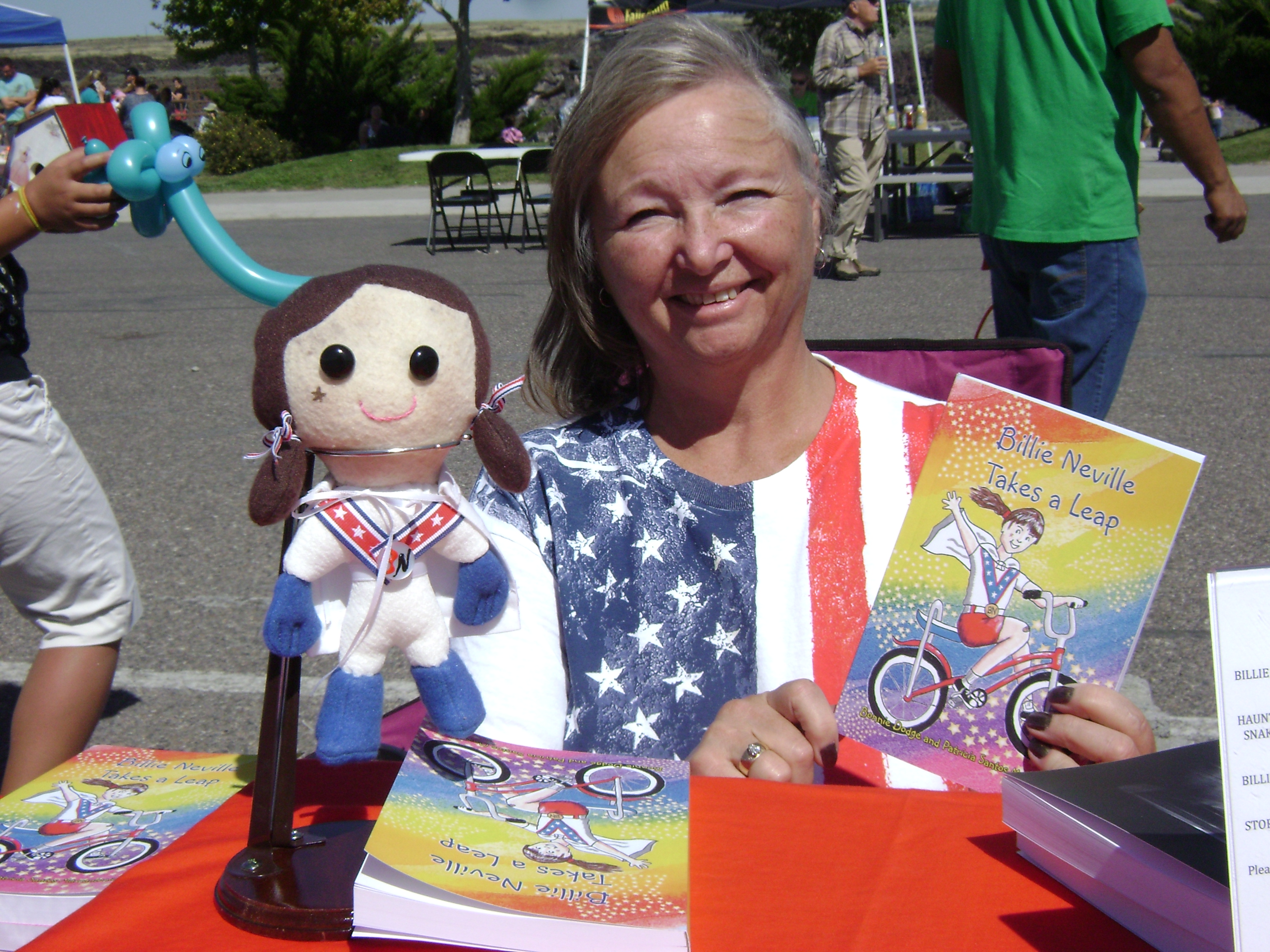
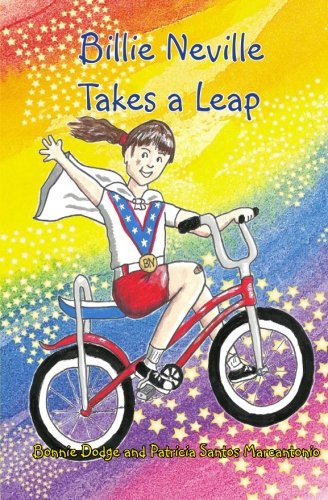
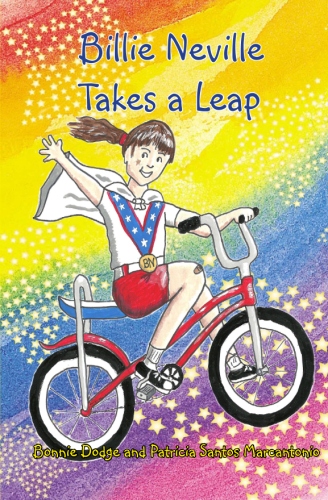
Also, Billie Neville Takes a Leap, a book about a girl who dreams of being a daredevil amidst the excitement of Evel Knievel’s jump over the Snake River, that I co-wrote with Patricia Santos Marcantonio published by River St. Press, won second place in the young adult category.
To celebrate Waiting‘s new book award, Top Ten Fiction 2014 Idaho Author Awards, I am giving away three copies of Waiting on Goodreads. Don’t miss out, enter today!
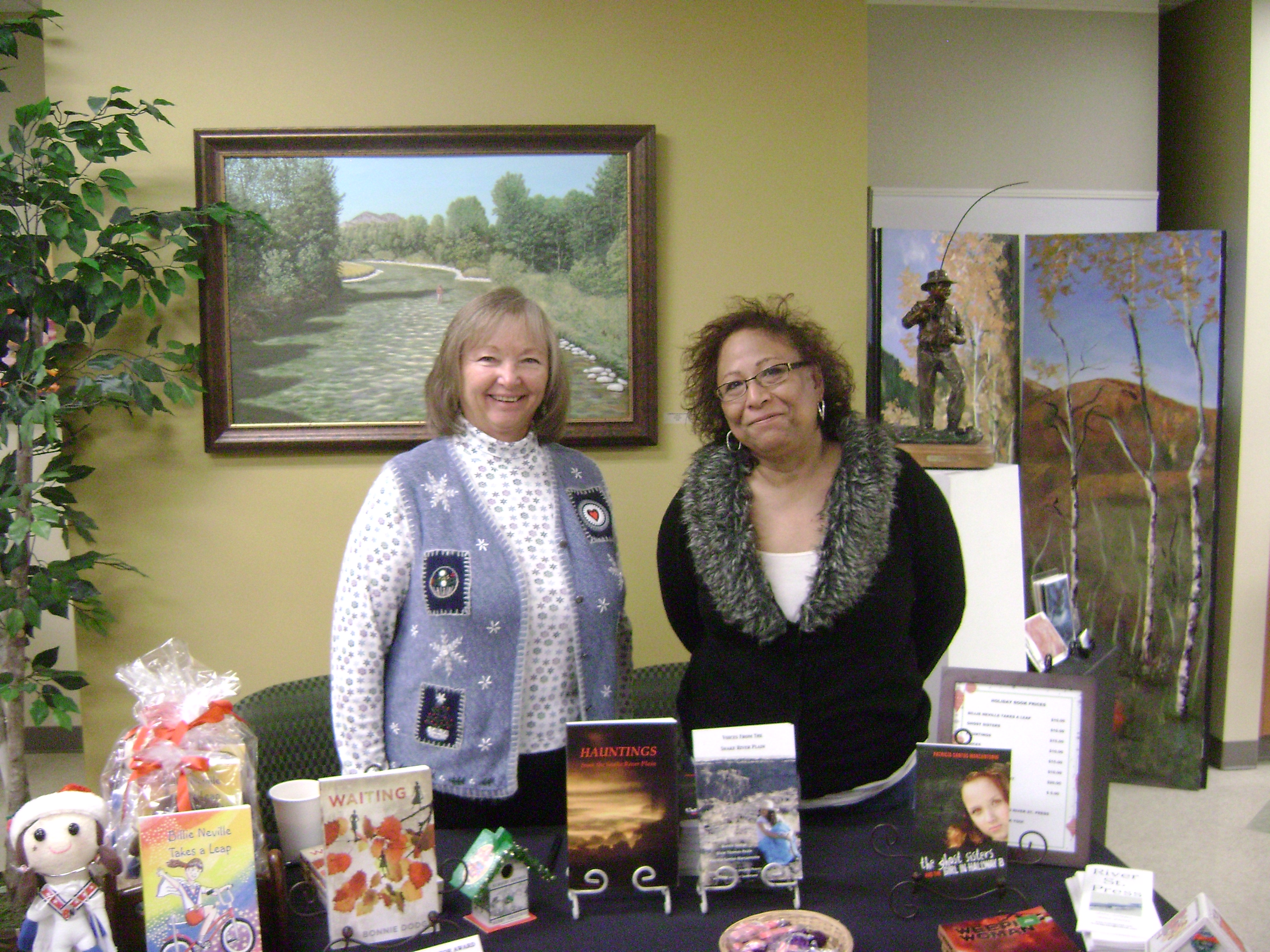
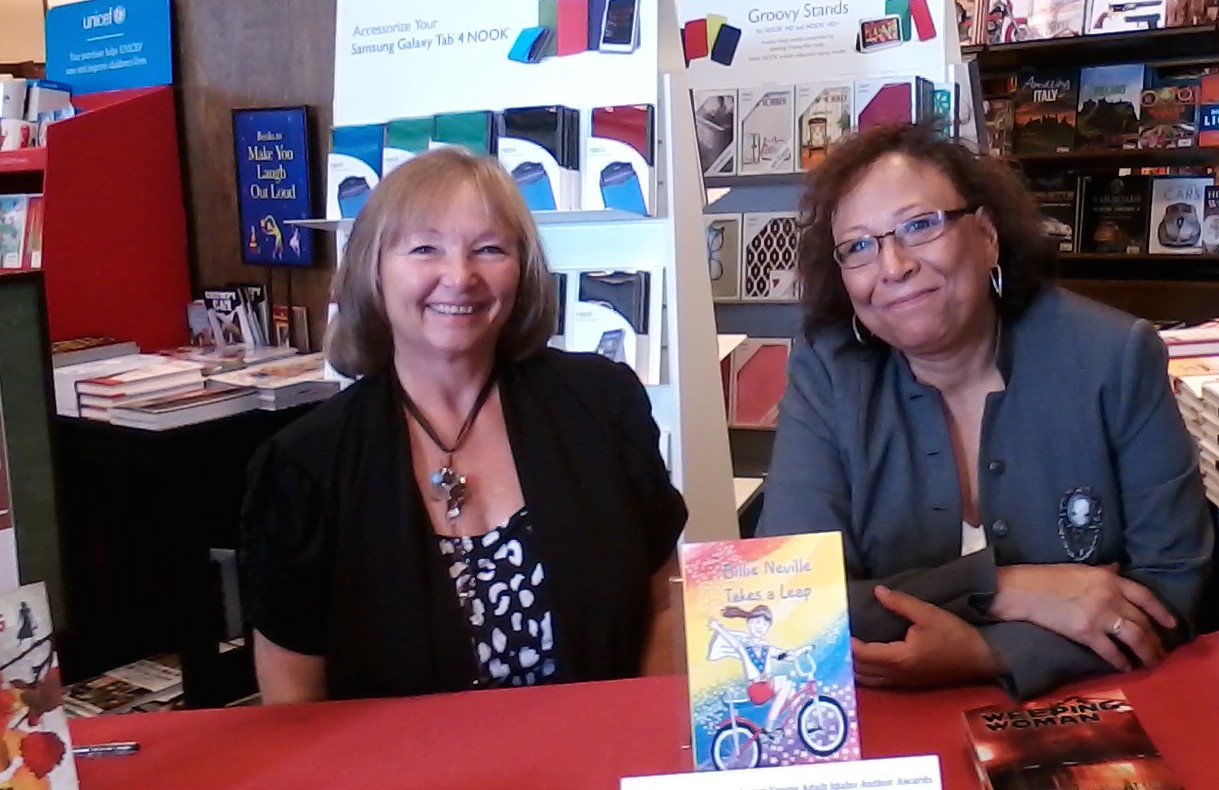
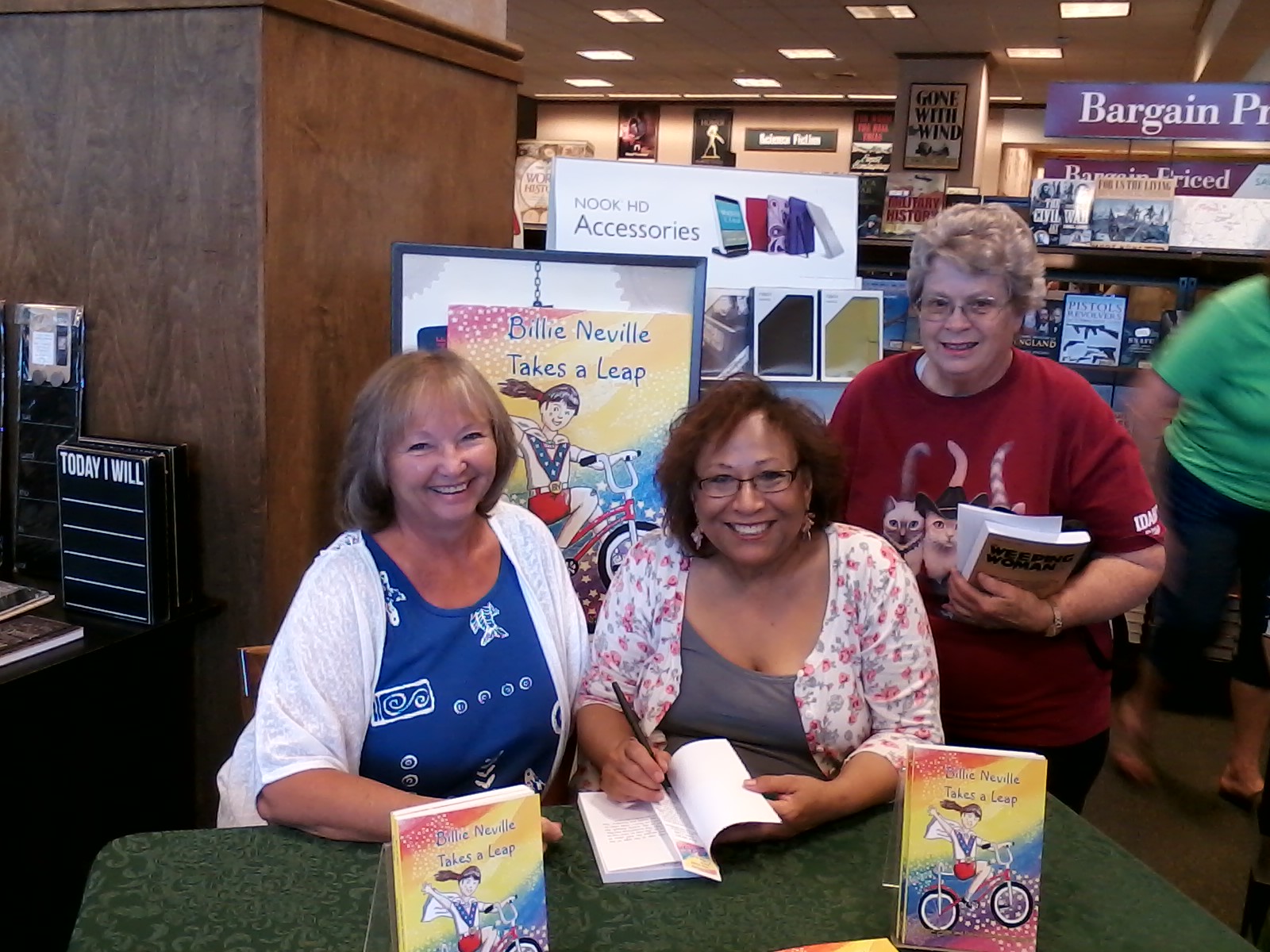
Every day I give thanks that I live in such a nurturing community. Thank you Magic Valley and Barnes & Noble for a great afternoon talking about books and writing. I love my job.
I have a cast-iron bathtub I’ve converted into a water garden. It’s heavy and ugly but makes the best place for lilies to bloom and fish to swim. For ten years it’s graced my flower garden, the sound of the fountain soothing on many summer nights. Years ago when I planted my water garden, I added ten goldfish. Nothing fancy, just ten small feeder fish from my local WalMart. I didn’t know if I had males or females, nor did I care. If they made it through the season I’d consider myself lucky. Being optimistic, I bought some fish food and as soon as the fish were acclimated to the water, I dumped them into the tub.
Since I live on ten acres and have more than a water garden demanding my time, I didn’t hover over the fish. Most of the time I forgot about them, stopping occasionally to check how they fared. One—two—three I’d count anxious to know how many adapted and survived. Quickly I discovered they weren’t interested in the store-bought food. They were more interested in the organisms growing in the roots of the water hyacinths and the insects hovering over the water. So much better than the tanks at Wally World, my fish were happy in their new environment.
Because I didn’t want my water lilies to freeze I purchased a water stock heater and placed it in the bathtub once the outside temperatures neared 30°F. The lilies didn’t freeze that first winter and neither did the fish. I’d read that goldfish eat their young so I wasn’t worried about the tub overflowing with new fish each year. Every spring I’d count the fish to see just how many had survived. The first year I lost three. The following year I lost two more.
Yesterday I was outside getting the yard ready for winter. Still too early to install the water stock heater, I stood over the tub and watched, hoping to catch a glimpse of the fish. The water rippled and I started to count. One—two—three—four—five. Wait a minute. Six—seven—eight—nine—ten. Oh my gosh. My fish had multiplied. My fish had had babies and some of them didn’t get eaten. Like a happy child I clapped my hands. My heart was full of wonder.
I watched the water garden a long time before I went on with my yard work. Nothing that day compared to the joy and surprise I felt as I counted those fish. Reproducing miracles. A ray of surprise and sunshine on a typically ordinary day.
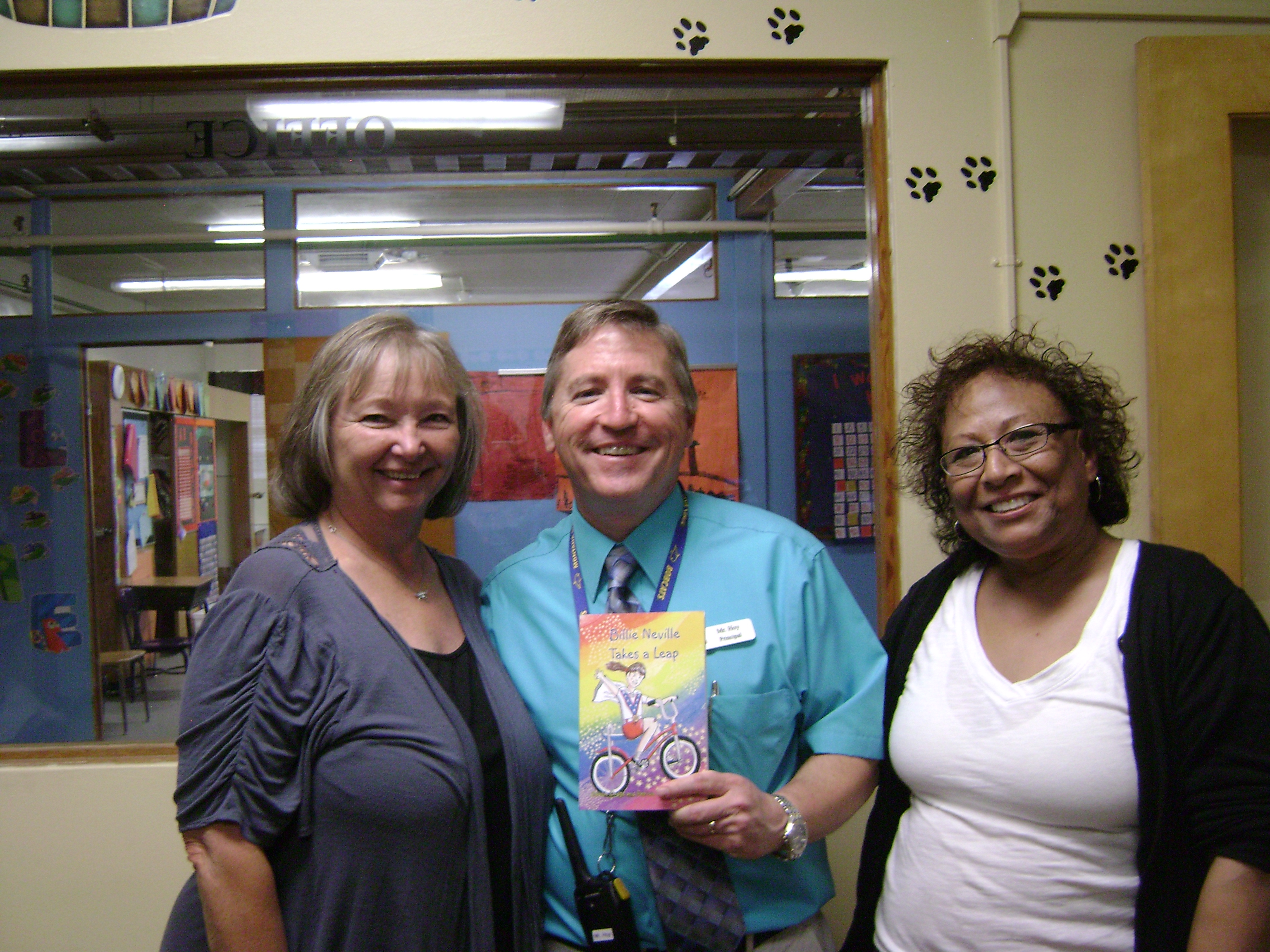
Today we stopped by Morningside Elementary in Twin Falls and presented the Principal, Steven Hoy, a copy of our book, Billie Neville Takes a Leap. Billie attended Morningside in 1974, the year Evel Knievel attempted to jump the Snake River Canyon. Thank you, Morningside Elementary for letting us wander your halls. You have a great school.
Summer leaves today, which reminds me of a recent trip to the mountains. It was the weekend before Labor Day. My husband and I were enjoying the summer weather at our cabin near Featherville. It was one of those gloriously quiet weekends. Soon enough the roads would be thick with dust and campers eager to celebrate the last summer hurrah with the upcoming three-day weekend. But that weekend the only thing stirring was the Feather River and an occasional chipmunk scampering over logs in the woodpile.
“Let’s go for a ride,” my husband said, wanting to take advantage of the nice weather. So we hopped in the truck and meandered over the back roads following the river.
We passed horses, we passed sheep. Gravel skipped under our tires as deer bounded across the road in front of the truck. We slowed down and Emily sniffed the air while Boo and Riley barked.
“Wow, did you see that big dog,” I taunted my pets. They all wagged their tales.
“Stop.” I pointed to the hillside. “Look at that.” I opened the door and walked over to the shrubs, thick and plump with purple chokecherries.
“I can’t believe it. They’re usually gone by now.” I popped one in my mouth, enjoying the tart fruit. “If we had some bags, I would pick these. They are delicious, just perfect.” I popped one more in my mouth, spit out the pit, and jumped back into the truck.
Farther on down the road, I made my husband stop again. This time I didn’t leave the truck, but peered at the hill beside me.
“Last year’s forest-fire didn’t devour everything,” I said. “Look at the elderberries.”
They were everywhere. Some green, some purple, some powdery white meaning they needed picking soon. I was beyond tempted, immediately imagining my juicer full of fruit, the kettle on the stove humming. We studied the hills for a while and then traveled on, empty-handed.
As we rounded the road back to our cabin we pulled over and stared down at the small pond Fish and Game stock in the spring. No one was angling, and as we watched fish jumped at insects, leaving concentric circles on the water.
“I’ve never seen the pond this low,” my husband said. “Look. You can see clear to the bottom of the dredge.”
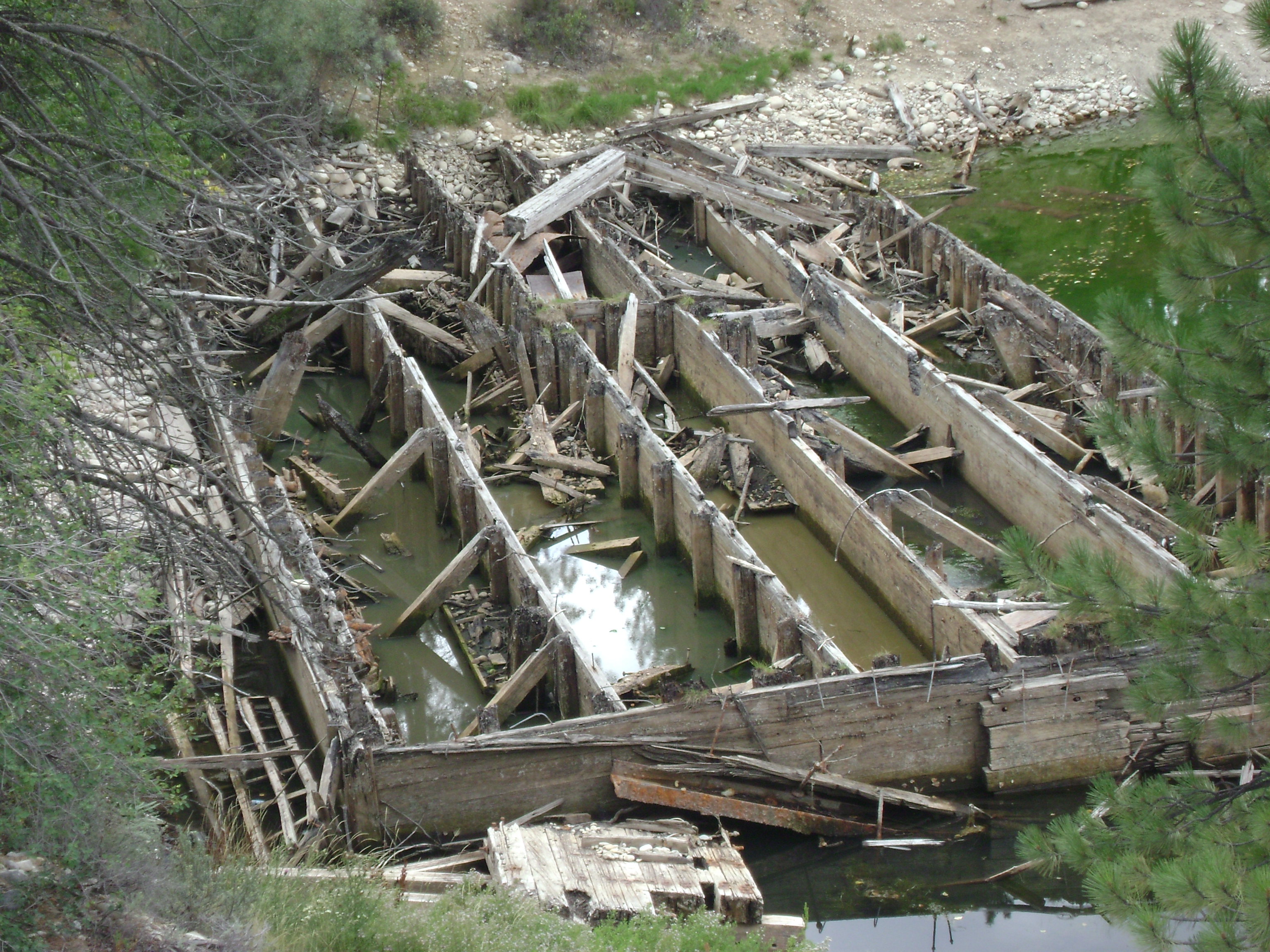
I aimed my camera at the abandoned machine, a dredge that years ago chewed up the riverbed, spitting it out into odd-shaped Cairns. Carnage the dredge left behind. From where we stood we could see river-bottom, the place where the dredger finally stopped to rest. It was impressive. It was sad.
“Well,” my husband said as we pulled into our driveway. “Are we getting a bucket and going back for those berries?”
“Naw,” I said, even though I was tempted. “We’ll leave them for all the berry-pickers coming to the hills next weekend.”
“You’re sure?”
I nodded. I’d leave them for someone else to enjoy.
“Okay.” He settled into a chair on the back deck. Enjoying cool drinks, we listened to camp robbers chatter and watched hummingbirds dive-bomb the feeder.
“This is nice,” I said. One simple day filled with summer wonder and all the things we left behind.
We had so much fun today at the Perrine Bridge Festival. It was a little windy, but, then, this is Idaho. Thanks, everyone, for stopping by and saying hello!
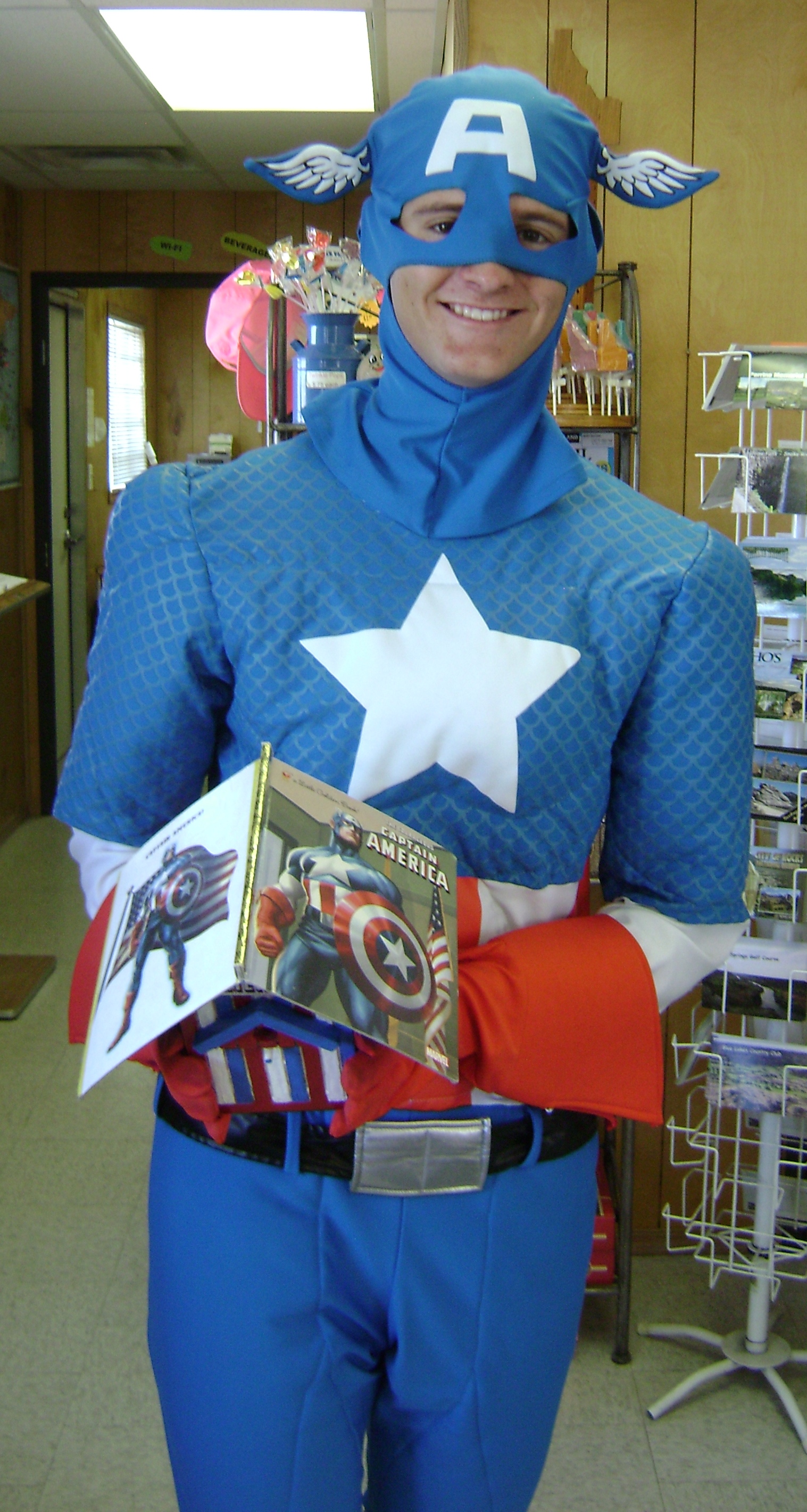
And a famous superhero holding one of our storybook houses!
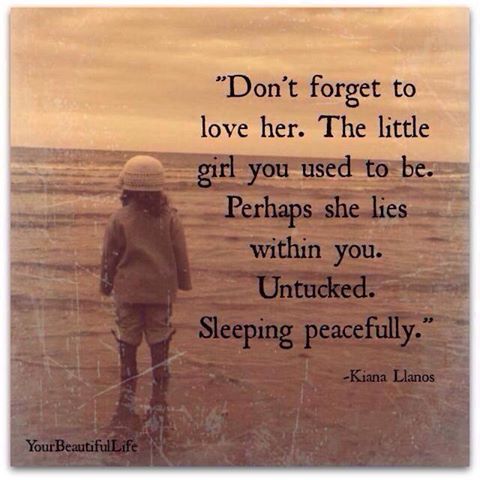
There’s a picture of a little girl looking out to sea by Kiana Llanos floating around Facebook. The picture caption reads: Don’t forget to love her. The little girl you used to be. Perhaps she lies within you. Untucked. Sleeping peacefully.
The picture brings back memories of my writing partner Dixie Thomas Reale who passed away a year ago from cancer. Dixie was a fighter, and at first blush she had a chip on her shoulder bigger than Mount Rushmore. Feisty, she refused to let anyone boss her around. I can barely remember the last time she laughed, but I remember the last time I saw her cry.
The first time I saw tears in Dixie’s eyes was when she described how she rescued a kitten in her rock shop in King Hill. The kitten had been abandoned by its mother and would have died if Dixie hadn’t stuffed that kitten into her shirt to keep it warm. Fostering the kitten, which she named Ice Cube because it was so cold, Dixie wrote a story about her “Christmas” kitten and planned to include it in a future issue of our Snake River Plain books. The second time I saw Dixie cry was one day at lunch when we were critiquing her memoir. Dixie had a keen sense of humor and had been working on a novel about a corrupt minister. She stated that she couldn’t finish the novel until she wrote her memoir, so she put the novel away and started pounding out the pages. That day at lunch we read about a little girl who was shoved in a corner while her family struggled to raise Dixie’s mentally-challenged brother. Since he was younger than Dixie a lot of responsibly fell on Dixie’s shoulders. In those pages she described the details of some of the escapades, but she rarely described the emotion. She’d been taught to swallow her feelings. When I said, “My heart breaks for that little girl,” tears spilled down Dixie’s 68-year old cheeks. She was still a child inside seeking validation. The last time I saw Dixie cry was when I visited her in a nursing home and bragged to a fellow writer about Dixie’s memoir. Dixie cried knowing she’d never get to finish it.
It’s because of women like Dixie that I wrote Waiting, a novel about three generations of Foster women for wait for love, for attention, for life, for death. Women like Dixie helped me form my character Maxine, who waits all her life to be happy. Who, like so many of us, ignore the fact that we alone are masters of our own happiness. Too many of us wait until it’s too late.
Dixie offered valuable insight as I labored over Waiting. As I get ready to celebrate the release of my novel, part of me does so with sadness. I will never be able to place a signed copy in her hands and thank her for all of her suggestions.
Take time to tell the Dixie’s in your life how much you love and appreciate them, even when they gruff back at you, pretending they don’t care. There’s still a little girl inside each one of them that needs a hug before they fall asleep.
June, July and August, my three summer friends . . .
Gosh, I love the old songs. This one was always one of my favorites. And it is so true, soon it all must end because here we are smack in the middle of July already. But I’m keeping busy. Here’s what I did this weekend. Thank you Magic Valley and Barnes & Noble for a great event.
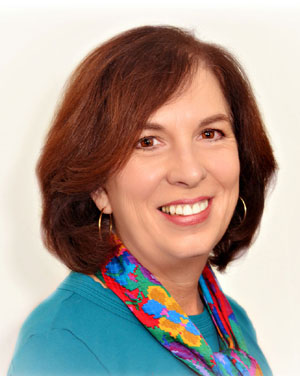
Joanne Pence is an award-winning and USA Today best-selling author of the Angie Amalfi mysteries, the new Rebecca Mayfield mysteries, as well as historical fiction, romance, romantic suspense, a fantasy, and most recently, a supernatural suspense set in the empty, roadless, no-one’s-ever-lived-there “River of No Return” area of Idaho. Born and raised in San Francisco, she has been a journalist, analyst for the Federal government, taught school in Japan, and now makes her home in the foothills north of Boise, Idaho, with her husband, two dogs, four cats, and a peahen (female peacock) who showed up one day and refuses to leave.
I met Joanne several years ago at a writer’s function in Boise. She had just relocated and wanted to connect with other writers. We’ve been good friends since. An active member of Idaho Writers Guild and a true writer’s advocate, Joanne gives willing of her time and knowledge.
15 things you may not know about Joanne Pence
1) Why did you become a Writer? How did you get started?
Growing up, I wanted to become a foreign correspondent and travel the world. I made it as far as Japan. After I got married and had children, I turned to fiction. Fortunately, through journalism (I have a masters degree in it), I learned a lot about writing. With fiction, I enjoy being able to have stories end the way I want them to.
2) What is your writing routine? How do you discipline yourself to keep at it?
I no longer have a “day job,” and my sons are adults, so I only have my husband and pets to contend with around the house. It’s not difficult to fit in time to write. In fact, I’ve been known to become grumpy if I can’t find time to write because too many other things have to be done. (Hard to imagine, isn’t it?)
3) How many drafts before you feel the book is finished?
It depends on the book. I know when I’ve written enough drafts when I stop finding things to change. I write an extremely rough, short, first draft—just doing all I can to get from the beginning of the book to some kind of an ending. I don’t worry about much when I’m putting down that draft. Sometimes I’ll think of something in the middle of the story that needs to go in the beginning, so I’ll write it down. Later, I’ll move it to where it belongs. Also, I write in scenes—each new scene has its own file (I use Scrivener, which is a blessing for people who write the way I do). I’m a person who needs to see things written down, and only after that am I able to fix what needs to be fixed. Because my first drafts are so rough and short, the next few drafts flesh out the plot, and the last few drafts flesh out the characters. I know the book is almost finished when I start to cut out the excess words, scenes, descriptions, and especially explanations that tell instead of show.
4) What was the best thing that happened with regard to your writing career? The worst?
Selling my first novel was definitely the most exciting thing, and then my second (the first in the Angie Amalfi mysteries, Something’s Cooking) was nominated for several big awards and sold extremely well, so that was a huge boost. One of my special memories happened shortly after watching a Woody Allen movie (can’t remember the name) in which he was a writer and in one scene he walked into the HarperCollins building at 10 East 53rd Street in New York City (the front is quite distinctive). A few weeks later, there I was walking into the same building. I went to the Edgar Mystery Awards Ceremony with my editor. It was all quite magical.
Despite all that, I began to feel as if I was on a treadmill, turning out one Angie Amalfi mystery a year. The best thing was when I decided I wanted to write something completely different, and stopped the Angie books.
As far as the worst, there were disappointments—it’s always easy to think one should have been given more support, more publicity, more money, or whatever—but overall, I really can’t complain.
5) What part of your job do you love the most? Hate or dislike the most?
I most dislike writing the first draft of a book. It always seems impossible—that I’ll never be able to think of enough for my characters to do to cover 55,000 or more words. I have to all but force myself to write at that first draft—a necessary evil. I most love late-draft revising, where the plot has been worked out, and I’m tweaking to find the perfect word to make a sentence better, or the perfect few sentences to transform a scene from the mundane to something that comes alive or evokes emotion from the reader. I also love making book covers. That’s something I’ve been learning to do since I set up my own publishing company as an independent author. It’s not easy, but I love the challenge, and hope to someday be really, really good at it.
6) What do you like to read? Do you read while working on a novel? Favorite authors?
I most enjoy mysteries and suspense novels that deal with crime, but that have characters with a romantic storyline of some sort. The Yard was a recent read that’s a good example—a crime story that takes place shortly after the Jack the Ripper murders. The inspectors, their wives, lovers, and so on were great people to read about. As to favorite authors, that’s tough–they change with my mood. Over the years, probably the ones I’ve gone back to and reread are Daphne du Maurier, LaVryle Spencer, and Michael Connelly.
7) What was the best advice you received as a writer? The worst?
The best advice was to give independent publishing a try. I’ve never enjoyed writing as much as I do since I began putting out my own books and writing them the way I want them written. The worst was probably to write what my editor and agent wanted me to write rather than to follow my own muse.
It’s very easy to fall into the trap of thinking that because agents and editors are “professionals” they know what’s best for you. For example, anyone who is familiar with my biggest, most ambitious book, ANCIENT ECHOES, can understand how dumbfounded I was when an agent suggested I “get rid of all that Lewis and Clark stuff.” I’m thankful I continued with my concept of the book, not someone else’s. (It was chosen as a Top Idaho Fiction Book of 2013.)
8) Who has influenced you the most in terms of developing your personal writing style?
Considering that I’ve been writing since the 1970’s, I have no idea—I write the way I write because it’s the way I think. My “voice” is like a colloquial style that’s clear, simple, wry, and sometimes tongue-in-cheek. I can think of writers who tend to write that way, but I don’t know that they were influences. Susan Isaacs’ Compromising Positions showed me that humor and crime could go together.
9) Do you have a good luck charm or superstition?
I’m afraid not.
10) If you weren’t a writer, what would you be?
I’d be unhappy. I’d probably be doing something else creative—making book covers for other people, possibly; or painting; maybe knitting, crochet, and/or needlepoint which are all things I very much enjoy.
11) What quote or personal saying do you live by?
“If you build it, they will come.” In other words, don’t sit around and wish for good things to happen to you—get out there and work to make your own luck and you won’t be disappointed. Things might not turn out the way you expect, or even the way you ever imagined, but whatever the result will be, it’s preferable to doing nothing.
12) What’s next up for you, writing-wise?
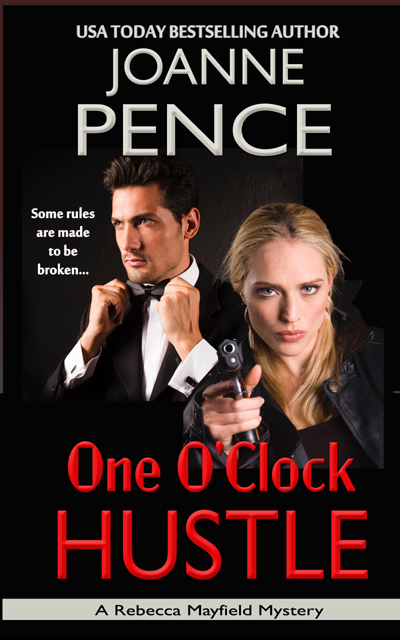
Bottom line, I hope to write more, write faster, and write better. Specifically, I hope to quickly put out at least three books in my new Inspector Rebecca Mayfield mystery series. The first book, ONE O’CLOCK HUSTLE, was released in April. The second book, TWO O’CLOCK HEIST, will be released next month, and then I hope to start the third, THREE O’CLOCK I-DON’T-KNOW-WHAT-YET. I also want to complete the trilogy that began with ANCIENT ECHOES. And Angie Amalfi fans keep writing to me asking for another book in that series.
13) If you could do anything over again, would you and what would it be?
I wish I had paid more attention to what was going on with independent publishing earlier than I did. I was hearing rumors, but not until 2011, when I attended a conference in Florida, did it all begin to make sense. There’s a steep learning curve—and things change from one week to the next—so you pretty much need to just jump in and test the waters.
14) What advice would you give beginning writers?
I would tell writers to write what they “love” rather than what they “know” because there’s a world of research at your fingertips. If I had written what I know, I never would have set parts of ANCIENT ECHOES in Mongolia or Jerusalem, and never would have used the “secret” that’s the heart of the story. Writers need to listen to that little voice we all have that tells us when something needs changing or needs more work. And most of all, don’t release a story before you’re completely happy with it.
15) Something we don’t know about you?
Perhaps you don’t know that I studied Mandarin Chinese in college and took calligraphy classes to learn to write Chinese characters using a brush and ink that I was taught how to prepare. Both were among the most difficult things I ever attempted!
And: what’d you like us to know about your latest release?
My latest release is ONE O’CLOCK HUSTLE. Homicide Inspector Rebecca Mayfield and Richie Amalfi were introduced in the Angie Amalfi mysteries, and they now have their own mystery series. This is their first full-length story.
When San Francisco Homicide Inspector Rebecca Mayfield arrives at the scene of a deadly shooting, she’s shocked to find that the witnesses have caught the killer, and that he’s someone she knows. Rebecca’s a by-the-book detective, and she’s always done her job according to the rules, without hesitation … until Richie Amalfi comes back into her life.
Richie knows his way around everything and everyone in his city. When people say they “know a guy who knows a guy,” Richie’s the guy they’re talking about. He can usually help people out of tight situations, but suddenly finds he can’t get himself out of hot water when he’s accused of murder.
Richie’s on the run, and he runs straight to Rebecca to help him prove his innocence. From the nightclubs of North Beach to the scenic heights of Twin Peaks, dangers lurk and more deaths happen. As Rebecca discovers there’s a lot more to Richie than she thought, and a lot more to like than she imagined, she soon fears not only for her life, but also her heart.
Joanne will be signing books this Saturday (June 14) at Rediscovered Bookshop in Boise, Idaho, Saturday 11-1. If you’re nearby, stop in and say hello.
We had so much fun putting this book together. Take a tomboy with no friends with a dream to be a daredevil and you have little Billie Neville. Add a skycycle and the Snake River Canyon and there’s bound to be lots of action.
Hurry and get your copy now just in time to celebrate the 4oth anniversary of Evel Knievel’s failed jump of the Snake River Canyon.
Check out my new children’s book, “Billie Neville Takes a Leap.”
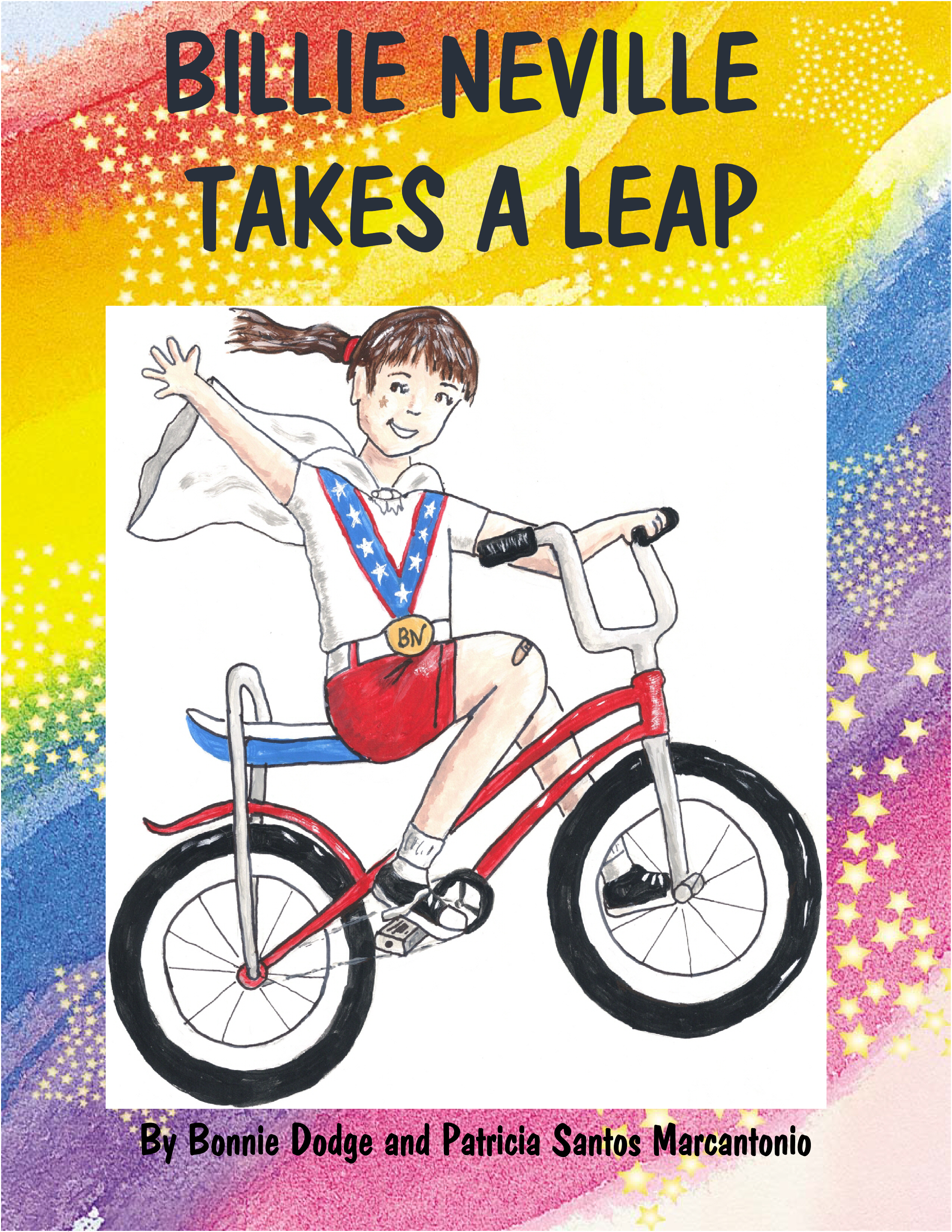
Ten-year-old Billie Neville wants to be a daredevil, just like her hero Evel Knievel. She also wants a best friend. Riding “the best bike in the whole world” Billie’s desperate to enter a bike jumping contest with three boys named The Meanies and show them her cool bike skills. When Evel comes to town to jump the Snake River Canyon, Billie learns she has to be a friend to make friends and that not all heroes have to soar over canyons.
Students entering the sixth grade are invited to write an essay entitled, “What is a Hero?”
There is no entry fee and the winner will receive $50. The contest is sponsored by River St. Press in conjunction with the release of its new children’s book, “Billie Neville Takes a Leap” by Bonnie Dodge and Patricia Santos Marcantonio. The book, which will be released in May, is about friendship and heroes.
Ten-year-old Billie wants to be a daredevil, just like her hero Evel Knievel. She also wants a best friend. Riding “the best bike in the whole world,” Billie’s desperate to enter a bike jumping contest with three boys named The Meanies and show them her cool skills. In the meantime, she also enters an essay contest in hopes of meeting Knievel. When the famous daredevil comes to Twin Falls to jump the Snake River Canyon, Billie learns she has to be a friend to make friends and that not all heroes have to soar over canyons.
The River St. Press contest is open to any student who will be in the sixth grade by September 2014. Essays must be typed or printed, and no longer than 400 words. They must include the entrant’s name and telephone number, and the name of the school the writer attends. The entry deadline is August 15, 2014. Entrants can email their essays to riverstpress@outlook.com or mail them to River St. Press, P.O. Box 5073, Twin Falls, ID 83303.
The winner will be announced at a book party in Twin Falls. The winning essay will be printed on the River St. Press website, riverstpress.com.
So kids, get busy. We’re hoping to see lots of entries.
Ten-year-old Billie wants to be a daredevil, just like her hero Evel Knievel. She also wants a best friend. Riding “the best bike in the whole world,” Billie’s desperate to enter a bike jumping contest with three boys named The Meanies and show them her cool bike skills. When Evel comes to town to jump the Snake River Canyon, Billie learns she has to be a friend to make friends and that not all heroes have to soar over canyons.
It was 2009. I’d been working endlessly on my novel, pretty sure I was wasting my time. Convinced I’d be more productive in the garden or in the kitchen, I stopped writing. Until I picked up a copy of Therese Walsh’s debut novel, The Last Will of Moira Leahy. I loved the story, but more importantly I loved the writing. Here was a writer I could identify with. Our styles were similar, our word choices almost the same. And our story choices—stories about women and their relationships—were parallel. When I finished reading her book I was excited. If Therese could do it, so could I.
Well, Therese has done it again. Her fans have been “patiently” waiting for her next book and this year she delivered. Its working title Therese jokes, The Book That Tried to Kill Me, was published this year on my birthday.
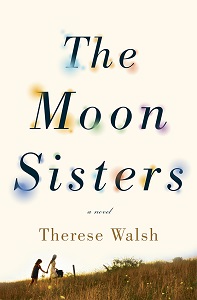
Therese Walsh’s second novel,The Moon Sisters, was published in hard cover on March 4th, 2014 by Crown (Random House). Her debut,The Last Will of Moira Leahy, was named one of January Magazine’s Best Books of 2009, was nominated for a RITA award for Best First Book, and was a TARGET Breakout Book. Therese is the co-founder ofWriter Unboxed, a site that’s visited daily by thousands of writers interested in the craft and business of fiction. She has a master’s degree in psychology. Aside from writing, Therese’s favorite things include music, art, crab legs, Whose Line is it Anyway?, dark chocolate, photography, unique movies and novels, people watching, strong Irish tea, and spending time with her husband, two kids and their Jack Russell.
15 things you may not know about Therese Walsh
1) Why did you become a Writer? How did you get started?
I started writing plays as a child, but it wasn’t until I had a child that I became intrigued with the idea of writing fiction. It began with writing children’s picture book text and eventually evolved into adult fiction. My first adult fiction manuscript became my debut novel, The Last Will of Moira Leahy.
2) What is your writing routine? How do you discipline yourself to keep at it?
I should have a writing routine, I’m sure, but I tend instead to write when the characters are very present in my mind and I have to write. The trick for me, to stay in that perfect zone, is to keep writing. It’s a little like water skiing, I suppose: Getting upright is the trick. Staying upright is less hard, and makes the whole thing fun.
3) How many drafts before you feel the book is finished?
As many as it takes! Probably three complete reworks, but with many reworkings of scenes and chapters throughout the story.
4) What was the best thing that happened with regard to your writing career? The worst?
The best thing that happened with regard to my writing career was finding my agent, Elisabeth Weed. She is a wonderful advocate, and enthusiastic about my stories and my future.
The worst thing was probably feeling the pressure of a two-book deal. Writing The Moon Sisters was often difficult for me because I was nervous about the deal, but ultimately I’m incredibly happy with the book.
5) What part of your job do you love the most? Hate or dislike the most?
I love it when I write something and feel that perfect balance that I’m looking for in storytelling, depth of meaning, and in the cadence of the sentence. Those moments make me so glad to be a writer.
I dislike the need to be so visible as a writer in this era of social media.
6) What do you like to read? Do you read while working on a novel? Favorite authors?
I like to read books that are unique, that have a great voice, and that really make me think more deeply about my own life.
I do read while writing. Not all of the time, but yes.
I have fewer favorite authors than favorite books, but I will say that I recently finished Brunonia Barry’s The Map of True Places. Between that book and her debut, The Lace Reader, I know I’ve definitely found a favorite author.
7) What was the best advice you received as a writer? The worst?
The best advice I received was to try to keep separate the craft of writing from the business end of things. It’s something I find difficult to do, but it’s important to work at that split.
Like every writer out there, I’ve received advice I didn’t think was right for my novel-in-progress. But it’s hard to say that any advice is bad advice; it’s just advice you decide not to take. I think it really taps into the importance of doing a gut check for everything that you do as a writer. Every bit of advice I receive has to go through my personal filter. If it doesn’t make it through, it wasn’t the advice for me.
8) Who has influenced you the most in terms of developing your personal writing style?
I don’t try to emulate anyone, but reading The Second Coming of Lucy Hatch by Marsha Moyer influenced the way I approach first pages. Marsha chose to begin that book with the following line: “I was thirty-three years old when my husband walked out into the field one morning and never came back and I went in one quick leap from wife to widow.”I loved that line. It made me feel for the protagonist right away. I try to do the same—look for ways to help the reader feel, right off the bat. Empathy is connection. It is my favorite hook.
9) Do you have a good luck charm or superstition?
I knock on wood, literally, every time I say something that might be predicting a good thing for myself or my books.
10) If you weren’t a writer, what would you be?
I don’t know. I do have a master’s degree in psychology, so perhaps I would’ve found my way into an occupation that would have been a help to others.
11) What quote or personal saying do you live by?
Write on!
12) What’s next up for you, writing-wise?
I have two story ideas vying for my attention. I’m playing hard to get; I’ve given a little to both but not enough to commit. Let them woo me.
13) If you could do anything over again, would you and what would it be?
I would like to take what I know now and give it to myself back in 2008, right after my debut sold in a two-book deal. The Therese Walsh back didn’t know what was going to happen, and felt unsettled. While I wouldn’t want to necessarily give her a crystal ball, I’d love to give her some words of encouragement and tell her some stories about the publishing industry—what’s normal and what to expect. My former lack of knowledge is part of the reason I like to help pull back the curtain for other writers, and why we spent the month of February focusing on Inside Publishing topics at Writer Unboxed.
14) What advice would you give beginning writers?
Try not to be offended by critique of your work. Criticism is simply someone taking the time to point out where things might be improved. Don’t take it personally. Take it professionally. Lean into it. Hunger for it. Learn from it.
15) Something we don’t know about you?
I once gobbled at a turkey so authentically that it gobbled back at me.
And: what’d you like us to know about your latest release:
The Moon Sisters took five years to write, and is the truest thing I’ve ever written. I am thrilled that Booklist recently awarded it a starred review:
“This magical, moving tale is not to be missed.” –Booklist (STARRED REVIEW)
Here’s a little of what the book is about:
After their mother’s probable suicide, sisters Olivia and Jazz attempt to move on with their lives. Pragmatic Jazz takes a job in the same funeral home that handled her mother’s body, while spirited, strong-willed Olivia—who can see sounds and taste words—wants to travel to the remote setting of their mother’s unfinished novel to see the will-o-the-wisp lights that she’d written about. A reluctant Jazz agrees to go with Olivia, and as they journey toward the wisps, their acceptance of their mother’s death becomes as important as their journey to understand each other and themselves.
Thanks for having me as your guest!
To celebrate her new novel, Therese is holding “A Taste of Hope Contest.” Describe what hope takes like and you just might win some cool prices. You can enter the contest here.
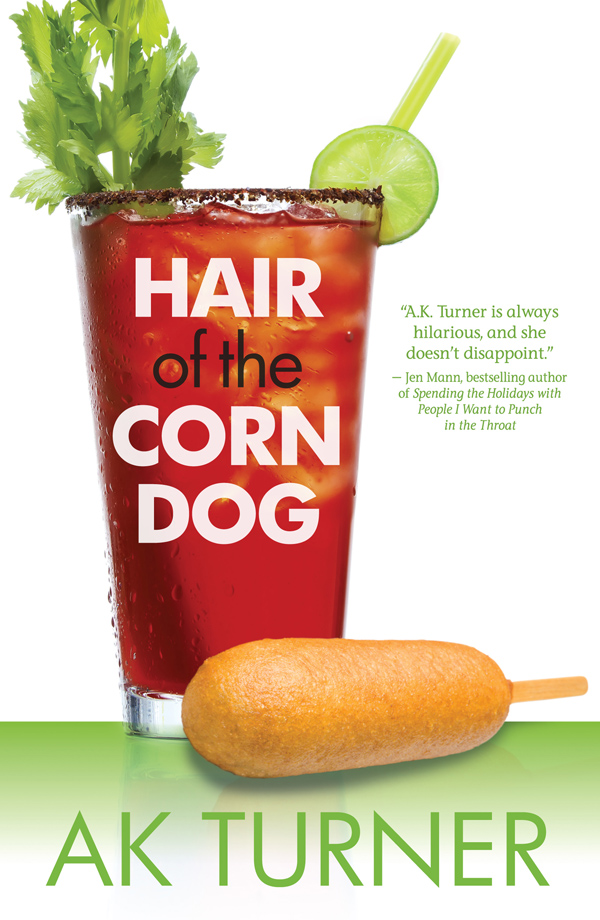
I write a lot of things, but humor isn’t one of them. Writing “funny” is hard work, but A. K. Turner makes it look so easy. Her latest book, Hair of the Corn Dog, releases today. Both members of the Idaho Writers Guild, we love to talk writing. Here’s something about Amanda you may not know:
15 things you may not know about A. K. Turner
1) Why did you become a Writer? How did you get started?
I don’t feel like I had much choice in the matter. My route may have at times been circuitous, but I think this is where I was always headed. My father is a writer, so I had a sense early on of the realities of the writing life. I still had to come to writing in my own way and in my own time, though, which meant a solid decade of the starving artist gig. I waited tables and cleaned houses for years before I found my genre and really started moving forward in my writing career.
2) What is your writing routine? How do you discipline yourself to keep at it?
I don’t work on a book every day, but when I do, it is regimented. I map out my progress on a calendar and I stick to it. When I’m writing a first draft, I write 5,000 words per work day. I don’t write on weekends. I have kids and they deserve my full attention during that time, though chances are I might write a little something, even if just an email to a friend or idea for a blog post. If it’s a day when I have a word goal, I don’t allow myself to do much else until that goal is met. The fact that I take breaks in between projects and take my weekends off helps me stay disciplined during my work days.
3) How many drafts before you feel the book is finished?
It varies for each book. I write my first draft very fast, then rewrite two or three times before sending it to my editor. She sends back what is by then a fourth draft. We volley it back and forth. It’s usually on its sixth draft when I send it to my beta readers. I incorporate their comments for an eighth draft that goes back to the editor. Hell, let’s just call it an even ten.
4) What was the best thing that happened with regard to your writing career? The worst?
The best thing for my writing career was impending motherhood. When pregnant with my first child, I felt terrified that I’d missed my chance, that now that I was going to be a mother, I’d never be a writer. That was the kick in the pants that I needed. I’m not sure I can think of the worst thing for my writing career. Even things that seem like they were negative (rejections, disappointments, typos) all help shape the present and future. There is no worst thing.
5) What part of your job do you love the most? Hate or dislike the most?
I love the excitement of beginning a new project, the sense of accomplishment at completing something, the space in the middle when you realize your project has legs. I also love that it no longer costs me money to be a writer, which is how it felt for the longest time. I hate horrible reviews and try not to read them. That’s a learned skill.
6) What do you like to read? Do you read while working on a novel? Favorite authors?
I like to read almost anything I can get my hands on. If you looked at my nightstand (but please, stay out of my bedroom) you’d see a collection of short stories, a book of essays, a nature narrative, an epic historical novel, and a lesson on craft. I recently finished books in sci-fi, mystery/thriller, a few that I’d consider literary fiction, and another book on craft. I hate assigning these labels, because most books fit more than one category. I always read, whether I’m working on a book or not. That said, I don’t usually read another female humorist while working on a humor project of my own. Favorite authors: Flannery O’Connor, John Irving, Wally Lamb, Jeffrey Eugenides. Other books I adore: Stephen King’s On Writing, Ann-Marie MacDonald’s Fall on Your Knees, Gillian Flynn’s Gone Girl, Angela Carter’s The Magic Toyshop.
7) What was the best advice you received as a writer? The worst?
Best advice: “Time is going to march on no matter what. In five years, you’ll be five years older. You can be five years older having written a book, or not having written a book, but you’re going to be five years older, either way.” Sometimes I think of this but play with the number. I make it one year or ten and think of what I want to accomplish in that time. Not that writing should be rushed, but life is short.
Worst advice: “You must write every day.” People take this too seriously. So what if someone else writes 2,000 words every day of the year? Every writer is different, so it makes no sense to latch on to rules that work for someone else. There are no rules, this isn’t football. Every writer whose habits you try to emulate had major faults of their own. Hemingway shot himself in the head. Instead of trying to be Hemingway, find your own path. It’ll likely be less messy.
8) Who has influenced you the most in terms of developing your personal writing style?
When I realized that there were people who actually made a living writing humor essays, I knew I’d found my genre. I read David Sedaris, Sloane Crosley, Bill Bryson, and Laurie Notaro, among others. In terms of developing my own style, my husband Mike and my editor Elizabeth Day have been and continue to be extremely helpful in identifying the strengths and weaknesses in my writing. Identifying those aspects and using that knowledge going forward is, in my mind, one way a writer develops her personal style.
9) Do you have a good luck charm or superstition?
I’m not superstitious at all, though I do believe I’ve been very lucky in life. Every writer needs talent, tenacity, and a little bit of luck.
10) If you weren’t a writer, what would you be?
I’d like to say Federal Agent or Homicide Detective. But if we’re talking about reality, I’d clean houses, something I did a lot of before writing full time. I can clean a toilet like nobody’s business.
11) What quote or personal saying do you live by?
Every day in which I read, write, laugh, and move is a good day.
12) What’s next up for you, writing-wise?
I want to continue writing humor, but replace the element of alcohol with travel. Don’t get me wrong, I still love a drink at the end of the day, but in terms of genre, the drinking mommy thing has been done, and I’m ready to move on to something else. We have a trip planned to Australia later this year and I’m working on some preliminary research. The working title is Tasmania with Children and Other Devils.
13) If you could do anything over again, would you and what would it be?
I’d write more and read more. Other than that, I think dwelling on what I could have done or should have done is a big waste of time. I’m always looking forward.
14) What advice would you give beginning writers?
Everything takes practice. A person practicing the piano doesn’t view that practice time as wasted music notes. Writers need to give themselves permission to write things that never go anywhere, pieces they’ll never show to anyone else. You need that practice and those are not wasted words. We battle this a lot when others ask us about our work. We feel compelled to answer that we’re working on something that is ultimately marketable: a book, magazine article, short story. There’s nothing wrong with working on the writing itself without an end goal in mind. When an athlete exercises, that’s as much a part of their job as playing in the big game. The same is true for writers, whether or not your friends, family, and acquaintances understand that.
15) Something we don’t know about you?
I took flying lessons in a Piper J-3 Cub for about a year when I was a teenager, but never got my license. I worked on two seasons of the television show Survivor. I also worked on a movie, during which I met a shirtless Matthew McConaughey, but who hasn’t?
And: what’d you like us to know about your latest release:
Hair of the Corn Dog is the third book in my “Tales of Imperfection” series. It’s a collection of essays that center on the adventures of family and motherhood, like going to a drag show with your in-laws. But again, who hasn’t? Fans of the first two books, This Little Piggy Went to the Liquor Store and Mommy Had a Little Flask, will enjoy it. Those offended by raw honesty and four-letter words will not. I’ll be reading and signing on Thursday, March 20th at 6:30 pm at Rediscovered Books in Boise.