Manzanita: Cloud & Leaf Bookstore, Manzanita News & Espresso
Nehalem: Beehive
Wheeler: The Roost
Tillamook: Tillamook Country Pioneer Museum
Cannon Beach: Cannon Beach Books
Seaside: Beach Books
Astoria: Lucy’s Books
Pacific City: The Rowboat Gallery
Bonnie Dodge
Not Writing Excuse #3: Computer Technology
12/17/2023
I woke up in a good, creative mood determined to write. I wanted to talk about the holiday season and what that is like here on the coast with rain instead of snow, about the light parade in Waldport, and the upcoming Christmas show at the Performing Arts Center. Ideas were bubbling in my head until I fell down a WordPress rabbit hole because I did things backwards. Instead of writing the words and then posting them to my blog, I decided to update my website first. There were a couple of changes that needed to be made and I wanted to fix them before I started writing. They weren’t big changes; they would only take a minute or two to fix. Three hours later I was still trying to make the changes and not one creative word was written. My creative energy was frustrated and angry and I no longer wanted to write.
I’m a touch OCD so I wanted to fix what was wrong first. Having designed a couple of WordPress sites some years ago, I thought it would be easy. I could make the changes, write my blog, and still have time to walk the dogs before it got dark outside. Because, of course, you can’t post anything to an outdated website, right?
Two hours later I was still trying to figure it out. I edited the pages. The changes didn’t appear. I couldn’t remember how to change the date on the copywrite page. I was having trouble working with blocks instead of the classic layout. It had been a while since I set up my website. I’m older and slower and rereading instructions I found on the Internet didn’t help. I walked away from the computer. I played a few games of solitaire to calm down. I looked out the window. I was so frustrated I was ready to quit.
But I kept going back. This was fixable, I knew it. I just didn’t know how to fix it. I read countless questions and answers on Google and punched buttons until I was ready to punch a tree. In the end I did get the changes made, but by that time my creative energy was gone and it was dark outside.
I learned something today. Write the words first. Even if technology wins in the end and your website doesn’t look exactly like you want it to, at least your creative energy was put to good use. And you have something creative to read instead of how to untag a page in WordPress.
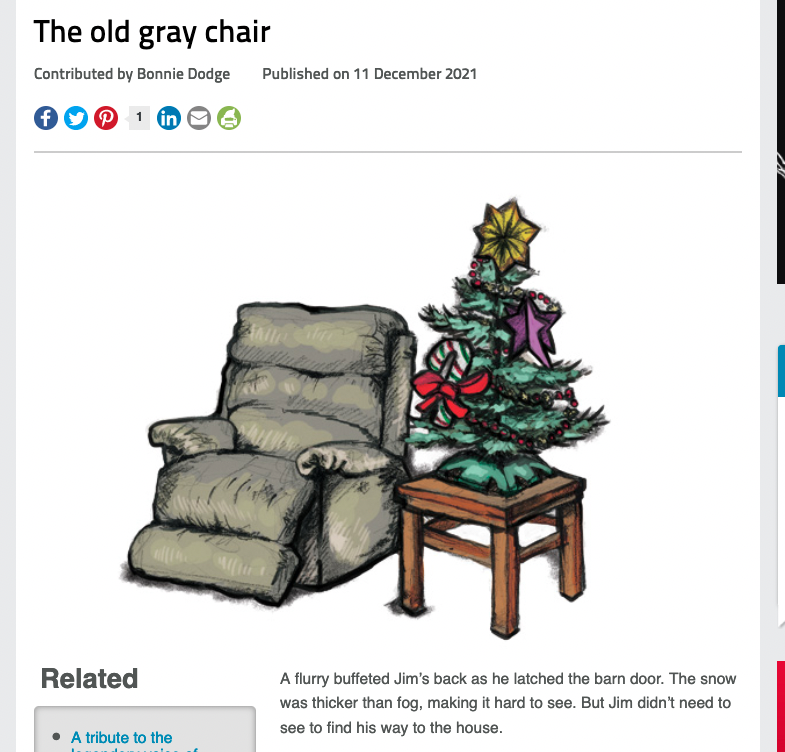
The Old Gray Chair
My short story, “The Old Gray Chair”, was published December 11, 2021 by Progressive Dairy. You can read it here.
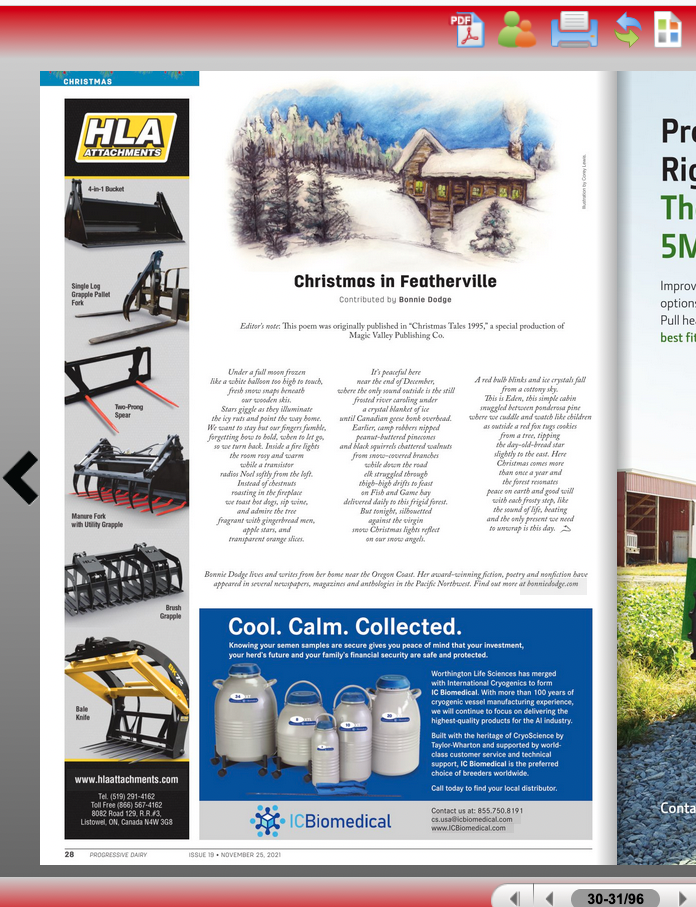
Christmas in Featherville
My poem, “Christmas in Featherville”, was published by Progressive Dairy on November 24, 2021. You can read it here.
Lost Near Atlanta
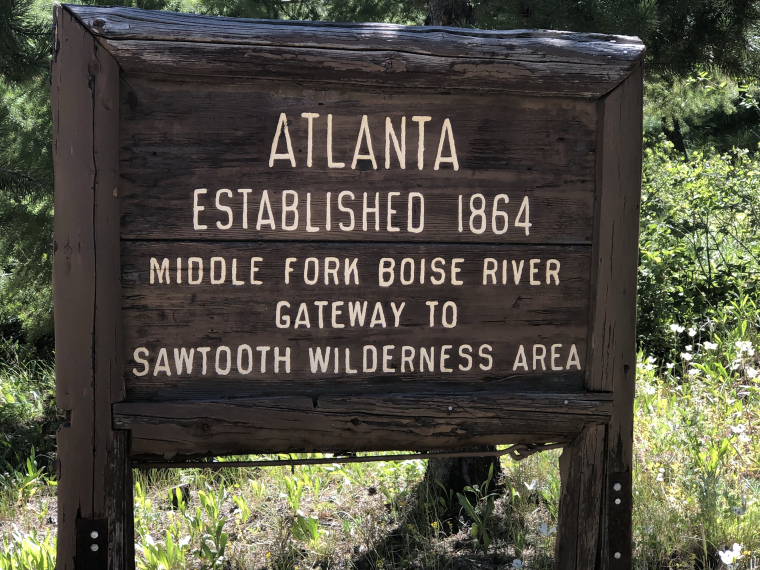
This story won third place Idaho Magazine‘s 2016 writing contest. I spent many summers exploring the old mining town of Atlanta, Idaho. I hope you enjoy this tale.
Lost Near Atlanta
“It’s great here,” Pam said as she stoked the campfire.
Surrounded by the Boise National Forest, we settled in for the night after a productive research day in Boise and Idaho City. As soon as the Old Idaho Penitentiary out on Old Penitentiary Road opened, Pam and I were there ready to take pictures and notes. I was particularly interested in some of the women incarcerated in the women’s prison and Pam, being a criminal reporter at her day job, was more intrigued with the gallows. We could have stayed there all day, imagining the people who walked behind those bars, and talking to the tour guides, but we were on a tight schedule. We had only three days to see the State Pen and the mining ghost towns of Idaho City, Rocky Bar, and Atlanta.
As usual we had underestimated how much time we would need to see everything. Discussing our trip over the phone, it seemed doable. We would meet in Mountain home. Pam knew the manager of AJs Restaurant and Lounge who said I could leave my car in his parking lot. That way we wouldn’t have to take two cars. Better yet, it would be safe there and we wouldn’t have to worry. Now, there we were, at the end of our first day, pitching a tent in the forest, anxious to see Atlanta and Rocky Bar the next day. We had heard the legend of Peg Leg Annie and we were eager to check it out.
Pam and I are writers and we both have a passion for Idaho history, which isn’t surprising given the fact that we met at an Idaho history conference in Boise five years ago. Pam is writing a murder mystery set in Idaho City and I’m working on a novel. We were hoping this trip would give us all the details we needed to finish our projects.
Since neither one of us are mountain women, I borrowed a popup tent from my brother. “It’s easy,” he said as he showed me how to assemble the tent. And it had looked easy enough when we played with the tent in his driveway. But there, in the forest, I had no idea how to put the thing together. “Maybe we should have stayed in that rustic hotel in Idaho City,” I said to Pam. “A shower would be nice.”
“Yeah,” she said. “But that would defeat the purpose. The character in my novel escapes into the forest. I won’t learn about cooking over a campfire sitting on a bed staring at a TV.”
“That’s true,” I said. “And it’s nice here, being outdoors and away from city traffic.” The campground was deserted. Even the camp host had left for the season.
We were nearing the end of a beautiful October day. The sun-warmed forest was fragrant with pine and sage. I inhaled deeply, enjoying the outdoor smells. It took us a while to set up camp, but once we did, we were glad we’d made the effort.
Sitting around the campfire sipping wine, we discussed all we had learned that day. Pam was particularly intrigued with the story about Lyda Southard, Idaho’s notorious female serial killer, also known as Lady Bluebeard.
“Flypaper,” Pam said. “She boiled flypaper to make her poison.”
I nodded and tried to listen. But I was more interested in the story one of the guards told us about Peg Leg Annie. A rumored prostitute who worked in the mining camps, Annie spent her days living in Atlanta and Rocky Bar. One day in May she and her friend Dutch Em tried to walk from Atlanta to Rocky bar. A freak snowstorm cost Em her life and Annie her legs. My brain was spinning with all the stories I could tell. What was it like to be a prostitute in a mining camp? Better yet, what was it like to be a woman in a mining camp? The possibilities were endless.
As the fire crackled we plotted. “What if I have the murderer hide in the basement of that old church in Idaho City?” Pam said.
“What if Annie had a daughter who hated living in the mining camps and all she wanted to do was escape?”
Pam and I watched the fire and talked until our eyes could no longer focus. “Night,” Pam yawned. “I’m going to bed.”
“Be there soon.” I stared into the fire, wanting to sit there all night and dream. But tomorrow was another busy day, so I needed to get some sleep. Afraid the wind would fan the fire during the night, I snuffed it out and crawled into my sleeping bag. When I turned off the flashlight, Pam was already snoring.
I woke to the sound of wind howling through the forest. Good thing I put out that fire, I thought as I snuggled deeper into my sleeping bag. Good thing I have a brother who likes to hunt in subzero temperatures.
“Wake up.” Pam was shaking me. It was still early, barely morning. “You’re not going to believe this.”
I poked my head outside the tent. “Whoa. What happened?”
We were smack in the middle of a snowdrift. The howling wind I heard during the night had filled our campsite with at least ten inches of snow.
“Holy cow,” Pam said. “We’re snowed in.”
Shivering, I pulled on my jeans and sweater and went outside to start a fire. Like that was going to happen. All the wood was covered with snow and what wasn’t buried in a snow bank was too wet to burn. No fire for coffee, no fire to warm our bodies. To make matters worse, everything looked flat like a white sheet. We couldn’t see the road.
“Guess that takes care of Atlanta and Rocky Bar,” Pam said.
“Guess that takes care of a lot of things,” I said. “I think we have bigger problems than research in old mining camps. Her beige Honda was good on roads, but now it was buried in snow. Gloveless, we didn’t have a shovel so we had to use our hands to move the snow away from the car. It was pointless. The more we shoveled, the more snow fell from the cottony sky.
“I’ll call for help.” Pam tired her cell. “No service,” she said looking at the snow still falling.
Exhausted, we stood beside the car in our wet clothes. “What are we going to do?”
“Well,” I said. “It would be stupid to try and walk out.”
“We can’t stay here.”
We broke into a nervous laugh. We’d been looking for an adventure. We sure got one.
“Maybe it’ll stop soon.” My teeth chattered.
“I’m going to sit in the car and run the heater until I get warm,” Pam said. Lucky for us we’d filled the car with gas in Idaho City. Just to be safe. Who knew where the nearest gas station was. I’d heard there wasn’t one in Atlanta. But that didn’t seem to matter now. We’d be lucky to get back to Idaho City, let alone Atlanta. Our research trip had morphed into a trip of survival.
We sat in the car until we could feel our fingers and toes again. By then the snow had stopped, and it was almost noon.
“I think we should walk out,” Pam said.
“Don’t be ridiculous. Do you want to end up like Peg Leg Annie?”
“No.” Pam stared out into the forest. “But I don’t want to die here either.”
We weren’t dressed for winter weather. We had no heavy coats, no snowshoes, no boots or gloves. What we had was a sense of panic as we started out, hoping we were walking in the right direction.
“I can’t even see the road,” I mumbled as I plowed through the snow, breaking a trail. Keen on adventure, I’d gotten myself into some pretty fine pickles, but this was the worst. I looked up at the sky afraid it would snow again. How did this happen? Beam me up Scotty and get me out of here.
We walked for an hour or more. “Look,” Pam said. “Here’s the road that goes back to Idaho City. If we follow it someone will find us.”
What little food we brought was all but gone. We had to keep going. We trudged through the snow until Pam slid off the road and tumbled down the embankment toward the river. “Help,” she cried.
I rushed forward and planted my feet the best I could on the slippery ground. “Give me your hand. I’ll pull you out.”
I yanked and almost fell in myself, but I didn’t let go. When she was safe, we sat on the side of the road our sides heaving. “I think I hurt my leg,” Pam said. “That was fun.”
“Barrels,” I said. “Now what do we do?” The sun was setting. We were wet. It wouldn’t be long before our clothes froze to our bodies.
“We need to keep moving,” I said, afraid if we stopped we’d never move again.
Pam winced. “I don’t think I can walk that far. Our only chance is if you go for help. I can wait here.”
“No you can’t.” I yanked on her arm until she was standing. “We’re in this disaster together.”
We both smelled it before we heard it. “Oh, no,” Pam said. “Is that a bear?”
“They don’t have bears out here, and even if they did, bears hibernate in winter.”
“Well,” Pam said. “It isn’t winter yet. He probably was surprised by the storm just like we were.”
“Run,” I said. “Here he comes!”
We turned to flee but running in the fluffy snow proved impossible. And Pam could only hobble on her bum leg.
“Roll up in a ball and play dead,” Pam instructed.
We both hit the ground and grabbed our knees tight.
Yelp. Yelp. Yelp.
I turned my head to peek. Hallelujah. It wasn’t a bear but a scraggly dog the size of a pony, barking and running toward us.
“Holy cow,” Pam said. “Never saw a dog that big.”
The dog ran to our side, pushing us with his nose. We had no other choice but to follow. “Maybe he lives around here,” Pam said.
“Yeah,” I said. “Maybe somewhere warm.”
He led us to a small mound, a shelter covered with snow. He wouldn’t leave us alone until he had nudged us inside. Once we were settled, he lay down and went to sleep.
“Thanks, buddy.” I snuggled beside him. He was so warm, so comfortable, even if he smelled like a wet dog. Exhausted and spent, we fell asleep next to the giant dog. When we woke it was morning and the dog was gone. The sun was shining. The snow was starting to melt. Looked like our luck was changing.
“What now?” Pam said.
“I guess we keep walking. How’s the leg?”
“Not bad. I think I can make it.” Pam limped.
“Good because I’m not leaving you behind.”
It helped to walk, each step warming our muscles. “Listen,” Pam said. “I hear something.”
“Doesn’t sound like a snowmobile,” I said, which had been my secret hope. That someone eager for winter would break out their sled to play in the snow. This was better. A snowplow clearing the road.
“Hey, you!” We jumped up and down calling, “Here! Here!”
“Wow,” the driver of the yellow machine said. “Where’d you come from?”
We pointed behind us. “We were camped back there when the storm hit. My car is buried in snow,” Pam said.
“Hop in,” he said. “Let’s see if we can get you out.”
“Thanks.” We scrambled into the cab of the plow, glad to be out of the cold.
Back at camp, the driver used a rope to pull Pam’s car out of the drift. When he was finished, we quickly packed up the tent and our chairs, and loaded the car. He waited to make sure we could get out.
“Thanks so much for your help,” I said. “I don’t think we could have stood another night in this weather.”
“Consider yourself lucky,” he said. “I don’t know how you survived this one.”
“There was a big dog,” Pam said. “A Newfoundland, I think. He kept us warm. When we woke, he was gone.” She looked into the forest. “You didn’t see him did you?”
The driver chuckled. “Oh, yeah, I’ve seen him around once or twice.”
“Does he live nearby?” I asked.
“No. He roams the forest between here and Rocky Bar. That’s Annie Morrow’s dog.”
I looked at Pam. Was he kidding? If Peg Leg Annie had a dog, he’d be long gone, just like her.
“Seriously,” I said. “Where did he go? We tried to find him, but he didn’t leave any tracks.”
“Seriously,” he smiled. “That’s the dog Annie and Dutch Em had with them when they tried to walk from Atlanta to Rocky Bar that wicked day in May.”
“In that freak snowstorm,” I said.
“Right,” he said. “That dog stayed with Annie and kept her warm.”
“No way,” Pam said.
“That was over a hundred years ago,” I said. “That dog would be dead now.”
The man winked at me. “He may be a ghost, but I’m not going to tell him. Not with the job I have. He’s saved my butt a time or two.” He hopped into his snowplow, waved, and drove off toward Atlanta.
We didn’t go into Atlanta that day, or Rocky Bar either, but we did return home with some great stories to tell. And a promise that we’d make the trip again sometime. But never in October and never in May.
North Coast Squid
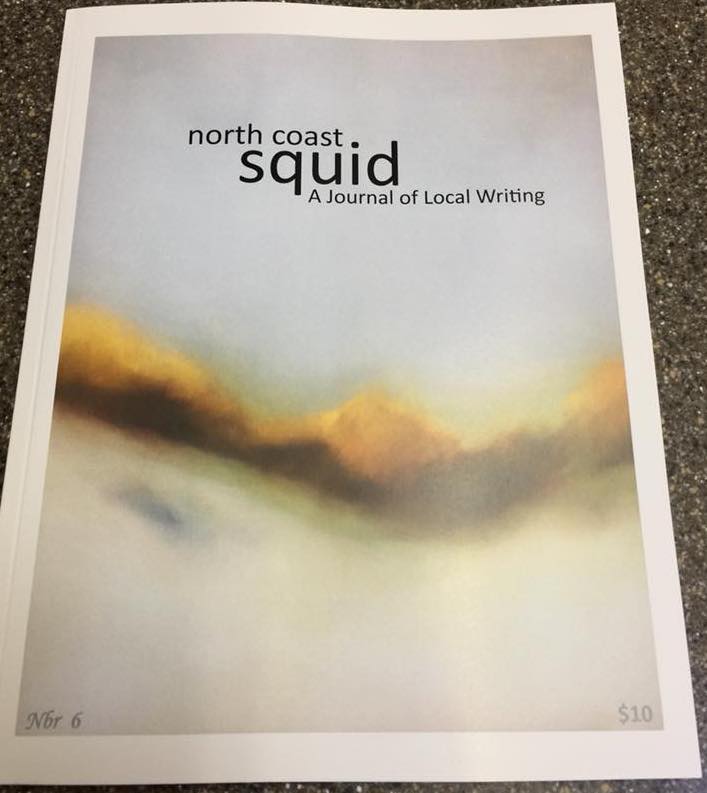
I’m happy to announce that my essay “Ebb and Flow” has been published in Volume 6 of North Coast Squid: A Journal of Local Writing, published by the Hoffman Center for the Arts, Manzanita, Oregon.
You can find a copy of the literary magazine here:
Forty years ago today
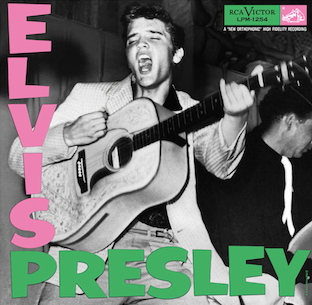
It was a day like no other, one she would remember for the rest of her life. Maxine Foster clicked off the television, her eyes blurry with tears and loaded every single Elvis Presley album she owned on the Zenith record player and pushed the lever.
“Well, it’s one for the money,
Two for the show,
Three to get ready,
Now go, cat, go.”
Holding her sides, she crumbled to the floor and cried inconsolably. It couldn’t be true. No, he couldn’t be dead.
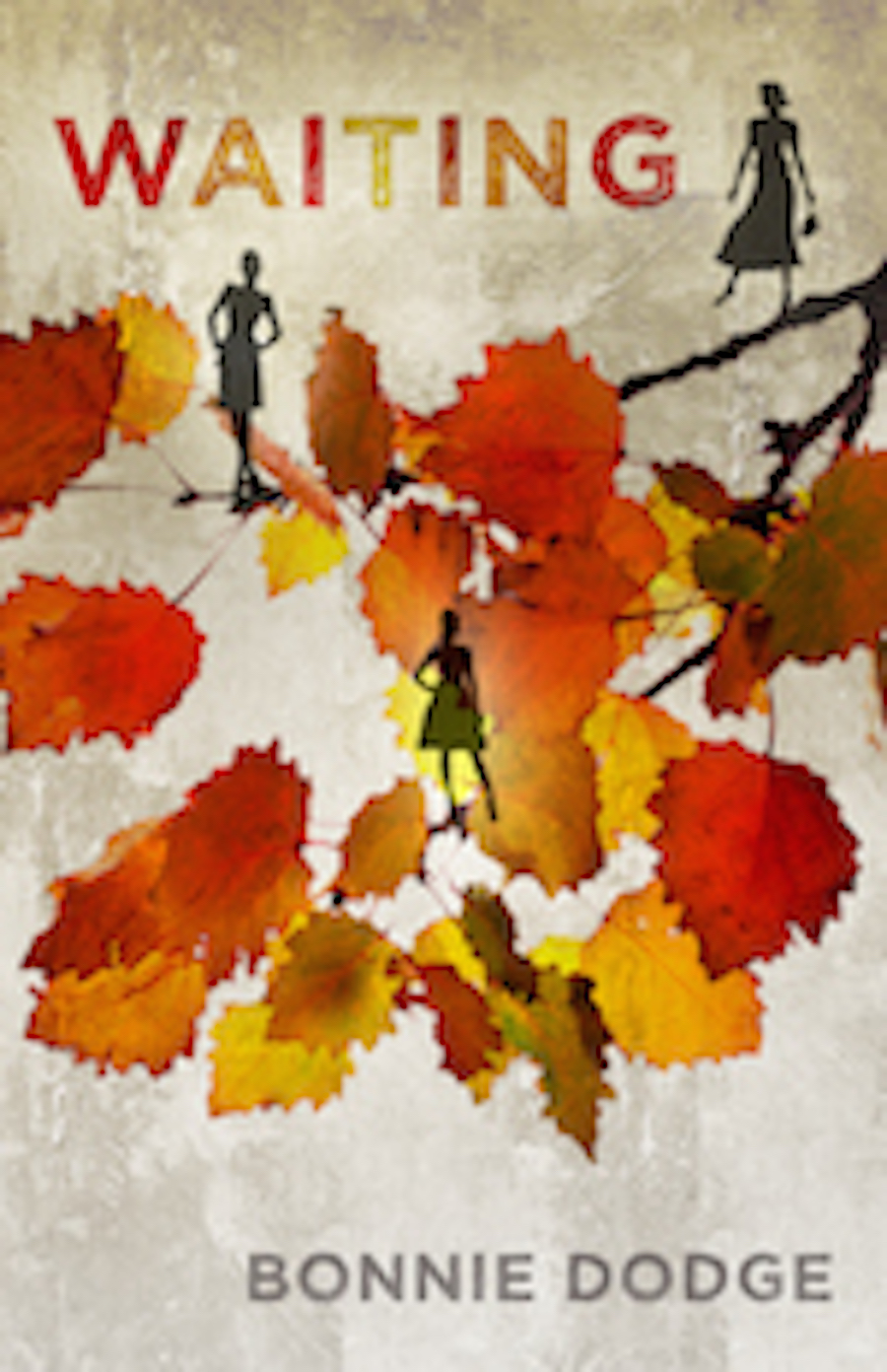
Find out more about Maxine in Waiting available here.
BONNIE DODGE VISITS THE BOOK DINER TO DISCUSS THE WEIRD BLESSING OF BEING A WRITER
Today I’m talking writing with Sharon Zink at The Book Diner. Check it out.
My Oregon Love Song
My fingers are puckered, my feet are webbed, and like most of my neighbors, I’d love to see the sun. But the weatherman just confirmed another week of rain. Oh, yay.
Coming from a town lucky enough to see ten inches of rain a year, here in Newport we’ve already endured forty-three inches of rain, and it isn’t even May. It’s hard to get and stay motivated when the days are gray, misty, and wet. Walks along the beach are anything but romantic and puttering in the yard only creates bigger messes. Maybe that’s why there is always so much going on indoors.
For instance, in the last thirty days I got to hang out with some pretty amazing writers. In March, Susan DeFreitas talked about environmental degradation and her debut novel Hot Season. Her landscape descriptions blew me away. I can still smell the river and feel the breeze on my skin. A couple weeks later Karen Karbo, author of a best-selling “kick-ass women’s series”, talked about writing personal essays and I learned how to put passion back into my work. And just last week Garth Stein came to town to discuss writing his novel The Art of Racing in the Rain. The room was packed and for two hours we didn’t care that it was pouring outside, Stein was filling the room with enlightenment and inspiration.
The place I used to call home was so isolated I’d have to drive hundreds of miles to attend book signings and writing workshops. Now all I have to do is go to the library or the Performing Arts Center, just a few miles down the road.
Newport brims with talented people I would have never met if I had stayed in my Idaho cocoon. So thank you Oregon for giving me a stimulating and verdant place to live. Thank you for welcoming me home.
(Sorry the pictures are so blurry. My phone doesn’t play nice sometimes.)
SELF-SABOTAGE, MY WORD FOR 2017
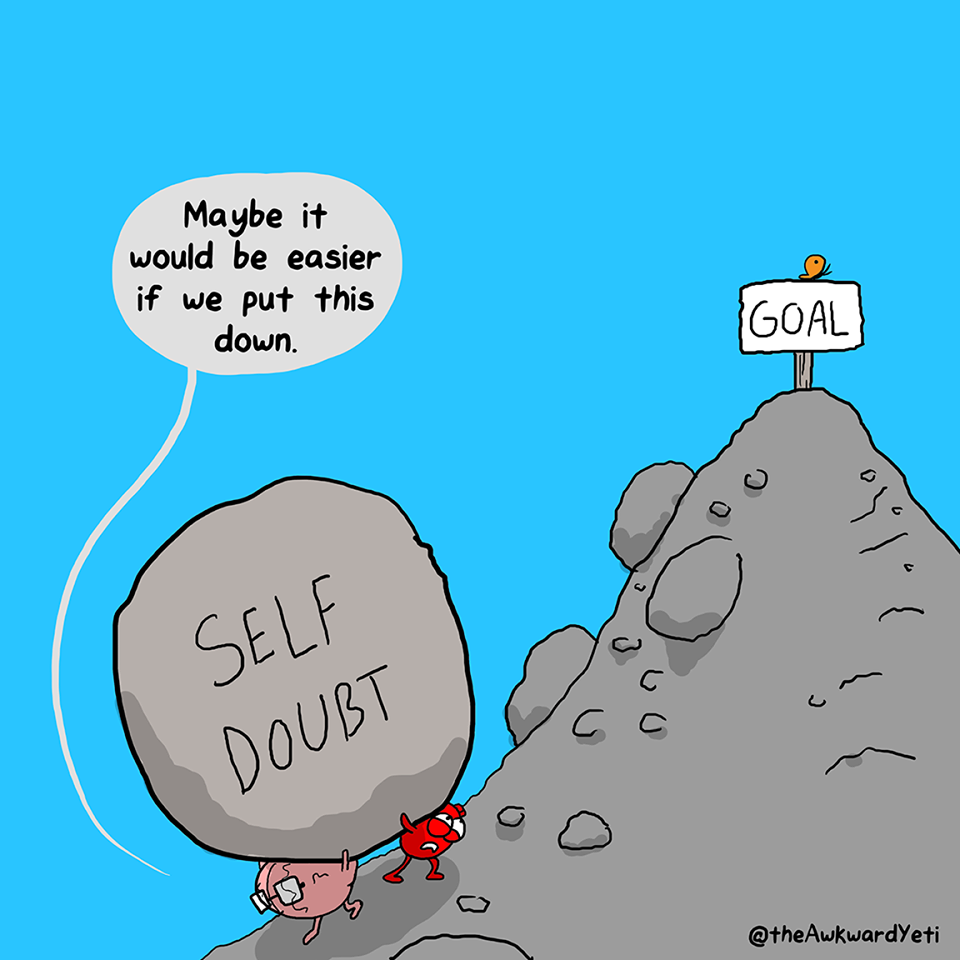
Words of encouragement are flooding social media this month. Words like hope, peace, love, respect, patience, and even no. As a writer, I’d like to offer another. Self-sabotage. That thing many writers do to avoid moving forward.
I’m not the queen of sabotage, but I know how to procrastinate. Take this book I’ve been working on for almost twenty years. Ten years ago I shopped this book around thinking it was finished. But clearly it wasn’t or I’d be collecting royalties instead of avoiding revisions.
Why isn’t it finished? It isn’t because I don’t know how to write or deliver a product. It isn’t that I don’t love the idea of this book, I do. The only reason I can offer is that I’ve gotten in the habit of avoiding this project. Every time I set out to finish this book something gets in the way. Here are some of the ways I’ve sabotaged the completion of this book.
1) I can’t work on this book until I finish xxx. Insert clean the house, take the dogs for a walk, or do the laundry.
Life is messy and has a way of getting in the way of writing. There will always be something else that needs attention. Pretending I can’t write until the dishwasher is loaded only prolongs the project. Instead of waiting until everything is done, I need to make working on this project a priority. First thing in the morning I need to sit down and revise a chapter. Before anything else. Waiting until I have a big chunk of time to work isn’t the answer and is just a lazy excuse.
2) I need to do more research.
After twenty years I should have more than enough information to finish this book. And if I don’t I can make it up. After all, it’s fiction, not non-fiction.
3) I don’t have the skills to write this story.
Recently I listened to Alice Hoffman discuss writing. She said a writer needs to write every day. Only by writing every day do you become a better writer. So stop waiting until you have the skill level you seek. Start writing and it will come.
4) It’s not perfect, so why bother.
Good writing is revisions, lots of them. Anne Lamott says write a messy first draft. Get the story down and then do the work of revisions. That’s where skill and magic happen, in the honing of words.
5) I need feedback on this chapter before I continue.
Maybe, but probably not. Even if you are lucky enough to have friends and family who offer to read your work and comment, this can be a big way to sabotage your writing. Reading is subjective and you will get good comments and bad comments. The time for constructive feedback is after the book is done. When you know the ending of your story, you’re better equipped to identify weak plot points and motivation. Too much advice while you’re being creative and writing can stop your story dead. Rely on your gut and trust the process.
6) I’m not smart enough to write this story.
If that is true, than put it away and work on something else. Just because you don’t feel adequate to complete this story doesn’t mean you can’t produce a sexier, better story. Learn to let go. Not everything you write is golden.
7) I need to turn off the internal editor.
Often the fear of failing, or even the fear of succeeding, can prevent me from finishing a project. Yes, criticism is scary. But it’s part of the process. Don’t let fear prevent you from achieving your goal. Writing can be scary, learn to work through the fear.
8) I can’t write until I get in the mood.
The longer you work as a writer the more it becomes a job and there are days you won’t want to go to work. Waiting for the mood to strike could mean days without writing, a sure way to shoot yourself in the foot. Many times I sit down to write, in a bad mood because I don’t want to write that day, and like magic my muse shows up and I produce some pretty amazing stuff. If you want to be a good writer, write even when you don’t want to. You’ll be surprised at what you can accomplish.
9) Illness gets in the way.
My goal for 2017 is to finish this book. I had a good start, with four chapters revised before I ended up in the hospital with a nasty gallbladder. See, I told my son, this book doesn’t want to be finished. And, yes, sometimes I feel like that. But the book isn’t the writer, I am the writer, and no one else is going to finish this book but me.
Self-sabotage diminishes passion and energy. It’s just an excuse to keep you from moving forward. If you’re in the habit of self-sabotaging yourself, try to identify why. Then work toward reaching your goal. You’re in control. Only you can do it.
15 Things You May Not Know About Jamie Duclos-Yourdon
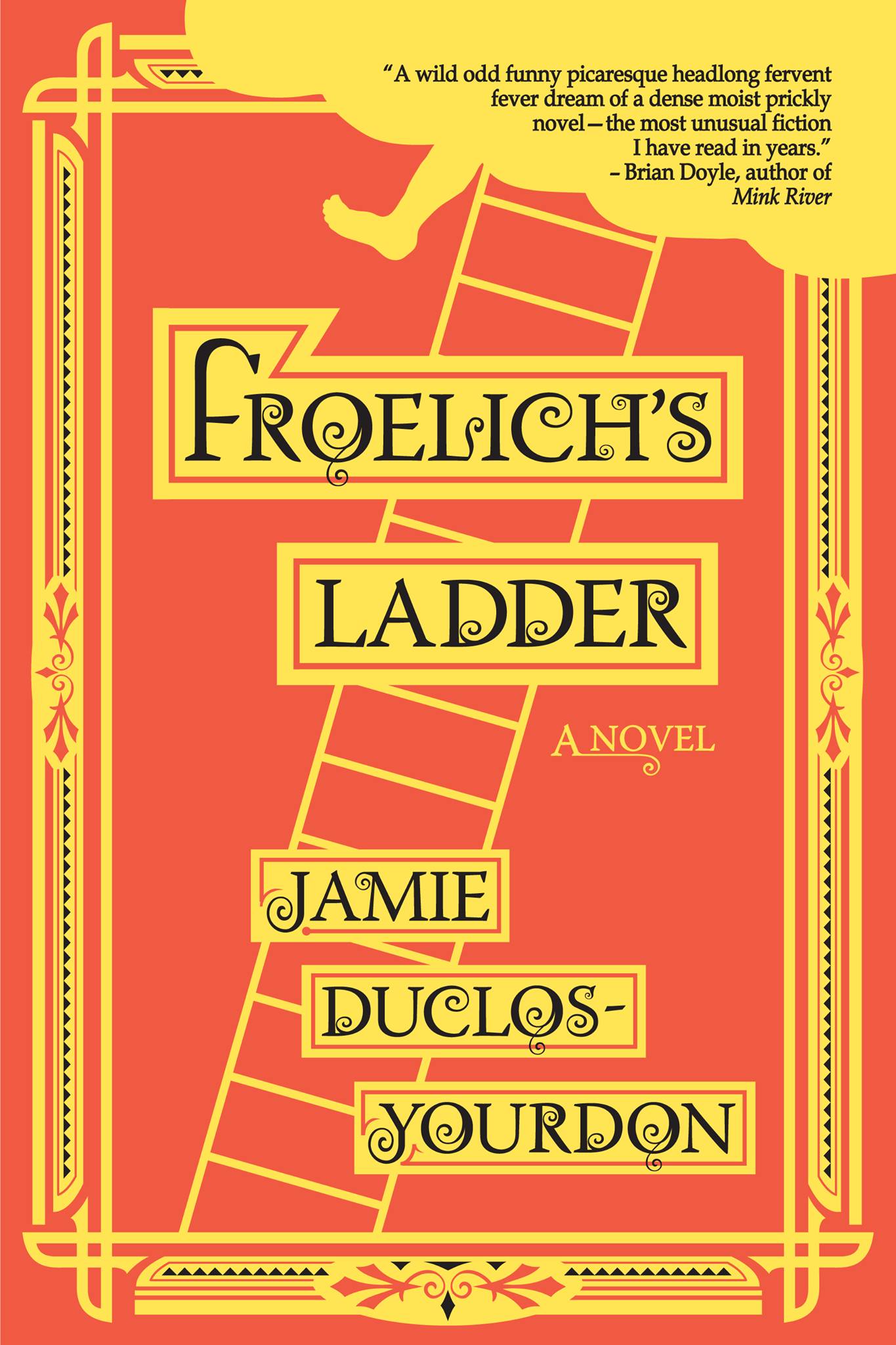
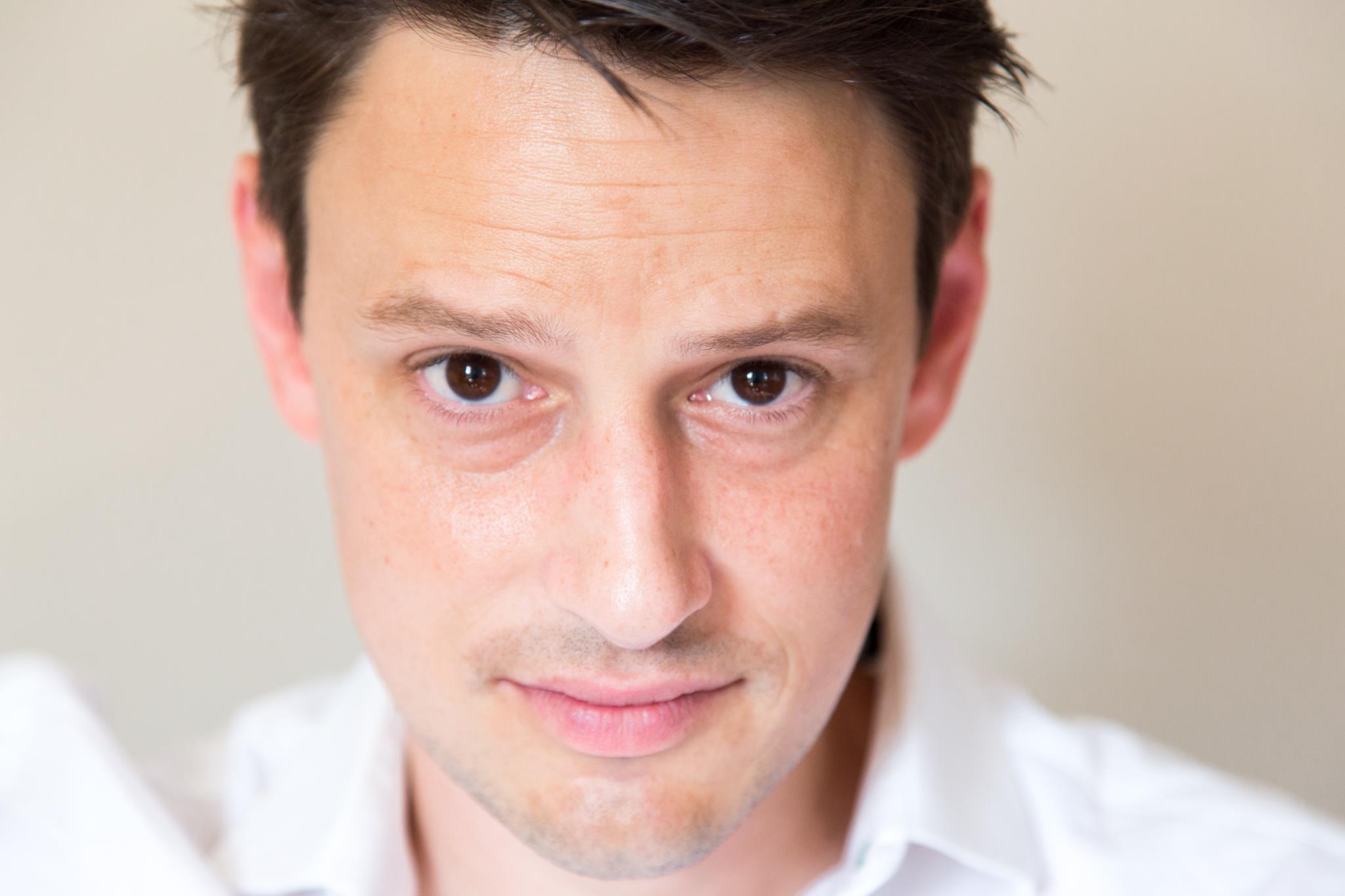
Oregon has so many talented writers. Take for instance Jamie Duclos-Yourdon. Jamie, a freelance editor and technical expert, received his MFA in Creative Writing from the University of Arizona. His short fiction has appeared in the Alaska Quarterly Review, Underneath the Juniper Tree, and Chicago Literati, and he has contributed essays and interviews to Booktrib. Froelich’s Ladder (Forest Avenue, August 2016) is his debut novel. He lives in Portland, Oregon. Here are some things you may not know about Jamie.
1) Why did you become a Writer? How did you get started?
When I was a kid, my mom said to squeeze her hand if I ever saw anything unusual. She hoped to prevent an embarrassing observation (we lived in New York, after all; everything was unusual), but I spent my time scanning my surroundings—and if I couldn’t spot the obviously unusual thing, I’d identify the smallest discrepancy.
2) What is your writing routine?
I wake up at 4:30 every day and write for an hour. I usually manage 300+ words, which is slightly more than a page. It doesn’t feel like much, but if you keep at it every day—seven days a week, with no exceptions—the material builds up pretty quickly.
3) How many drafts before you feel the book is finished?
Oh, gosh … I probably go through four or five drafts before I’m ready to share a manuscript with a publisher or an agent, and those drafts have already been vetted by my writing group. If a publisher or agent is interested, then I’ll undertake another two or three drafts. The story is always evolving (and, hopefully, improving).
4) What was the best thing that happened with regard to your writing career?
Having my first five books rejected. Through Book #6, I was still doing my best Nick Hornsby impression—which isn’t necessarily a knock on Nick Hornsby. It took me a long time to recognize my own voice and even longer to trust it.
5) What part of your job do you love the most?
I love Q&As with an audience. Even if I’ve heard a question before—and more often than not I haven’t—the context is always different, the underlying assumption is different, my mood is different, everything is different. I learn something new every time.
6) What do you like to read? Do you read while working on a novel?
I’m always reading, whether or not I’m working on new material. I mostly stick to fiction, with a few news sources to keep me informed. I’m really picky, in terms of the former (and the latter, I suppose), and I don’t like to reread novels or short stories; additionally, I don’t feel guilty putting down a book after 50 pages. So my reading process is like no, no, no, no, no, YES, no, YES, YES, no, no, no …
7) What was the best advice you received as a writer?
A professor of mine once said, “Learn what you write and when you write.” If you write flash fiction, cool, write flash fiction. If you write 150,000-word novels, then do that instead. Don’t try to be something you’re not. Same goes for whatever time of day suits your creative process: find it and stick to it.
8) Who has influenced you the most in terms of developing your personal writing style?
I took a fiction workshop with Aurelie Sheehan when I was twenty-four. She read one of my short stories and said, “Oh, you write about responsibility!” That observation had a profound effect on my writing.
9) Do you have a good luck charm or superstition?
I’ve had a storyteller on my desk since 2001—a ceramic figurine of a Pueblo Indian, mid-story, surrounded by her children. I’ll be devastated when I eventually, inevitably drop and break her.
10) If you weren’t a writer, what would you be?
I have absolutely no idea. Drunk?
11) What quote or personal saying do you live by?
Samuel Beckett said it best: Try again. Fail again. Fail better.
12) What’s next up for you, writing-wise?
I’m currently at work on my tenth novel, a Mesopotamian ghost story about death and grieving and talking crows and ancient Sumer.
13) If you could do anything over again, would you and what would it be?
In January of 2002, an agent at ICM expressed interest in my first novel. I thought, “Yay, this is it! The big time!” and spent the next six months sitting on my ass. I’d love to get that time back.
14) What advice would you give beginning writers?
Read everything. Write constantly. Be on the lookout for a mentor. Don’t assume debt for an MFA. Find community and earn your inclusion. Success isn’t zero-sum. Listen to what your readers have to say. There’s nothing wrong with adverbs. Writers make boring protagonists. Know what your characters want and what prevents them from getting it. Study screenwriting to learn three-act structure. What seems natural and obvious to you is completely foreign to the rest of the world. You are a writer. You are a writer. You are a writer.
15) Something we don’t know about you?
I’ll be the Keynote Speaker at the 2017 South Coast Writers Conference February 17–18.
And: what’d you like us to know about your latest release:
Froelich nurses a decades-old family grudge from his permanent perch atop a giant ladder in this nineteenth century madcap adventure novel, Froelich’s Ladder. When he disappears suddenly, his nephew embarks on a rain-soaked adventure across the Pacific Northwest landscape to find him, accompanied by an ornery girl with a most unfortunate name. In their encounters with Confederate assassins, European expatriates, and a general store magnate, this fairytale twist on the American dream explores the conflicts between loyalty and ambition and our need for human connection, even at the highest rungs.
If you’re still scrambling to find the perfect Christmas present, consider Jamie’s new book from Forest Avenue Press.
Happy Holidays!

454 Days Later
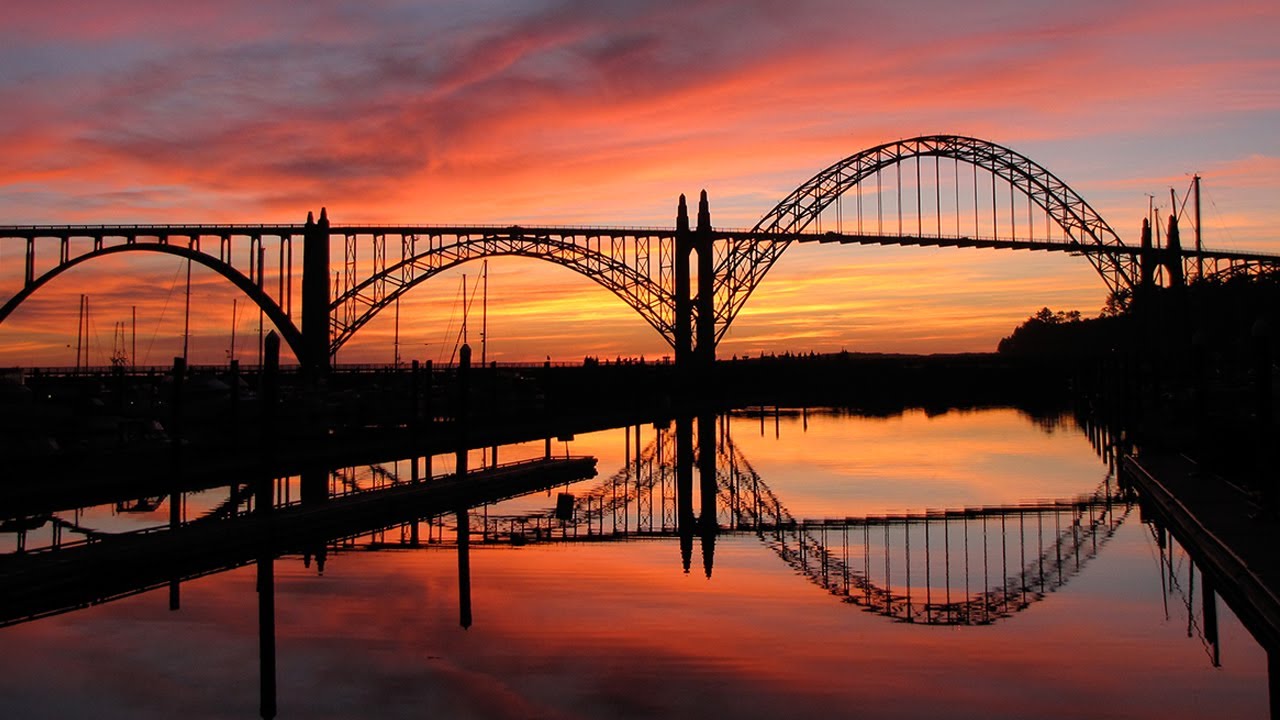
I’ve been quiet and you probably think I fell into the ocean or got blown away by coastal storms. But no, I’m still here, learning all I can about my new home.
The reason I’ve been silent is that I’ve been busy. For a tiny dot on the map between Yachats and Lincoln City, Newport’s population is about the same as the town I left in Idaho. If you want a Costco or a Lowe’s you have to drive several miles, just like I did in Idaho. But unlike the town I left behind, there is so much more to do here I barely have time to read, let alone write.
Check out the latest issue of Oregon Coast Today and you will see there is always something going on. Add to that everything happening in The Valley between here and Portland and there is no time to be bored. Ever.
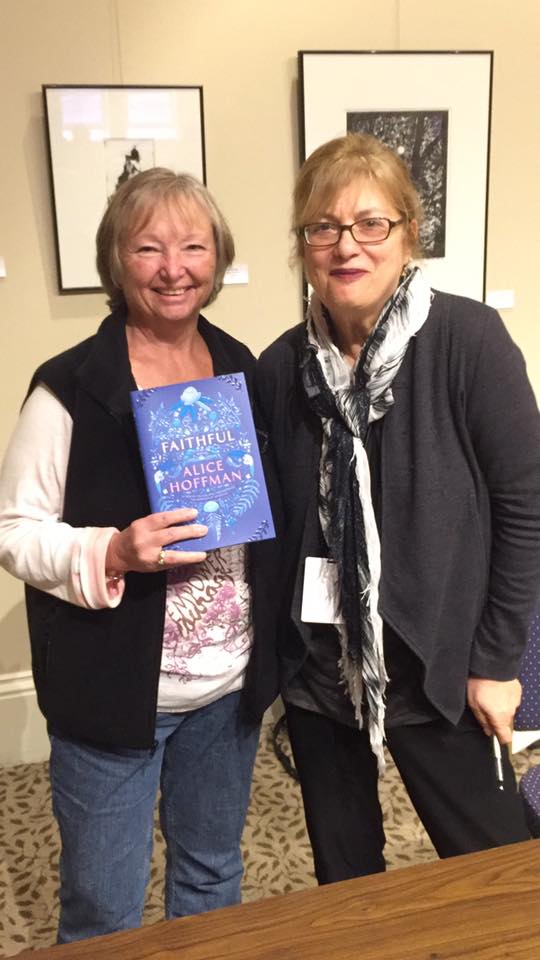
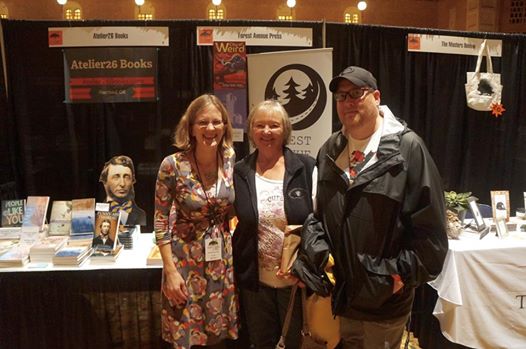
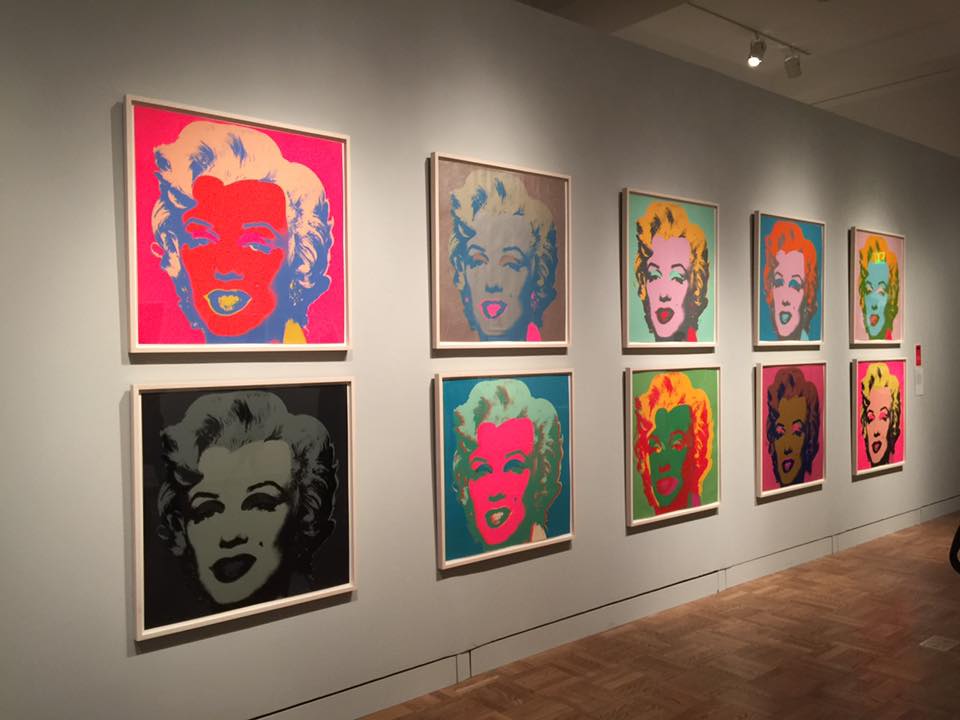
Take for instance last weekend. Since I don’t like to drive Portland traffic my son quietly obliged, taking me to Portland’s annual book festival Wordstock. I was so revitalized I’m still vibrating. My favorite author, Alice Hoffman, was in town and spoke about her new book Faithful. She even signed my copy and thanked me for stopping by. So many other talented writers attended, not to mention many Oregon presses including Ooligan Press, Tin House, and my favorite, Laura Stanfill from Forest Avenue Press. If that wasn’t great enough, admission to the event included admittance to the Portland Art Museum and the Andy Warhol exhibit. Now my son was vibrating, snapping pictures and studying one-of-a-kind art. Yes, it was raining. But in spite of the rain, it was a positive, energizing day.
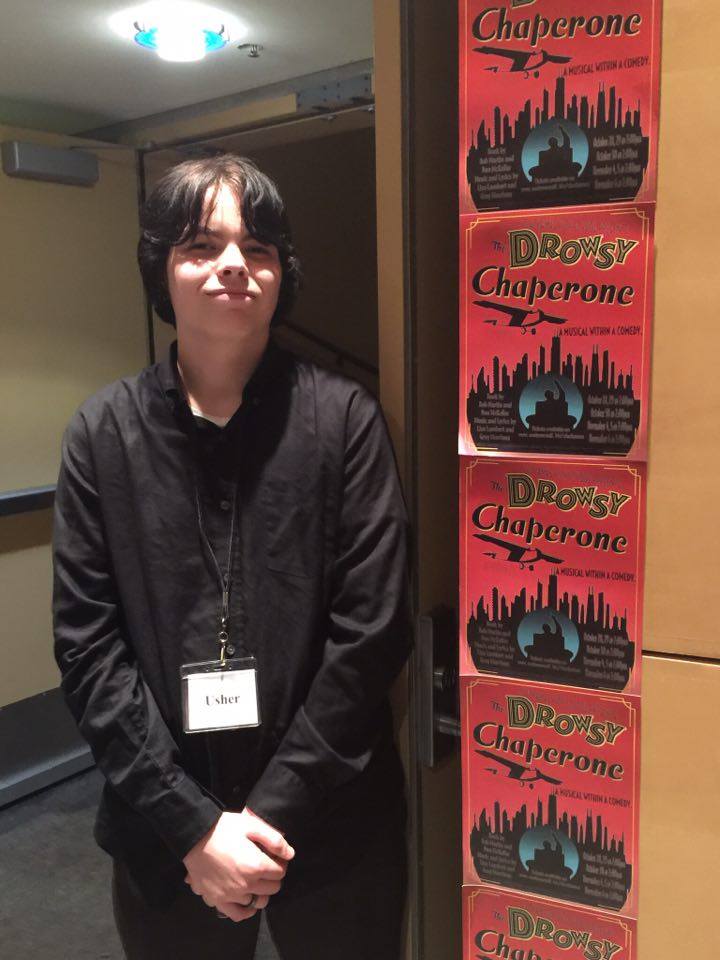
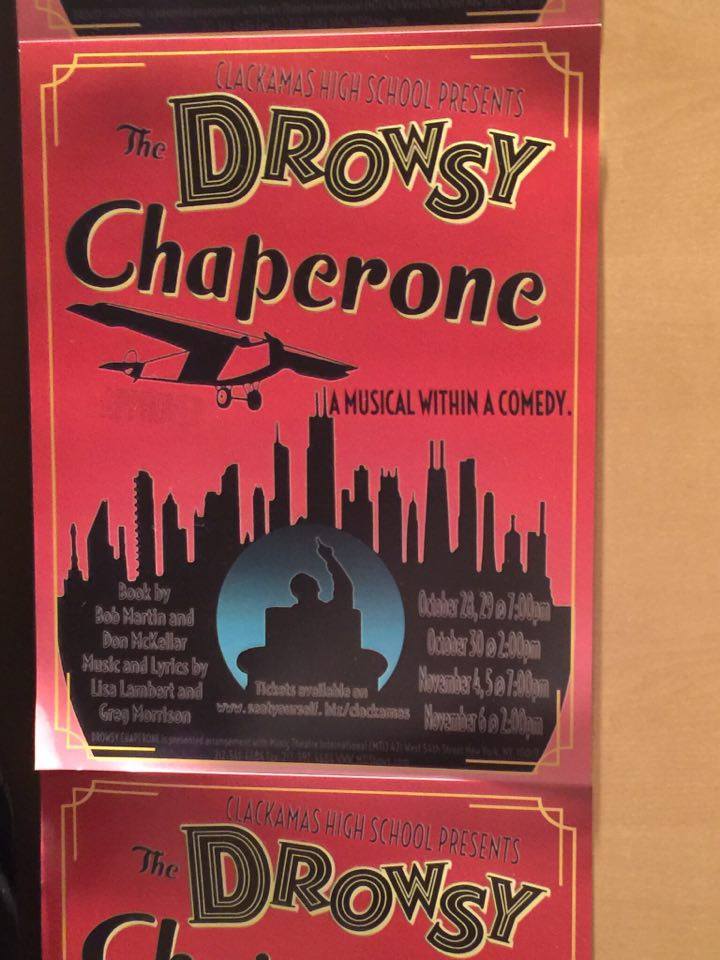
That evening my family took in The Drowsy Chaperone, a musical put on by my grandson Dante’s high school class. The students were top notch, high energy, and amazing. The day ended with dinner at The Ram and a glass of wine. Perfect.
Many people told me I was crazy to move to Oregon. Several said I’d get depressed and miss the sun. And even though I miss my friends in Idaho, and sometimes I do miss the sun, mostly I love it here. Even when it’s raining.
Back Roading Beaver Creek to Toledo
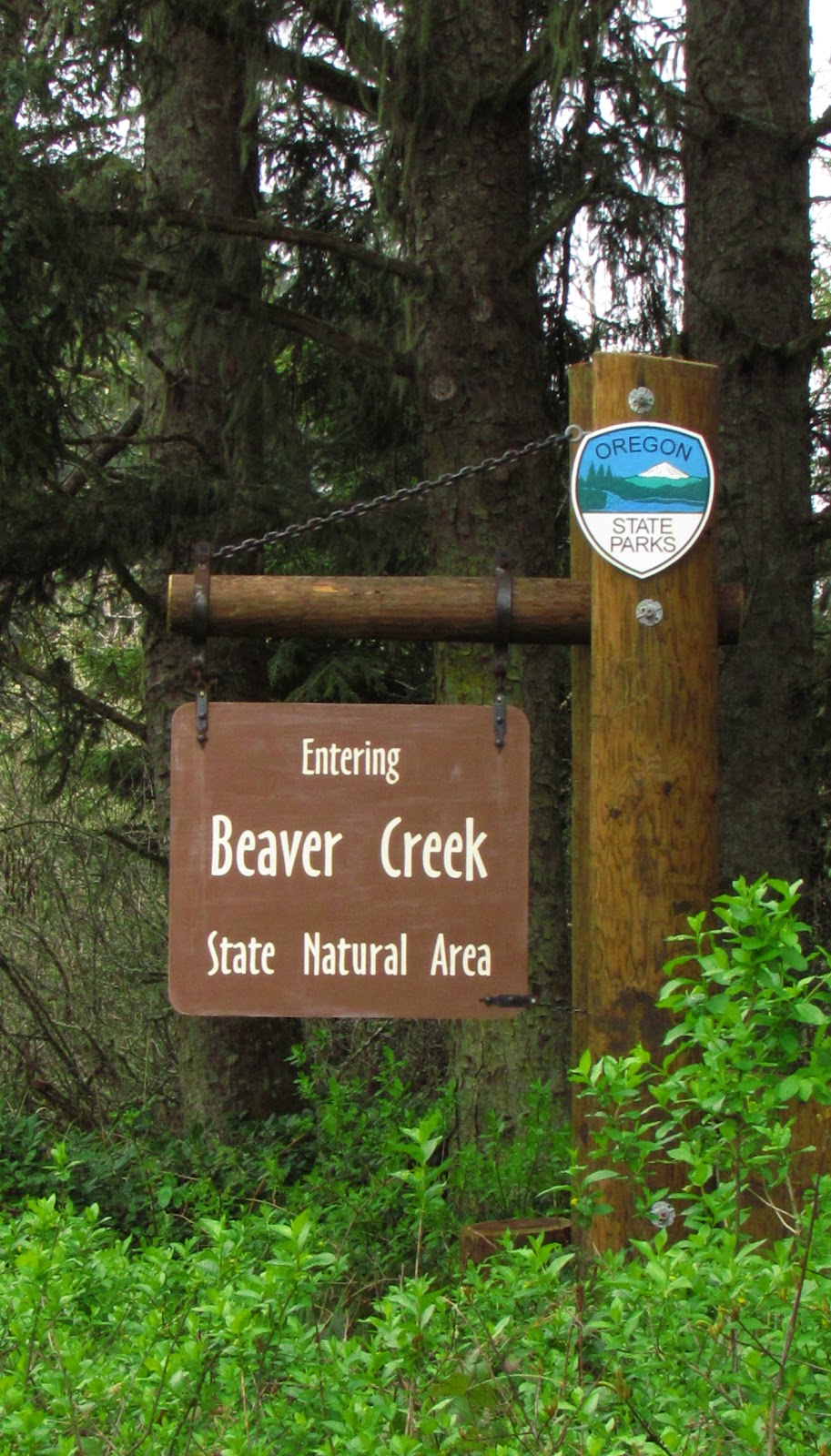
We’ve always been explorers, enjoying the back roads of Idaho and now Oregon. We’re not cityites who like to stare at window displays or order lattes. We like to travel back roads, sip home-brewed coffee, and enjoy the scenery.
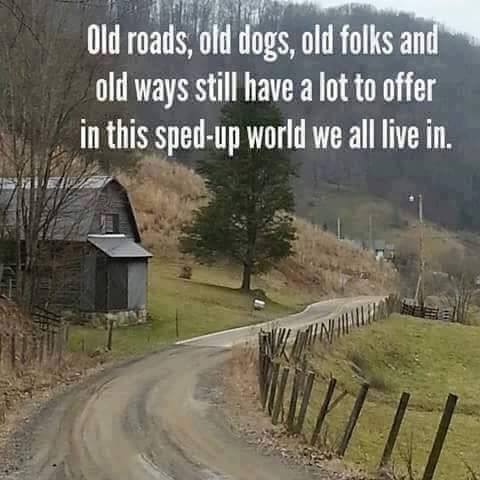
Knowing we liked quiet places for our dogs to run, a neighbor told us to check out the road from Beaver Creek to Toledo. “It’s mostly gravel,” he said, “and it’s easy to get lost. There isn’t much traffic. Nice drive, though.”
Enjoying a challenge, we filled our coffee mugs, gathered our dogs, headed south on 101, and turned east toward Beaver Creek. We turned left where the road teed and stopped at the Beaver Creek Welcome Center, hoping they’d have a map of the area.
No maps, just a volunteer. “Follow that road,” he said. “Stay left.” He pondered a moment. “Turns to gravel. Think it’s twenty or thirty miles. Been a while since I drove it. If you get lost, you can always turn around and come back.”
We looked at each other. Turning back was rarely an option. Not when we wanted to see something new.
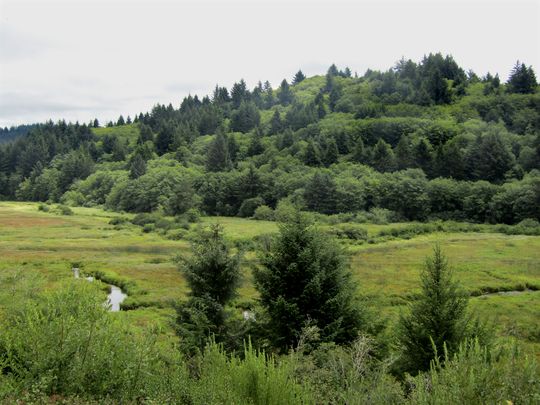
After considerable conversation, we waved a cheerful goodbye and followed the road. Within minutes we stopped at a small park with a picnic table and a large area for the dogs to run. While the dogs sniffed bushes, we picked blackberries and chomped on half-ripe apples from a nearby tree.
“Yuk.” I spit out the bitter fruit.
“Just right,” my husband said happily.
We rounded up the dogs, got back in the truck, and continued on.
No cars tried to pass us. No trucks met us head-on. The only vehicle on the road, we traveled slowly enjoying the drive, heavy with vegetation on both sides of the road.
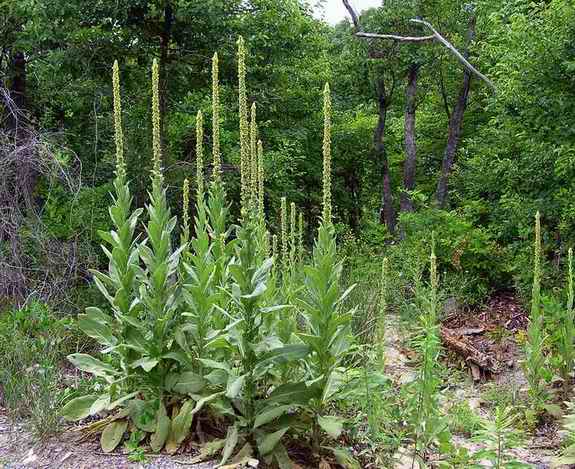
“Reminds me of the road to Fall Creek,” I said, commenting on the dense undergrowth. But instead of seeing obelisks of mullein and ponderosa pine, the shoulders of these roads were thick with evening primrose, foxglove, and purple loosestrife. I gawked out the window trying to identify the plants: Queen Anne’s Lace, mountain ash, ocean spray, and wild rose. Many more varieties than I would see traveling the gravel road from Fall Creek to Featherville, which held mostly fern and pine.

“Look,” my husband said as two velveted buck dashed in front of us. He hit the brakes and we watched them dart into the trees. We knew they were watching us, waiting for us to leave. But try as we might, we couldn’t spy an eye or an antler.
Moving on, it wasn’t long before we hit gravel. The vegetation grew thicker, canopying the narrow road. Blackberry vines reached toward the truck, each branch heavy with green berries. We were driving into a jungle, secluded and uninhabited, with no signs to guide us.
“Wonder if we should turn around?” my husband said, recalling the words of the Beaver Creek volunteer. Unwilling to give up, we moved forward, deeper into the forest.
“Must be on the right road,” my husband said when we finally spotted a mile marker that looked lost on the gravel road.
“How many miles did he say?” I asked.
“Twenty or thirty.”
We’d been driving almost an hour, but I couldn’t judge mileage. We were moving slow, sometimes five miles an hour, up, then down, wind around a corner. Wind around another corner so dark with shade we couldn’t see the sun.
Climbing again, we broke out onto a sunny hilltop. The panorama of the valley was jaw-dropping, worth the worry of getting lost.
“I know where we are now,” my husband said. “Toledo is right over there.”
Leaving the forest behind, we headed down. Minutes later we were on familiar asphalt again.
“Not even twenty miles,” my husband said.
“Not bad at all,” I said. “Perfect way to spend an afternoon.”
And the very best part of the drive was that we didn’t once have to turn around.
Getting to Know You
Plants have always been my passion. You’re more likely to find me outside playing in the dirt instead of indoors sitting in front of the TV or holding a book. For as long as I can remember I’ve been interested in plants. What is it? Does it have medicinal purposes? Can you eat it? Moving to the Oregon Coast, then, has been this gardener’s dream. Here, if you want something to grow, just toss it on the ground, forget about it and a week later it will be an established plant. In southern Idaho if you tossed a plant on the ground, it was destined to die.
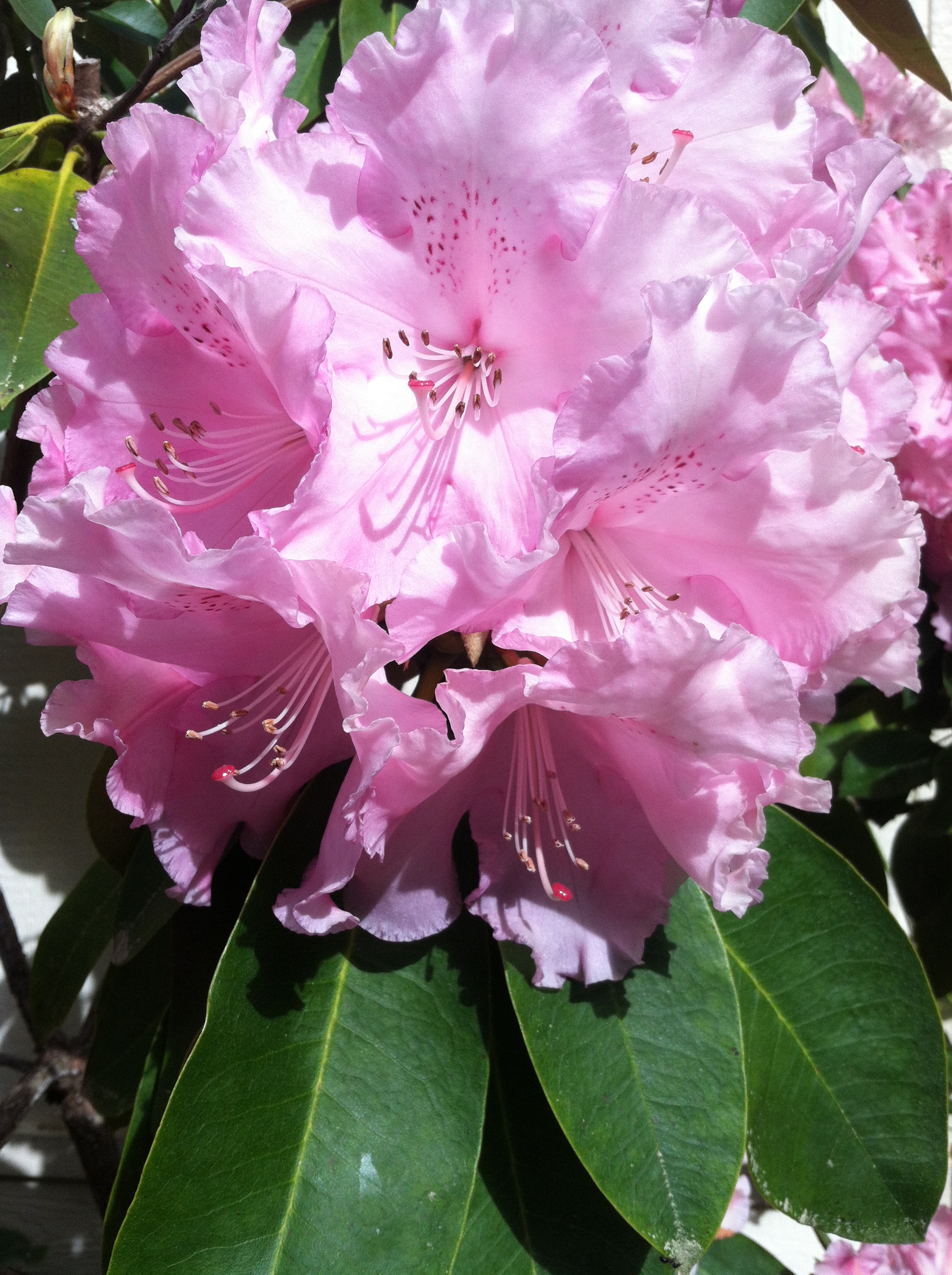
As an Idaho Master Gardener I know a lot about plants. But here in Oregon I feel like I’ve dropped down the rabbit hole. My head bobs at every step as I try to identify plants I’ve never seen before. Like the large bush that attracts birds and borders my yard on the north. The plant is prolific; I see it everywhere. But it took a trip to the county extension office to learn that the plant is a wax myrtle. I didn’t know that the pretty yellow plant along the side of the road is scotch broom and that it’s invasive. I was familiar with perennial geraniums but didn’t know that Herb Robert was not the same as cranesbill geranium even though they look alike. Is it an azalea or a rhododendron? What makes them different?
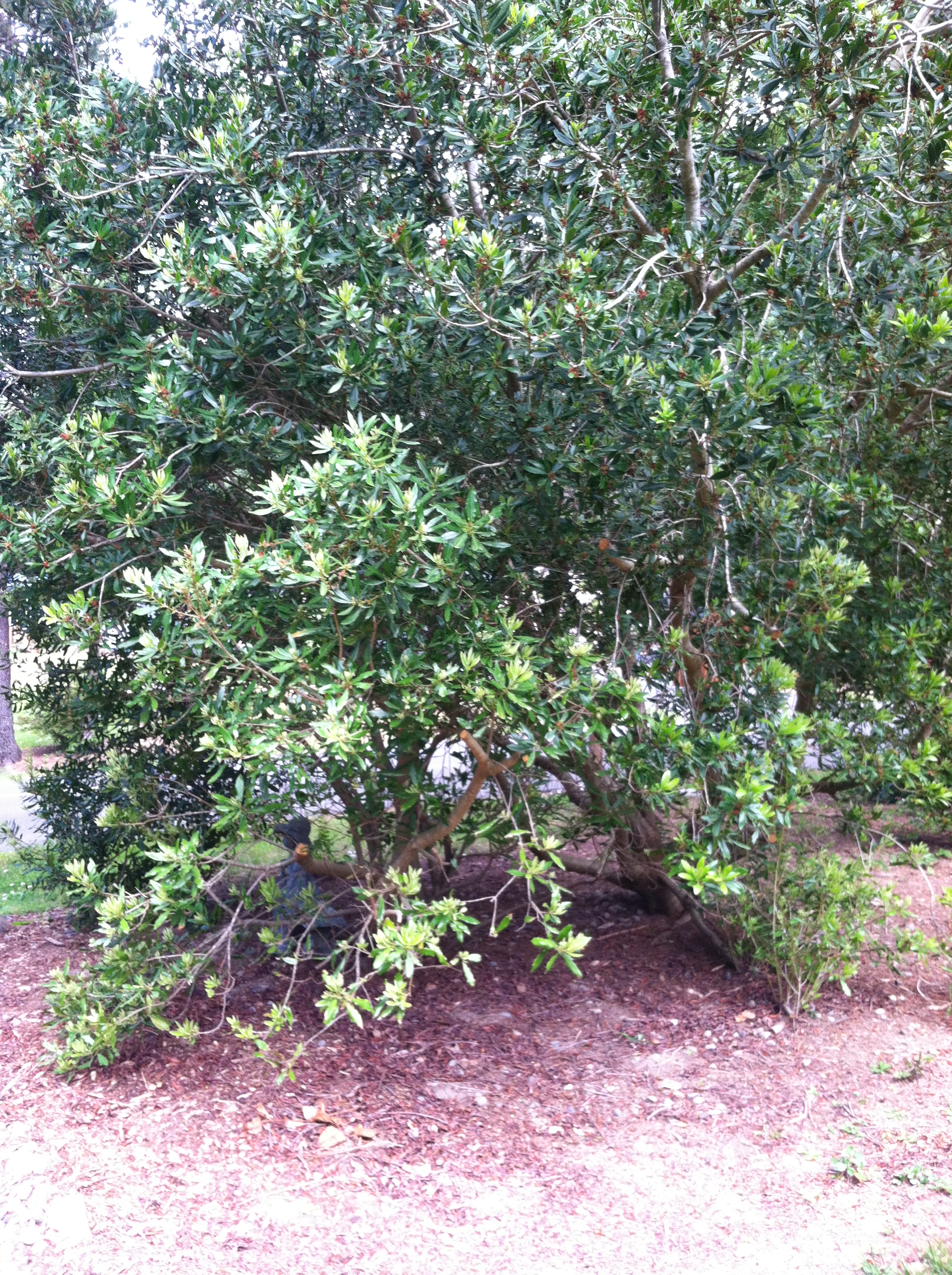
My yard is a wonderland of new discoveries. I knew I had a lot of blackberries bordering my lawn, but I didn’t know that I also had salmonberry, thimbleberry and evergreen huckleberries, not to mention the salal that grows like trees.
A walk through my neighborhood is truly a walk in the forest. Trilliums. Yellow skunk cabbage. English daisies and woodland strawberries that cover the ground instead of grass. Western buttercups and lewisia. Each forward step offers a mystery to be solved.
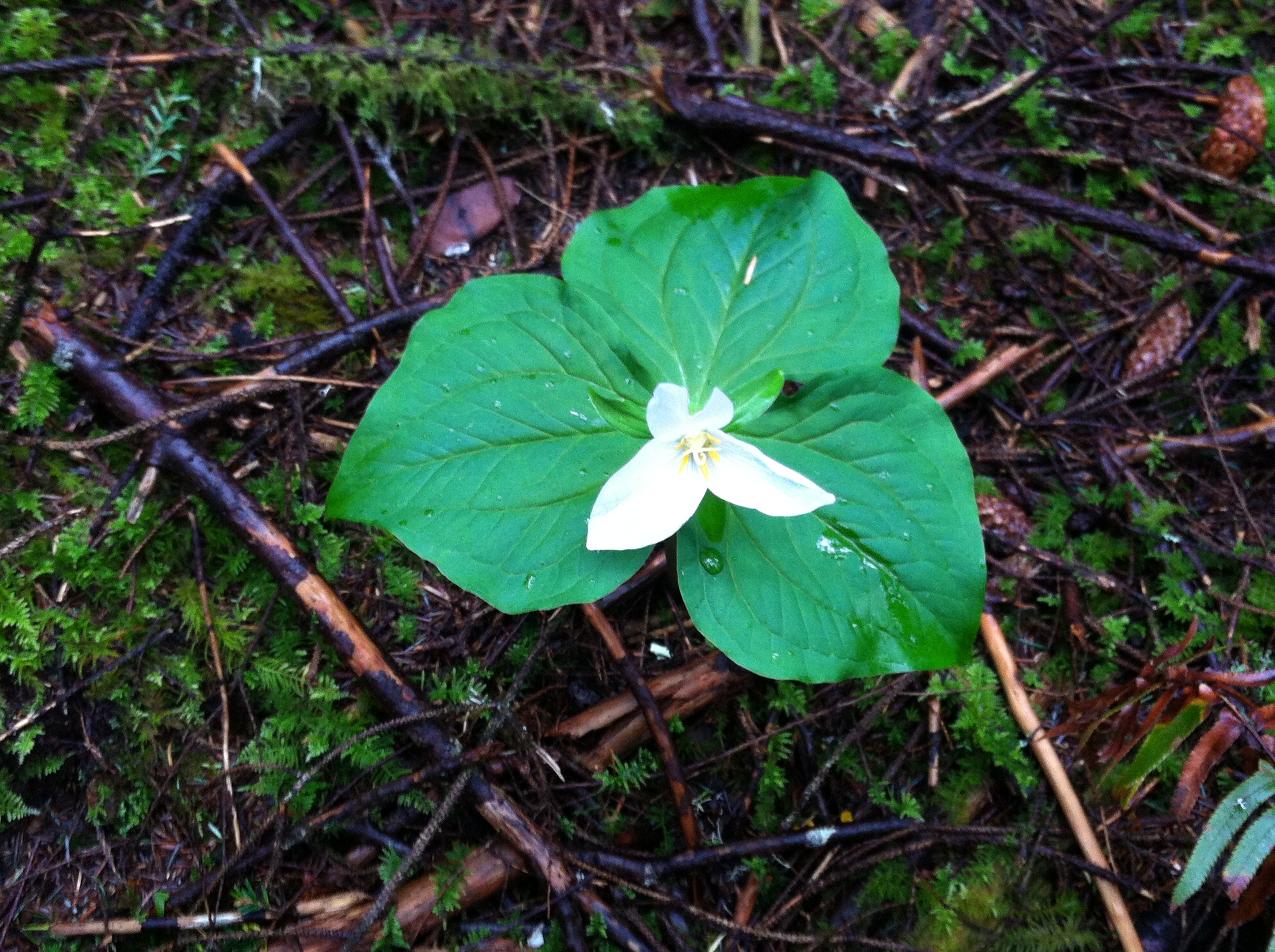
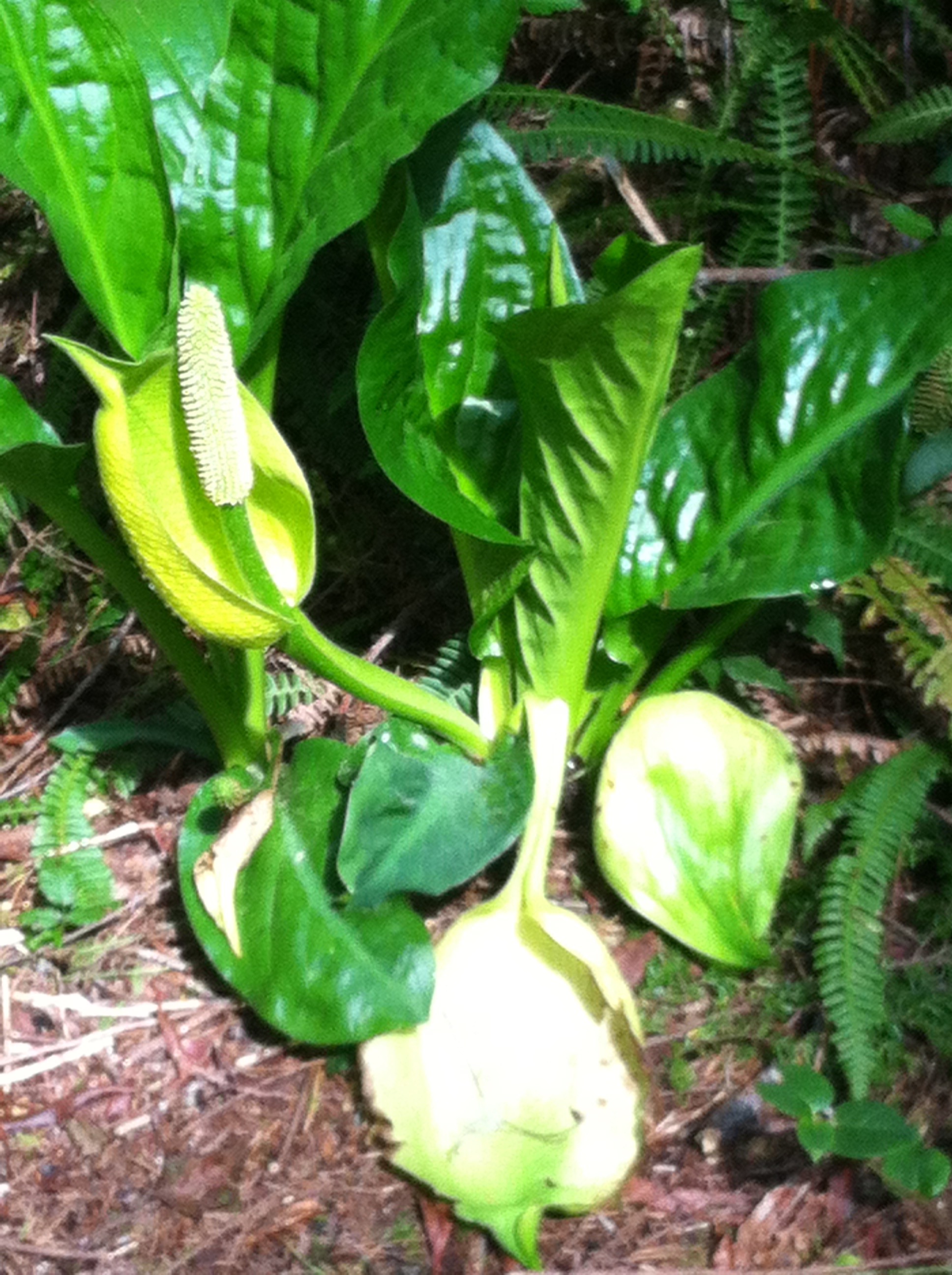
Moving to Oregon has been a grand adventure and I’ve enjoyed getting to know all about the plants that grow in my yard and neighborhood. With the ocean just down the road, I’m eager to start learning the names of the interesting treasures I find on the beach.
15 Things You May Not Know About Paula Marie Coomer
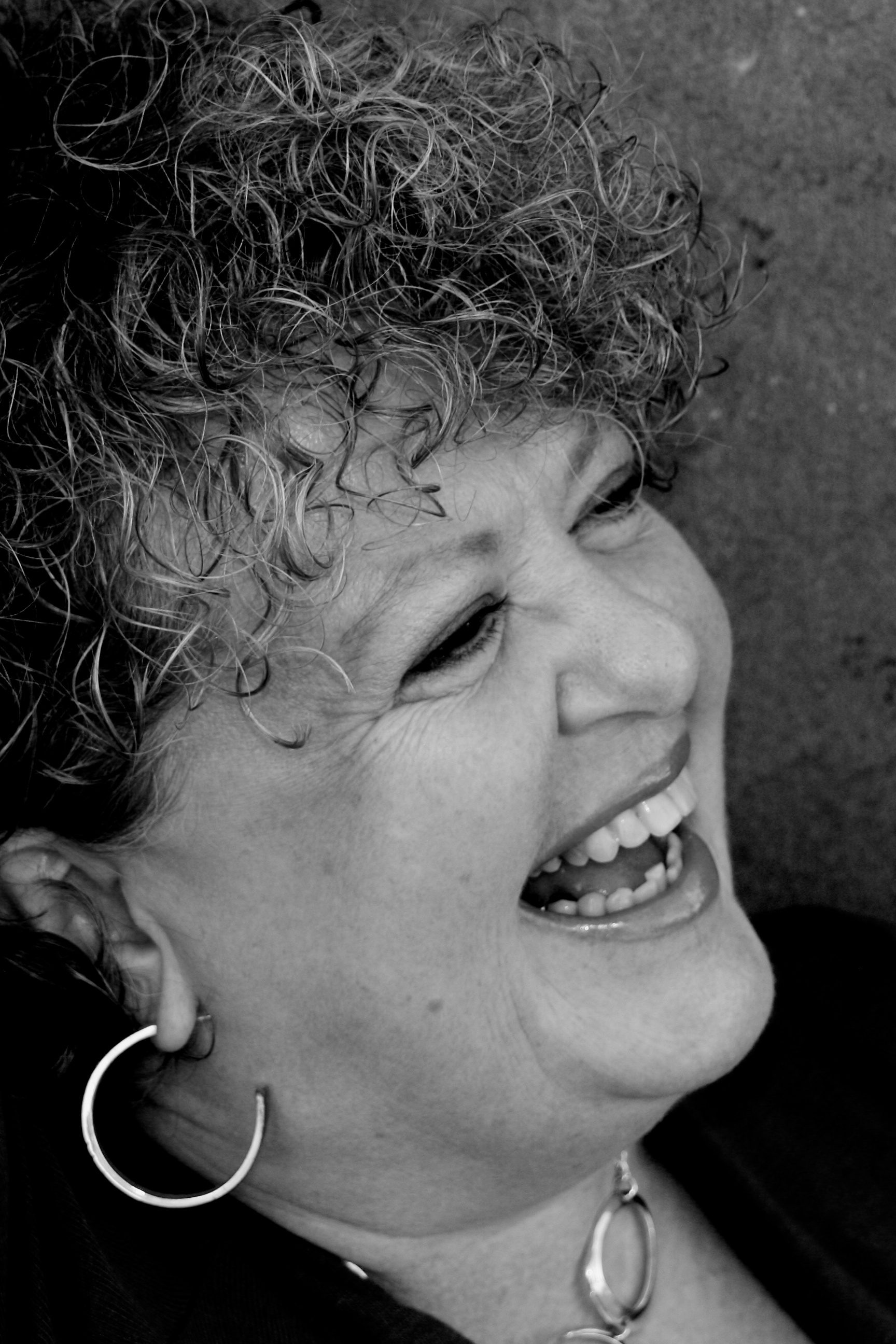
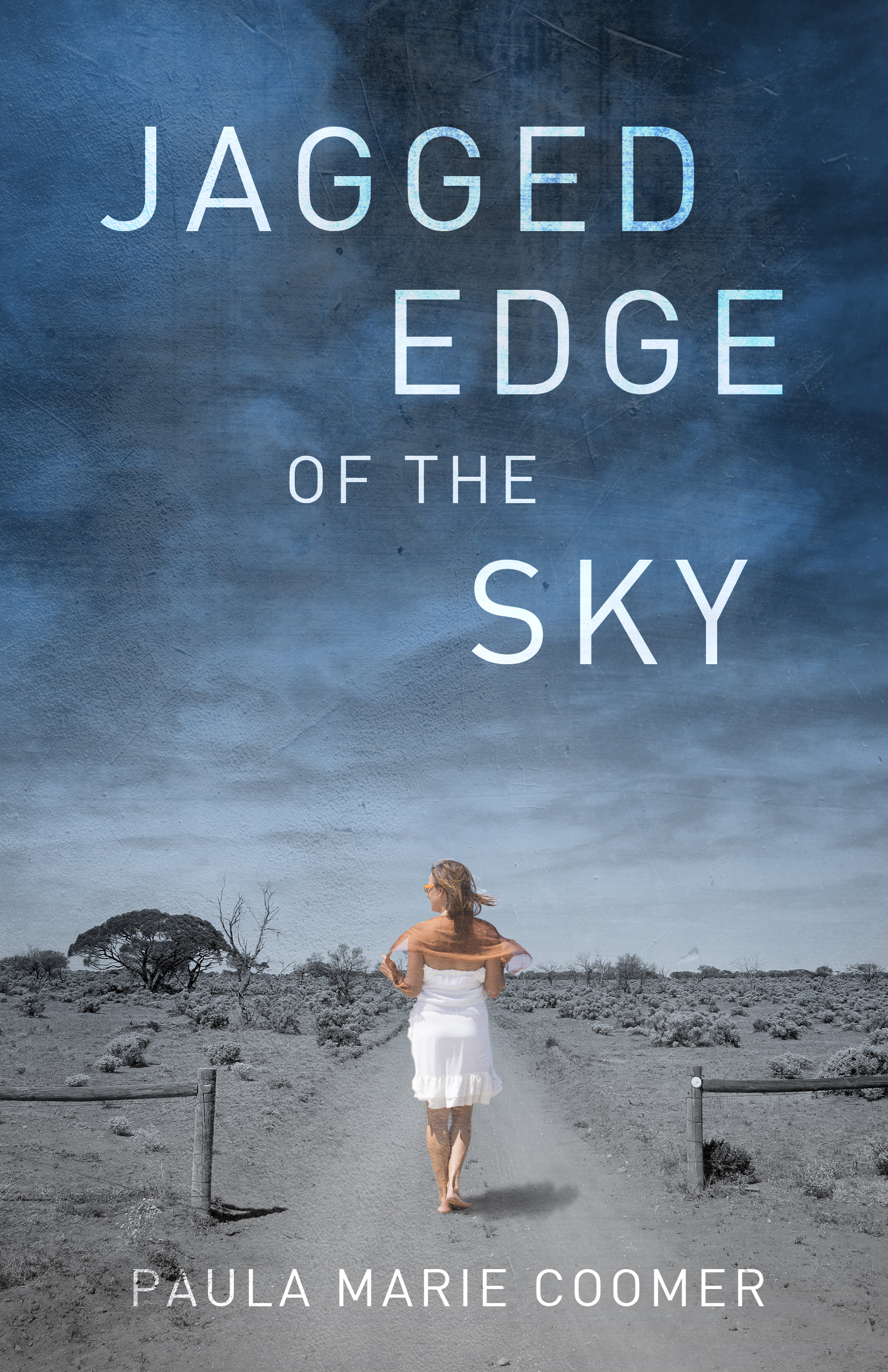
Paula Marie Coomer began life in Louisville, Kentucky, and lived most of her childhood in the industrial Ohio River town of New Albany, Indiana. The daughter of over 200 years of south-central Kentuckians, she is a predictable mix of Cherokee, African, Scot, and a dash of English Puritan. Her fiction, poetry, and non-fiction have appeared in many journals, anthologies, and publications, including Spilt Infinitive, Perceptions, Gargoyle, and Knock, to name only a few.
Coomer has been nominated twice for the Pushcart Prize, was writer-in-residence for Fishtrap, Oregon’s much-loved advocacy program for literature in the West, and has been a visiting scholar for the Idaho Commission for Libraries since 2002. She is a former long-time instructor of English for Washington State University, and was commissioned as an officer of the U.S Public Health Service, achieving the rank of lieutenant commander before she resigned her commission in 1995, ostensibly to be a writer.
I’ve known Paula for several years and am excited to host her here today. She’s a great friend, an awesome teacher, and is always eager to talk about writing. Here are fifteen things you may not know about Paula Marie Coomer.
1) Why did you become a Writer? How did you get started?
My first memories have to do with my awareness of myself as an observer. I wrote my first book at the age of four. No one else could understand what I had written, but I could. I even sewed a sort of binding with needle and thread—which I got in trouble for.
2) What is your writing routine? How do you discipline yourself to keep at it?
- If I’m doing research or composing a new draft, I’m usually in an isolated situation. Usually I go to the Inn in the Idaho mountains where I am in writer-in-residence (which is how I got to BE writer-in-residence). I hole myself up for as long as I can—usually at least 4 days. I’m fully focused. I do nothing besides eating (and very sparsely, at that) or getting up and moving occasionally.
- If I’m revising, I usually work in my studio at home half a day, beginning almost as soon as I get up. Then half a day on the other things I have to do—the paying job, author gigs, etc. At times during this phase I hire a housekeeper and an assistant to free up my time for the writing hours.
- If I’m doing edits, I spend mornings at a local coffee shop working. For some reason at the level of line edits, it helps to have background noise.
3) How many drafts before you feel the book is finished?
That varies completely. My novel Dove Creek took 15 drafts. The 16th draft sold. Blue Moon Vegetarian took 3 drafts. Jagged Edge of the Sky took four. Single poems can take 10-20 drafts. Short stories can take a dozen drafts. I tend to write in layers, rather obviously.
4) What was the best thing that happened with regard to your writing career? The worst?
It broke my heart a little bit when I realized I was never going to be a New York writer, living in Greenwich Village, part of the U.S. “g-literati.” But that turned out to be the best possible thing, because I have a great independent publishing house at my back. They give me infinite freedom as an artist, and they like me enough to give me a job that allows me the time I need to keep writing. I have a decent following, and people love what I write. I’m so busy I can’t even imagine being any busier in my writing career. I really couldn’t ask for anything better.
5) What part of your job do you love the most? Hate or dislike the most?
I love the serendipity. The way, when I’m working on a story or a book, the pieces just come to me, show up in my life in the most random of ways. What I dislike the most is the effect it’s had on my body. Luckily now I have a standing desk, so I rotate between sitting and standing, but writing is really, really hard on the body. We were not designed to sit for long periods of time.
6) What do you like to read? Do you read while working on a novel? Favorite authors?
I mostly read according to whatever I’m researching for the next book. Right now my stack of reading material looks like the course requirements for an herbalism class or a course on mountaineering. I’m preparing to write a follow-up for the Blue Moon food book series focused on the healing nature of plants. This is also research for my next novel, which features a mountain woman who is a healer. Otherwise, I have a few living favorites—Lidia Yuknavitch and Lance Olsen are my literary heroes. I also do presentations at regional libraries so often I have a novel I’m reading for that. Otherwise, I try to read a few poetry books now and again. I don’t read any mainstream books or authors. Most of the books I read are written by women. I prefer the voices of women writers.
7) What was the best advice you received as a writer? The worst?
- Best: Don’t give up. If you keep writing, someone will publish you.
- Worst: Teaching gives you control of your time. It will give you time to write. The truth is that teaching sucks your life force and your creativity and gives you very little in return; however, to donate yourself to the world in this way is very noble and to some extent a necessary part of mastering your craft.
8) Who has influenced you the most in terms of developing your personal writing style?
Lance Olsen, Ray Federmann, Lidia Yuknavitch.
9) Do you have a good luck charm or superstition?
I have lots. First, I have feathers and rocks everywhere. A feather in your path is a blessing. The always present themselves to me at difficult times. Rocks possess certain energies. If I’m drawn to the energy of a certain rock, I always pick it up. I have certain types of gems and semi-precious stones that are meant to absorb bad energy. Occasionally I soak them in water and sea salt to cleanse them. I regularly smudge the house with sweetgrass, sage, or cedar.
10) If you weren’t a writer, what would you be?
A visual artist.
11) What quote or personal saying do you live by?
From the I-Ching: Perseverance furthers.
12) What’s next up for you, writing-wise?
I have a new novel finished. It’s very, very experimental, and I have no idea if anyone will want to publish it. I have a collection of essays and one of short stories that both need final revision. Then I have the 2 final books in the Blue Moon series, Blue Moon Medicine Woman and Blue Moon Folkways in the Kitchen. What is that 5? Five books in process, a book of poems I’m slowly working on, and research for the next novel.
13) If you could do anything over again, would you and what would it be?
I don’t really know. I don’t have much in the way of regrets.
14) What advice would you give beginning writers?
Let writing change your life.
15) Something we don’t know about you?
I spent two summers of my life picking fruit in California and Oregon, living out of the back of a pickup. It was the most horrible work but the people I worked with made it worthwhile. Stories I still haven’t told.
And: What would you like us to know about your latest release?
Jagged Edge of the Sky is the story of two women, one Australian and one American, who both go outside their marriages almost on the same day and with the same handsome, mixed-blood aboriginal man. The situation tears the Australian family apart; the American family keeps it secret. At once a women’s story, an immigrant story, and a family saga, the most important message the book delivers is about the despicable state of mental health services in our country.
Emily McIntyre writes about her dreams . . .
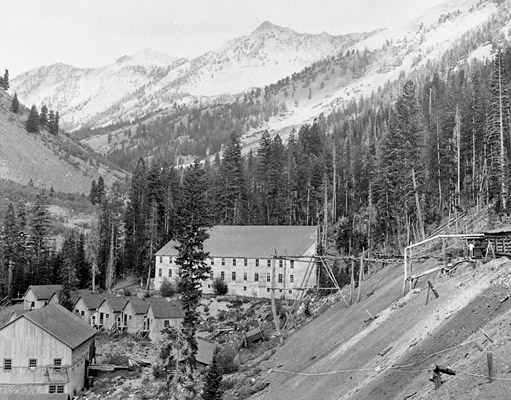
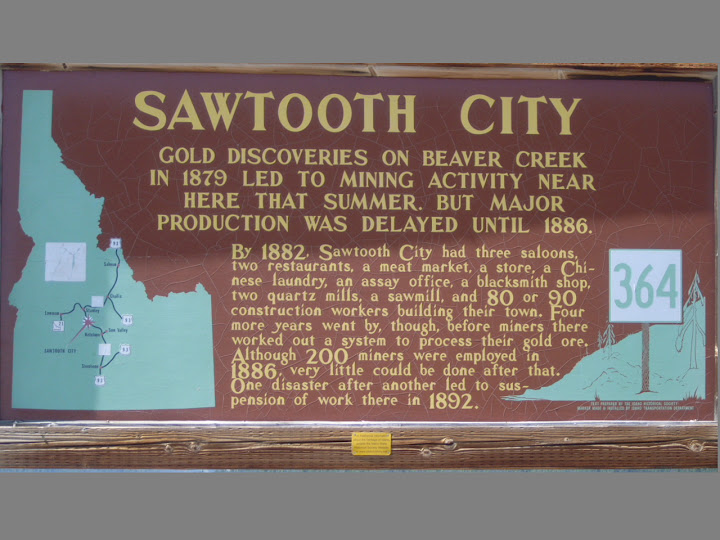
Sawtooth City in the late 1800s. Photo courtesy Community Library Regional History Department
Since April is national poetry month, Emily McIntyre wants to share a poem with you. Emily grew up in the gritty mining camps of Saw Tooth City and Rocky Bar, Idaho Territory, in the 1870s. She lived in a log cabin and carried water from nearby Beaver Creek. She was a great companion to Lizzie and George Harmon until the nefarious Kerry Chapman Troupe came to entertain the miners in the spring of 1882.
Back East there is a better life,
No digging in the dirt,
Or staring in a miner’s pan
Until your eyelids hurt.
A place where parasols are made
Of Paris silk so fine,
A place where steamboats paddle by,
A place that I’d call mine.
Back East is where I wish to go—
I’d like to run away
From all these mountains, trees, and chores.
Back East is where I’d stay.
Somewhere there is another sky
That’s just this shade of blue,
Somewhere back East, away from here,
Where all your dreams come true.
Emily Ann McIntyre
Saw Tooth City
April 29, 1882
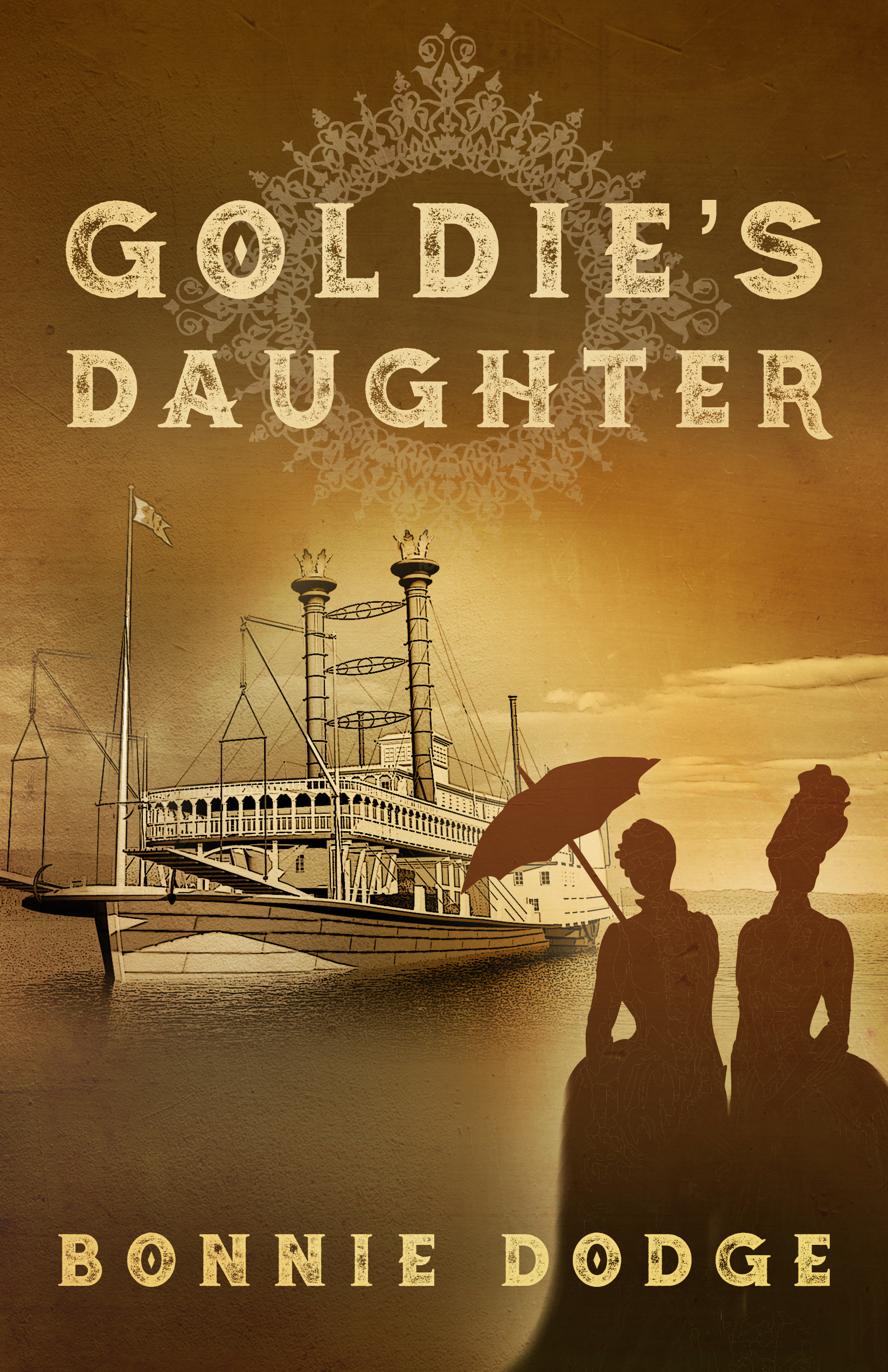
You can read all about Emily’s journey in Goldie’s Daughter.
Lost in Atlanta Places 3rd in Contest
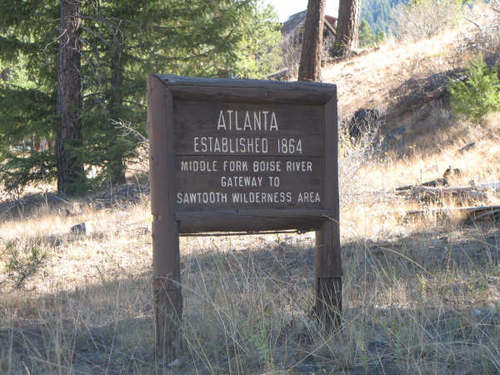
My short story, Lost in Atlanta, placed third in the 2016 Idaho Magazine Adult Fiction contest. The story is about two women who get lost looking for information about Peg-Leg Annie.
FEISTY AFTER 45 The Best Blogs From Midlife Women
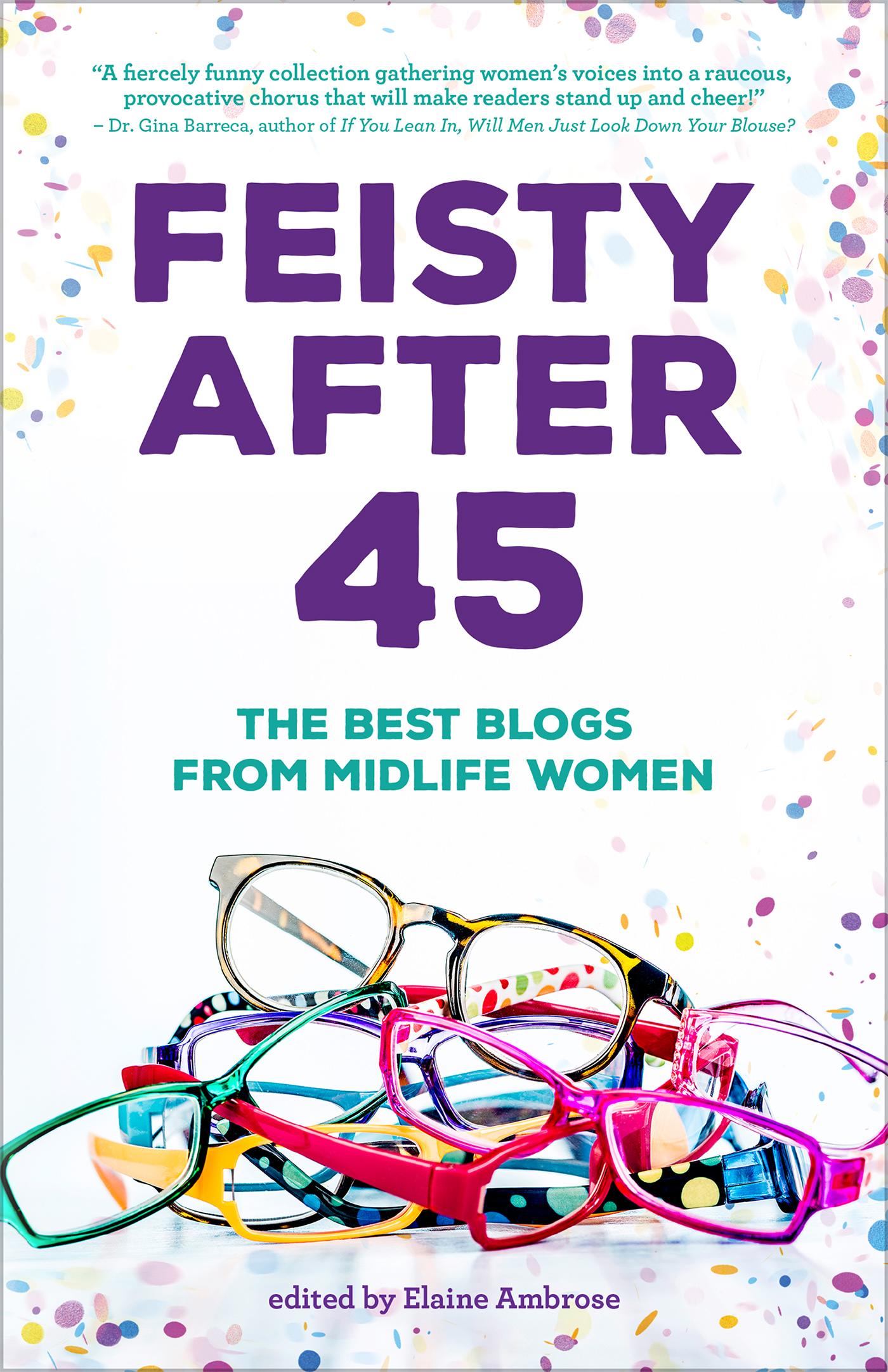
My blog, Facing Another Birthday with Humor, is in this best-selling anthology just released from Mill Park Publishing. You can get your copy here.
Diabetes and Me

I just returned from the doctor. There is good news and there is bad. The good news is that the new doctor was personable, asked lots of questions, talked to me instead of a computer, and gave me a good sense of well being. The bad news is that my A1C reading was 9.1.
I have an autoimmune disorder that acts like Lupus without the rash. Most days I feel like crap. On the outside I look great and full on energy, but on the inside I fight to function. I’ve had this disease for many years and I don’t run to the doctor every time I feel sick. But a few years ago I was scheduled to fly to Portland to see my grandchildren and I felt awful. Too sick to get on a plane. So I called my doctor and made an appointment. Eight hours later I had a diagnosis. Diabetes Type II. Yeah, happy birthday to me.
That was four years ago and it’s been a daily battle. The first two years I was able to keep my A1C numbers in the 6.1 range with diet, exercise, and oral medications. Then the numbers started climbing and no matter what I did I couldn’t bring them down to a healthy level. So I wasn’t surprised when my new doctor told me my A1C was high. What surprised me was that it had jumped two whole points in six months in spite of a low carb diet and exercise.
People with diabetes have bodies that don’t use insulin properly. Over time their pancreases can’t make enough insulin to keep their blood glucose at normal levels. Their pancreases may even stop working.
According to a recent report, there are about 27 million people in the U.S. with Type II diabetes. Another 86 million have prediabetes, which means their blood glucose is not normal, but not high enough to be diabetes yet.
So why am I telling you this? To bore you? To make you sad? To scare you?
To warn you. To encourage you to pay more attention to your health so you won’t end up like me, pricking your finger twice a day, counting carbs, and wishing you didn’t have to watch every thing you put in your mouth.
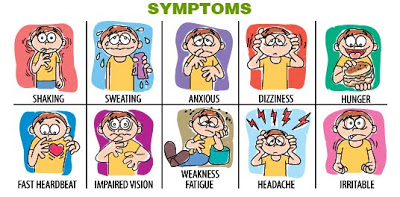
I was naïve. I knew lots of people with diabetes. I knew so many I began to believe diabetes was innocuous. People didn’t die from diabetes. Well, yes, they DO die from organ failure and heart disease, all a result of diabetes. Television commercials lead you to believe living with diabetes is no big deal. You can go to picnics. You can eat hot dogs and corn on the cob. You can smile and dance and have fun.
The reality is living with diabetes is HUGE. It’s hard work. Even with diet and exercise most days it feels like I’m are playing Russian roulette. I’m afraid to test my blood sugar because I don’t want to see the high numbers. It scares me and makes me depressed.
Be smarter than me. Any type of diabetes is a big thing. If your doctor says you are prediabetic, pay attention. Stop eating flour, sugar, and high carb foods immediately. Begin an exercise program and stick to it. Keep your blood glucose numbers between 80 and 100. That way you can truly be happy and healthy and smile and dance and have fun.

15 THINGS YOU MAY NOT KNOW ABOUT BRITTNEY CORRIGAN
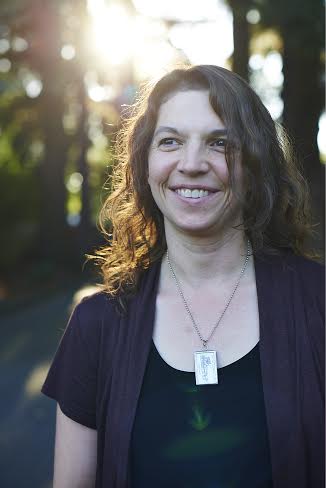
There is always something artsy or literary happening on the Oregon Coast. That’s one of the reasons I picked Newport, Oregon, to retire. This weekend the Nye Beach Writers is hosting Brittney Corrigan, poet and writer from Portland, Oregon. (Jan. 16, 2016 at 2.p.m. at the Nye Beach Visual Arts Center. General admission is $8; students are admitted free. Open mic to follow).
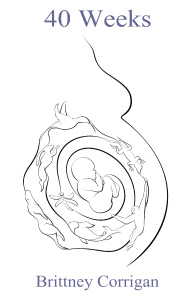
Brittney is the author of the poetry collection Navigation (The Habit of Rainy Nights Press, 2012) and the chapbook 40 Weeks (Finishing Line Press, 2012). Her poems have appeared widely in journals and anthologies, and she is the poetry editor for the online journal Hyperlexia: poetry and prose about the autism spectrum (http://hyperlexiajournal.com/). Brittney lives in Portland, Oregon, where she is both an alumna and employee of Reed College. You can find all this information in her bio, but here is something you may not know.
1) Why did you become a writer? How did you get started?
A writer was not something I became – it’s something I always was. I’ve been writing since I was a kid. I started with short stories and poetry, and over the years my focus turned to poetry almost entirely. But it was my high school English teacher who most encouraged me and made me believe that it was who I really was at my core.
2) What is your writing routine? How do you discipline yourself to keep at it?
I don’t have a specific routine. I have two children and a full time job, so I write in bits and pieces whenever I can make the time. I carry poems around in my head for a long time before they make it to the page. Being part of a writing group that meets regularly also helps to keep me motivated and generating new work.
3) How many drafts before you feel a poem is finished?
Since my poems gestate in my head for quite some time, they usually only go through 1-2 drafts.
4) What was the best thing that happened with regard to your writing career? The worst?
The best thing was seeing the publication of my first book and first chapbook both in the same year. I wouldn’t say that I have a worst thing, but the most challenging part is finding large stretches of time to focus on writing, especially now that I’m working on a new manuscript.
5) What part of writing do you love the most? Hate or dislike the most?
I love the excitement that comes when a new poem is pouring out of me onto the page after turning it over and over in my mind for so long. If I have to pick a dislike, it would be how difficult it is for new poets to get books published and find an audience.
6) What do you like to read? Do you read while working on poetry? Favorite authors?
I read plenty of poetry (which is very inspirational for my own work), but I also love fiction, particularly novels written in the magical realism style. My favorite poets are Sharon Olds, Joy Harjo, Naomi Shihab Nye, Natalie Diaz, and Deborah Digges. My favorite novelists are Tom Spanbauer, Barbara Kingsolver, Erin Morgenstern, and Ann Patchett.
7) What was the best advice you received as a writer? The worst?
The best advice I’ve had over the years is to just keep at it when it comes to both writing and publishing. The world of a poet is stacked high with rejection letters, but it’s important to keep sending the work out there into the world. I don’t have any specific memories of bad advice.
8) Who has influenced you the most in terms of developing your personal writing style?
I would say the poet Maxine Scates, who I have worked with off and on since college in classes, workshops, and on my senior thesis at Reed College. She is a gifted poet and teacher, and her guidance has been invaluable to my own writing process.
9) Do you have a good luck charm or superstition?
Not specifically, but I’m riddled with OCD tendencies, so superstition runs strong in my veins!
10) If you weren’t a writer, what would you be?
Well, my day job is an event planner at Reed College, where I work with faculty members on the public lecture series on campus. And I absolutely love it.
11) What quote or personal saying do you live by?
From Henry James, “Try to be one of the people on whom nothing is lost!”
12) What’s next up for you, writing-wise?
I’m working on a new manuscript titled Daughters, a series of persona poems that reimagine characters from mythology, folklore, fairy tales, and pop culture from the perspective of their daughters—characters such as Bigfoot, the Mad Hatter, Medusa, and Dorothy from the Wizard of Oz. Taking on such topics as aging, rebellion, loss, abuse, and judgment, the voices of Daughters aim to turn the reader’s conceptions of the characters on their ends and throw light upon what it means for a girl to come out from under her parents as a woman of her own making.
13) If you could do anything over again, would you and what would it be?
I would travel before having children. I would love to see Ireland in particular.
14) What advice would you give beginning writers?
Find a writing group or partner, develop your writing discipline, and read, read, read!
15) Something we don’t know about you?
I have a soft spot for rescuing feral cats.
And, what would you like us to know about your latest release?
Both of my books were released in 2012. Info on those is at http://brittneycorrigan.com/. A sample poem from Daughters can be found at http://brittneycorrigan.com/poetry/daughter-poems/. Published poems available online and forthcoming can be found at http://brittneycorrigan.com/about/publications/.
For more information about Brittney visit http://brittneycorrigan.com/ or https://www.facebook.com/Brittney-Corrigan-Writer-293186861938/?fref=ts
Transitioning – Hello 2016
December 31, 2015
While everyone is celebrating New Year’s Eve I’m taking a moment to reflect on the last twelve months. In one short year so much has happened. Weddings. Graduations. Illnesses. Deaths. Loss. Relocation. I might be tempted to write a sappy blog about the highs and lows of a hellish year, but all I feel is gratitude.
Tonight as I tip my champagne glass at the television, I say to my husband, “Just once I’d like to do that.”
He stares blankly at the TV. “What?”
“Watch the ball drop at Times Square.”
He turns toward me. “Really.”
No, I guess not. That’s a lot of people. Over a million, the commentator claims. People yelling and pushing and probably exhausted from standing in line for thirteen hours to save a spot. But there really was a time when I would have stayed up all night to join that crowd and welcome in the New Year, to dance and sing with Frank Sinatra, “New York, New York.”
But not anymore. If I were to make that trip today I would be jet-lagged and ill. The change in altitude would rev up my Meniere’s disease sending my head spinning. Nonetheless, it would have been an exciting way to welcome in 2016.
This time last year I was sitting with family in a vacation rental near Moolack Beach. We call it our Griswold Family Christmas. Most of us were sick. To make matters worse a valve in the holding tank was broken. Baby Ellie was sick. So were her parents. There was an ocean full of water outside but inside there was not a drop to drink. Twice we drove into Newport for water. We bought all the bottled water Thriftway carried, then hit up Safeway and Fred Meyer’s. In more ways than one it was the Christmas from hell. We tried to laugh, but we were miserable and ready to go home. By 10 p.m. we were all in bed, our plans to celebrate the New Year abandoned.
Fast forward a year and once again I have an opportunity to welcome in the New Year on the Oregon Coast. But this time I’m eating fresh crab and sipping champagne. There is no vacation rental; there is no broken valve. There is plenty of fresh water. This year our family Christmas was awesome instead of a disaster. Celebrating with our son and family in Happy Valley we baked cookies, beaded snowflakes, and drove into Portland to see the lights at Peacock Lane as well as the red and green lights on the bridge. We celebrated the Winter Solstice at Milwaukie’s Riverfront Park, sang carols, drank hot chocolate around a huge bonfire, and watched the fire reflect in the water. Everything was magical; it truly felt like Christmas.
That Griswold Christmas seems a long time ago. So much has changed. Now when I open my front door I hear the ocean instead of traffic. While friends in Idaho bundle up against single digit temperatures and inches of snow, the ground in my front yard has yet to freeze.
“Happy New Year.” I clink my husband’s glass as he heads off to bed. It’s 9 p.m. We’re not going to make it to midnight.
Welcome to Newport I hum as Kathy Griffin and Cooper Anderson razz each other at Times Square. I laugh at one of their jokes. The camera zooms in on the ball. The crowd behind them cheers.
I tip my glass toward the TV and finish my champagne. I am warm. I am happy. I am safe.
I turn off the television and put Emily, Riley, and Boo to bed. “Happy New Year,” I pat them on their heads as I retire. They waggle their tails. I turn out the lights.
I am filled with gratitude.
I am filled with awe.
I am humbled.
Transitioning – Welcome to Winter
When I moved from Idaho to Oregon my biggest fear was how well I would adapt to the wet climate. I’m a sunshine girl. I’ve spent most of my life living on a high desert plain. I know about wind. I know about dry air. But I knew nothing about wet and gray. That nagging voice in my head kept harping, You’re not going to like it. You’re not going to like it.
But this week as I watch the temperatures in Jerome, Idaho, drop to below zero, I’m not so sure. Here in South Beach it’s a misty 52°. Last night temperatures dipped to 45, not 18. This week I didn’t have to wake to -1°. And yesterday I was able to get outdoors and take a walk between raindrops without snow boots and gloves. The air was fresh; the roads were wet, but not icy. And this is December.
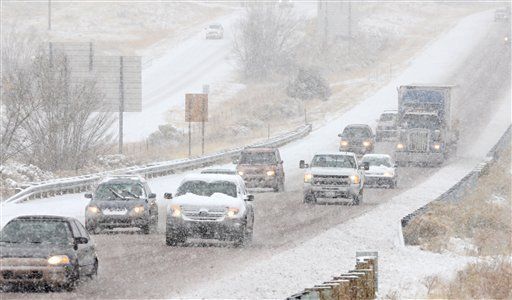
Idaho Decembers can be treacherous, especially the first snowfall and freeze. Cars run off the freeway, pileups happen, summoning a parade of tow trucks until people slow down. December in Oregon is also dangerous. There may not be snow on the road, but there is plenty of freezing rain. You can drive along at normal speed and then bam! you round a corner and hit ice. I’ve had my share of driving winter roads. I know how to maneuver. But between you and me, I prefer snow-covered to ice. Ice is impossible, even with chains.
So though some thing’s change, some things stay the same. It’s winter, and time to take it easy. Maybe it’s nature’s way of telling us to slow down and enjoy the season.

Historical Blog Tour with Tiffani Burnett-Velez
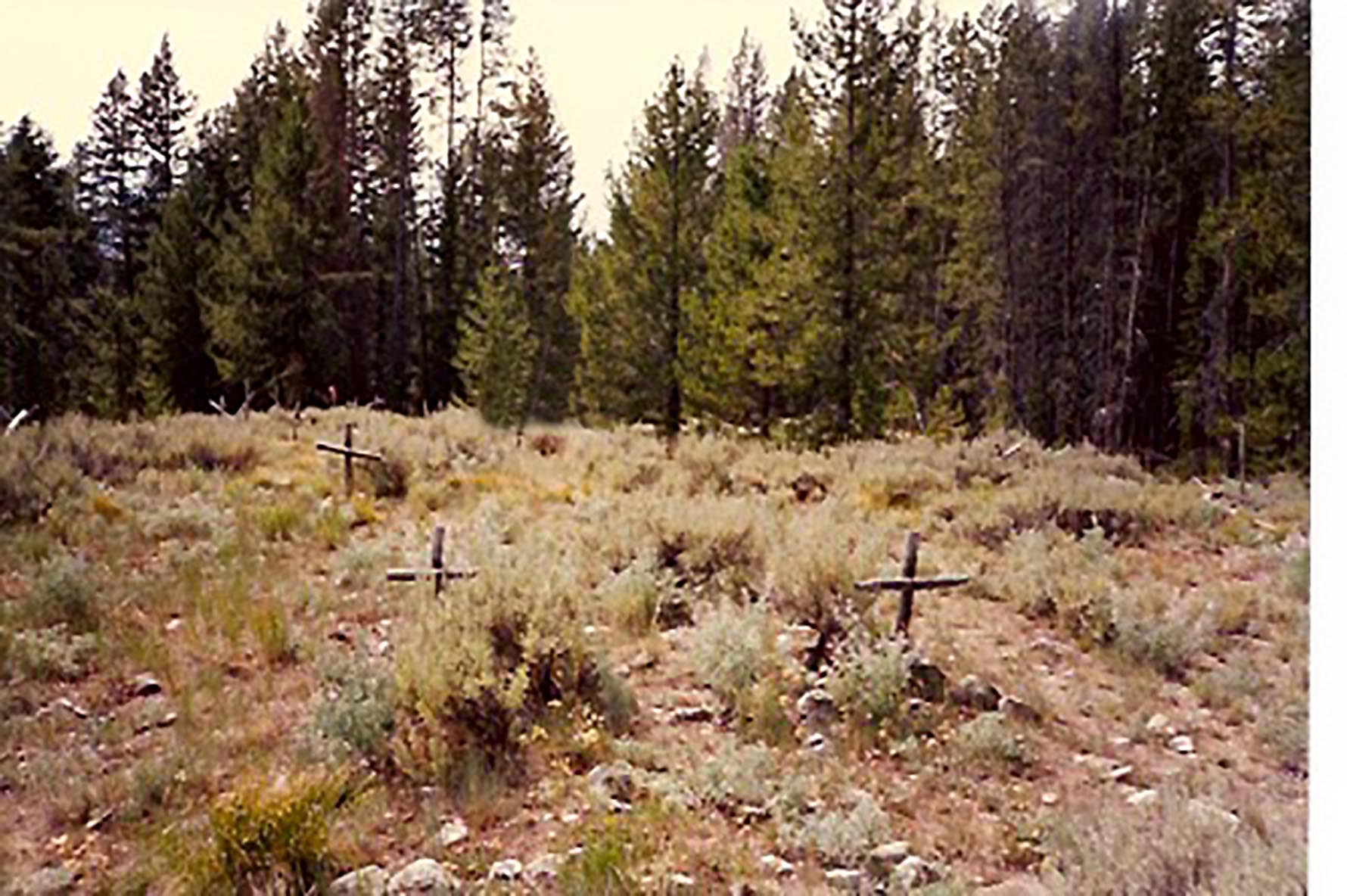
Sawtooth City, Idaho
I’m excited to be part of the Historical Novel Blog Tour hosted by writer Tiffani Burnett-Velez. Thanks, Tiffani, for inviting me to participate.
Who you are, where you’re from, your writing credits.
I’m a “farm” girl, raised in North Dakota until age nine, and then moving to southern Idaho. When I say farm girl, I don’t actually live on a farm, but I know how to milk a cow, and I do live on ten acres, mostly pasture. The only animals I keep are three small dogs that I love to pieces. For several years I played with the idea of keeping bees but my husband just retired and we don’t want to take on anything that will keep us from travelling, so that idea is on hold. I’m organic and love to play in the dirt, earning the name Mother Earth from close friends. For twenty-some years I worked in a bank, and when I left my “day job,” I started writing professionally. I started freelancing with mostly nonfiction, then took on a column for AG WEEKLY that I wrote for six years. I’ve written a bit of poetry, but my love is fiction, and particularly women’s fiction. When my hometown turned 100, I published a book of essays commemorating that event. I’ve co-authored several anthologies, a children’s book, and just recently published a book called Waiting, which won the 2014 Idaho Author Awards Top Ten in fiction. My newest novel, Goldie’s Daughter, will be published by Booktrope this summer. I’m excited to talk about this book and its development.
What is your latest historical fiction piece?
Goldie’s Daughter begins in the Idaho mining camps in 1882. Goldie was the town prostitute and the story is actually about her daughter, Emily, and how Emily overcomes her reputation as a prostitute’s daughter.
Why did you choose to write it?
We have a cabin in Featherville, Idaho, near the mining camps of Rocky Bar and Atlanta. Featherville was actually near a mining camp too named Esmeralda. As we spent summer vacations there, we wandered the mountains and learned more about the mining history. I heard about a woman named Peg Leg Annie. That started me thinking. What if I was Peg Leg Annie’s daughter? What if I had to grow up in a mining camp? That’s how the idea for the novel evolved.
What about that era appeals to you?
I love everything Victorian, and this is just at the end of the Victorian age. My favorite pastime is haunting old cemeteries and Victorian mansions. I love the West and the open spaces and how where a person lives affects the way they live. My character Emily has a tough time in the mining camps and thinks things will get better once she travels to a more civilized town. But when she gets to St. Louis, she discovers civilized society can often be harder to navigate then the gritty mining camps.
Are your characters real or fictional? If they’re real, how did you fictionalize them?
All of my characters are fictional. I did use the real person, Annie Morrow, as the inspiration for Goldie McIntyre, but everything is fiction. I did use real names for the towns to ground the story.
What kind of research is involved in writing your novel?
Tons. I read everything I could find about the Idaho mining camps and transportation in the late 1800s. I visited local libraries. For libraries I couldn’t visit, like in St. Louis, I corresponded through mail and email. I even purchased an old Webster’s dictionary to make sure I was using words common to the era, words my characters would use. I also conducted interviews and read old newspapers.
How do you organize the fictional aspects of your writing vs. the historical facts?
I kept historical dates accurate but I changed some of the names, like Sawtooth City became Saw Tooth City. I studied historical events and made sure the same things happened in my story. For instance, an article I read about a Forth of July parade in Rocky Bar became material for a scene in the book. Traveling troupes were popular at that time, and I made sure a travelling troupe visited the mining camps.
How does the historical timeline move your plot along or influence the actions of your characters?
One of the things I wanted to do was show the differences between people who lived in “polite society” vs those growing up in the mining towns. Dirt roads vs roads paved in brick. Full pantries vs the meager food found in mining camps, especially in winter when supplies couldn’t be delivered. And how transportation impacted the way people lived and moved about the country, much of which was still undeveloped.
How do you feel about writers taking creative license with historical facts? Or, does it bother you when facts area changed to fit the story in a movie or a book?
It used to. I don’t like it when authors put words into the mouths of famous people. For instance, I read a novel recently about nurses during the Civil War. The author had President Lincoln interact with the characters, carrying on conversations that “might” have happened. It didn’t make the scenes more real for me, in fact, they felt false. I can be a purest sometimes and I don’t like it when authors rewrite history to serve their stories, but I understand why they do it. I think they risk offending their audiences when they do because some people are unwilling to suspend their disbelief, especially if they are staunch historians.
What’s next for you after this present work?
I have several projects in the works. A novel set on the Oregon Coast, a collection of short stories in a rural setting, and a book with regional stories and recipes. I’m always working on something. Goldie’s Daughter will be out this summer, please watch for it.