June, July and August, my three summer friends . . .
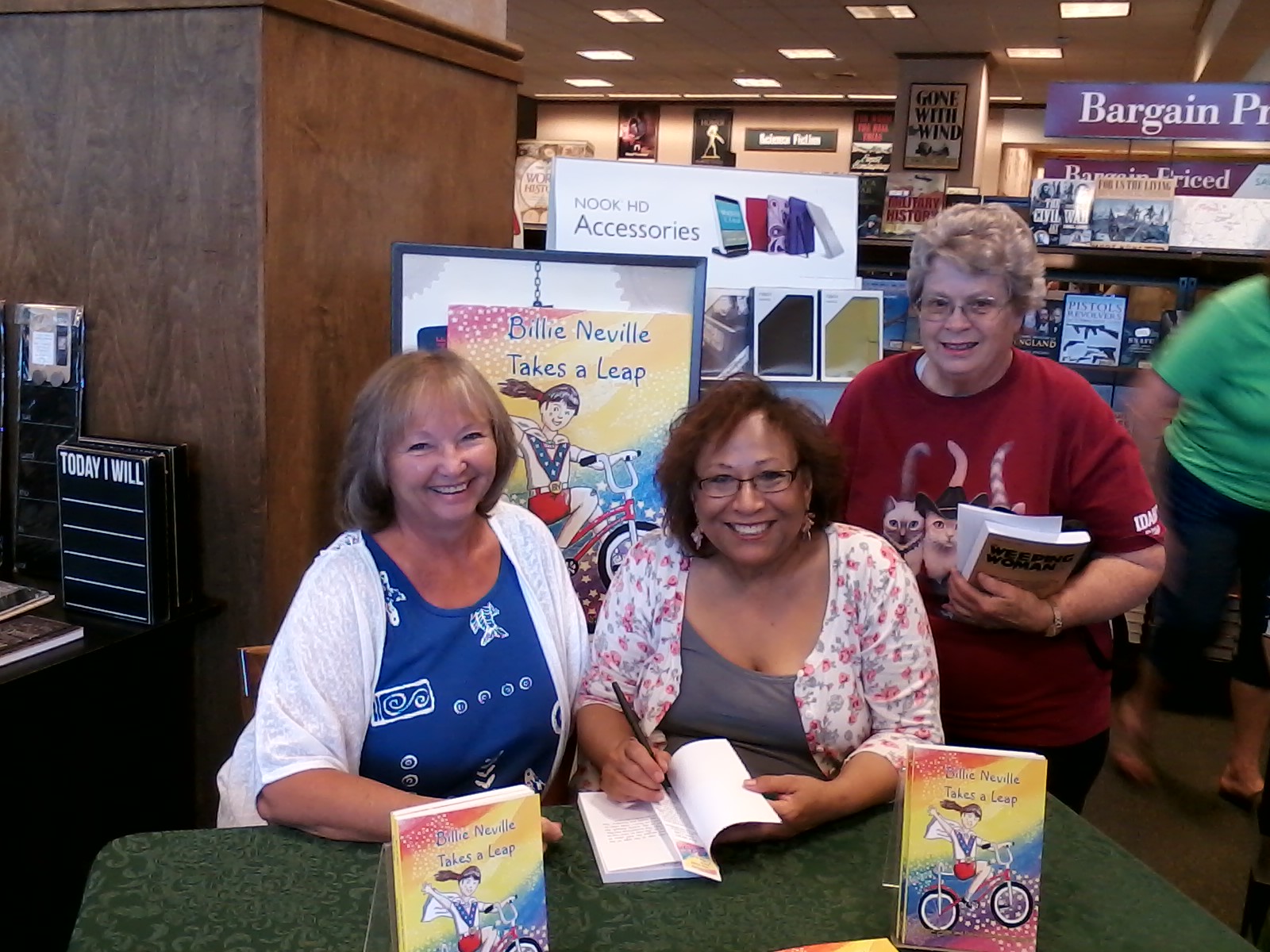
Gosh, I love the old songs. This one was always one of my favorites. And it is so true, soon it all must end because here we are smack in the middle of July already. But I’m keeping busy. Here’s what I did this weekend. Thank you Magic Valley and Barnes & Noble for a great event.
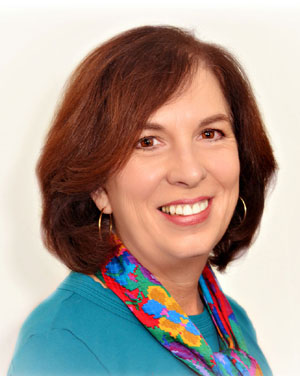
Joanne Pence is an award-winning and USA Today best-selling author of the Angie Amalfi mysteries, the new Rebecca Mayfield mysteries, as well as historical fiction, romance, romantic suspense, a fantasy, and most recently, a supernatural suspense set in the empty, roadless, no-one’s-ever-lived-there “River of No Return” area of Idaho. Born and raised in San Francisco, she has been a journalist, analyst for the Federal government, taught school in Japan, and now makes her home in the foothills north of Boise, Idaho, with her husband, two dogs, four cats, and a peahen (female peacock) who showed up one day and refuses to leave.
I met Joanne several years ago at a writer’s function in Boise. She had just relocated and wanted to connect with other writers. We’ve been good friends since. An active member of Idaho Writers Guild and a true writer’s advocate, Joanne gives willing of her time and knowledge.
15 things you may not know about Joanne Pence
1) Why did you become a Writer? How did you get started?
Growing up, I wanted to become a foreign correspondent and travel the world. I made it as far as Japan. After I got married and had children, I turned to fiction. Fortunately, through journalism (I have a masters degree in it), I learned a lot about writing. With fiction, I enjoy being able to have stories end the way I want them to.
2) What is your writing routine? How do you discipline yourself to keep at it?
I no longer have a “day job,” and my sons are adults, so I only have my husband and pets to contend with around the house. It’s not difficult to fit in time to write. In fact, I’ve been known to become grumpy if I can’t find time to write because too many other things have to be done. (Hard to imagine, isn’t it?)
3) How many drafts before you feel the book is finished?
It depends on the book. I know when I’ve written enough drafts when I stop finding things to change. I write an extremely rough, short, first draft—just doing all I can to get from the beginning of the book to some kind of an ending. I don’t worry about much when I’m putting down that draft. Sometimes I’ll think of something in the middle of the story that needs to go in the beginning, so I’ll write it down. Later, I’ll move it to where it belongs. Also, I write in scenes—each new scene has its own file (I use Scrivener, which is a blessing for people who write the way I do). I’m a person who needs to see things written down, and only after that am I able to fix what needs to be fixed. Because my first drafts are so rough and short, the next few drafts flesh out the plot, and the last few drafts flesh out the characters. I know the book is almost finished when I start to cut out the excess words, scenes, descriptions, and especially explanations that tell instead of show.
4) What was the best thing that happened with regard to your writing career? The worst?
Selling my first novel was definitely the most exciting thing, and then my second (the first in the Angie Amalfi mysteries, Something’s Cooking) was nominated for several big awards and sold extremely well, so that was a huge boost. One of my special memories happened shortly after watching a Woody Allen movie (can’t remember the name) in which he was a writer and in one scene he walked into the HarperCollins building at 10 East 53rd Street in New York City (the front is quite distinctive). A few weeks later, there I was walking into the same building. I went to the Edgar Mystery Awards Ceremony with my editor. It was all quite magical.
Despite all that, I began to feel as if I was on a treadmill, turning out one Angie Amalfi mystery a year. The best thing was when I decided I wanted to write something completely different, and stopped the Angie books.
As far as the worst, there were disappointments—it’s always easy to think one should have been given more support, more publicity, more money, or whatever—but overall, I really can’t complain.
5) What part of your job do you love the most? Hate or dislike the most?
I most dislike writing the first draft of a book. It always seems impossible—that I’ll never be able to think of enough for my characters to do to cover 55,000 or more words. I have to all but force myself to write at that first draft—a necessary evil. I most love late-draft revising, where the plot has been worked out, and I’m tweaking to find the perfect word to make a sentence better, or the perfect few sentences to transform a scene from the mundane to something that comes alive or evokes emotion from the reader. I also love making book covers. That’s something I’ve been learning to do since I set up my own publishing company as an independent author. It’s not easy, but I love the challenge, and hope to someday be really, really good at it.
6) What do you like to read? Do you read while working on a novel? Favorite authors?
I most enjoy mysteries and suspense novels that deal with crime, but that have characters with a romantic storyline of some sort. The Yard was a recent read that’s a good example—a crime story that takes place shortly after the Jack the Ripper murders. The inspectors, their wives, lovers, and so on were great people to read about. As to favorite authors, that’s tough–they change with my mood. Over the years, probably the ones I’ve gone back to and reread are Daphne du Maurier, LaVryle Spencer, and Michael Connelly.
7) What was the best advice you received as a writer? The worst?
The best advice was to give independent publishing a try. I’ve never enjoyed writing as much as I do since I began putting out my own books and writing them the way I want them written. The worst was probably to write what my editor and agent wanted me to write rather than to follow my own muse.
It’s very easy to fall into the trap of thinking that because agents and editors are “professionals” they know what’s best for you. For example, anyone who is familiar with my biggest, most ambitious book, ANCIENT ECHOES, can understand how dumbfounded I was when an agent suggested I “get rid of all that Lewis and Clark stuff.” I’m thankful I continued with my concept of the book, not someone else’s. (It was chosen as a Top Idaho Fiction Book of 2013.)
8) Who has influenced you the most in terms of developing your personal writing style?
Considering that I’ve been writing since the 1970’s, I have no idea—I write the way I write because it’s the way I think. My “voice” is like a colloquial style that’s clear, simple, wry, and sometimes tongue-in-cheek. I can think of writers who tend to write that way, but I don’t know that they were influences. Susan Isaacs’ Compromising Positions showed me that humor and crime could go together.
9) Do you have a good luck charm or superstition?
I’m afraid not.
10) If you weren’t a writer, what would you be?
I’d be unhappy. I’d probably be doing something else creative—making book covers for other people, possibly; or painting; maybe knitting, crochet, and/or needlepoint which are all things I very much enjoy.
11) What quote or personal saying do you live by?
“If you build it, they will come.” In other words, don’t sit around and wish for good things to happen to you—get out there and work to make your own luck and you won’t be disappointed. Things might not turn out the way you expect, or even the way you ever imagined, but whatever the result will be, it’s preferable to doing nothing.
12) What’s next up for you, writing-wise?
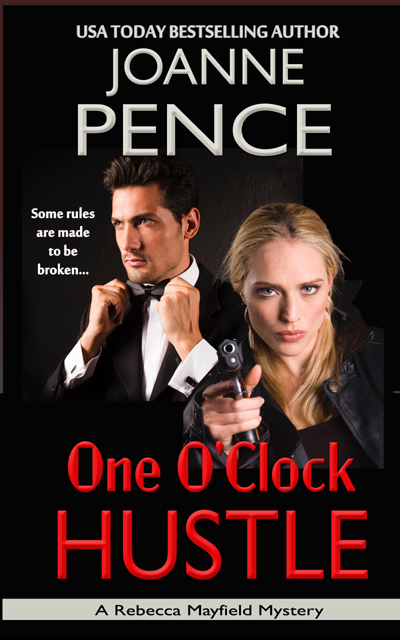
Bottom line, I hope to write more, write faster, and write better. Specifically, I hope to quickly put out at least three books in my new Inspector Rebecca Mayfield mystery series. The first book, ONE O’CLOCK HUSTLE, was released in April. The second book, TWO O’CLOCK HEIST, will be released next month, and then I hope to start the third, THREE O’CLOCK I-DON’T-KNOW-WHAT-YET. I also want to complete the trilogy that began with ANCIENT ECHOES. And Angie Amalfi fans keep writing to me asking for another book in that series.
13) If you could do anything over again, would you and what would it be?
I wish I had paid more attention to what was going on with independent publishing earlier than I did. I was hearing rumors, but not until 2011, when I attended a conference in Florida, did it all begin to make sense. There’s a steep learning curve—and things change from one week to the next—so you pretty much need to just jump in and test the waters.
14) What advice would you give beginning writers?
I would tell writers to write what they “love” rather than what they “know” because there’s a world of research at your fingertips. If I had written what I know, I never would have set parts of ANCIENT ECHOES in Mongolia or Jerusalem, and never would have used the “secret” that’s the heart of the story. Writers need to listen to that little voice we all have that tells us when something needs changing or needs more work. And most of all, don’t release a story before you’re completely happy with it.
15) Something we don’t know about you?
Perhaps you don’t know that I studied Mandarin Chinese in college and took calligraphy classes to learn to write Chinese characters using a brush and ink that I was taught how to prepare. Both were among the most difficult things I ever attempted!
And: what’d you like us to know about your latest release?
My latest release is ONE O’CLOCK HUSTLE. Homicide Inspector Rebecca Mayfield and Richie Amalfi were introduced in the Angie Amalfi mysteries, and they now have their own mystery series. This is their first full-length story.
When San Francisco Homicide Inspector Rebecca Mayfield arrives at the scene of a deadly shooting, she’s shocked to find that the witnesses have caught the killer, and that he’s someone she knows. Rebecca’s a by-the-book detective, and she’s always done her job according to the rules, without hesitation … until Richie Amalfi comes back into her life.
Richie knows his way around everything and everyone in his city. When people say they “know a guy who knows a guy,” Richie’s the guy they’re talking about. He can usually help people out of tight situations, but suddenly finds he can’t get himself out of hot water when he’s accused of murder.
Richie’s on the run, and he runs straight to Rebecca to help him prove his innocence. From the nightclubs of North Beach to the scenic heights of Twin Peaks, dangers lurk and more deaths happen. As Rebecca discovers there’s a lot more to Richie than she thought, and a lot more to like than she imagined, she soon fears not only for her life, but also her heart.
Joanne will be signing books this Saturday (June 14) at Rediscovered Bookshop in Boise, Idaho, Saturday 11-1. If you’re nearby, stop in and say hello.
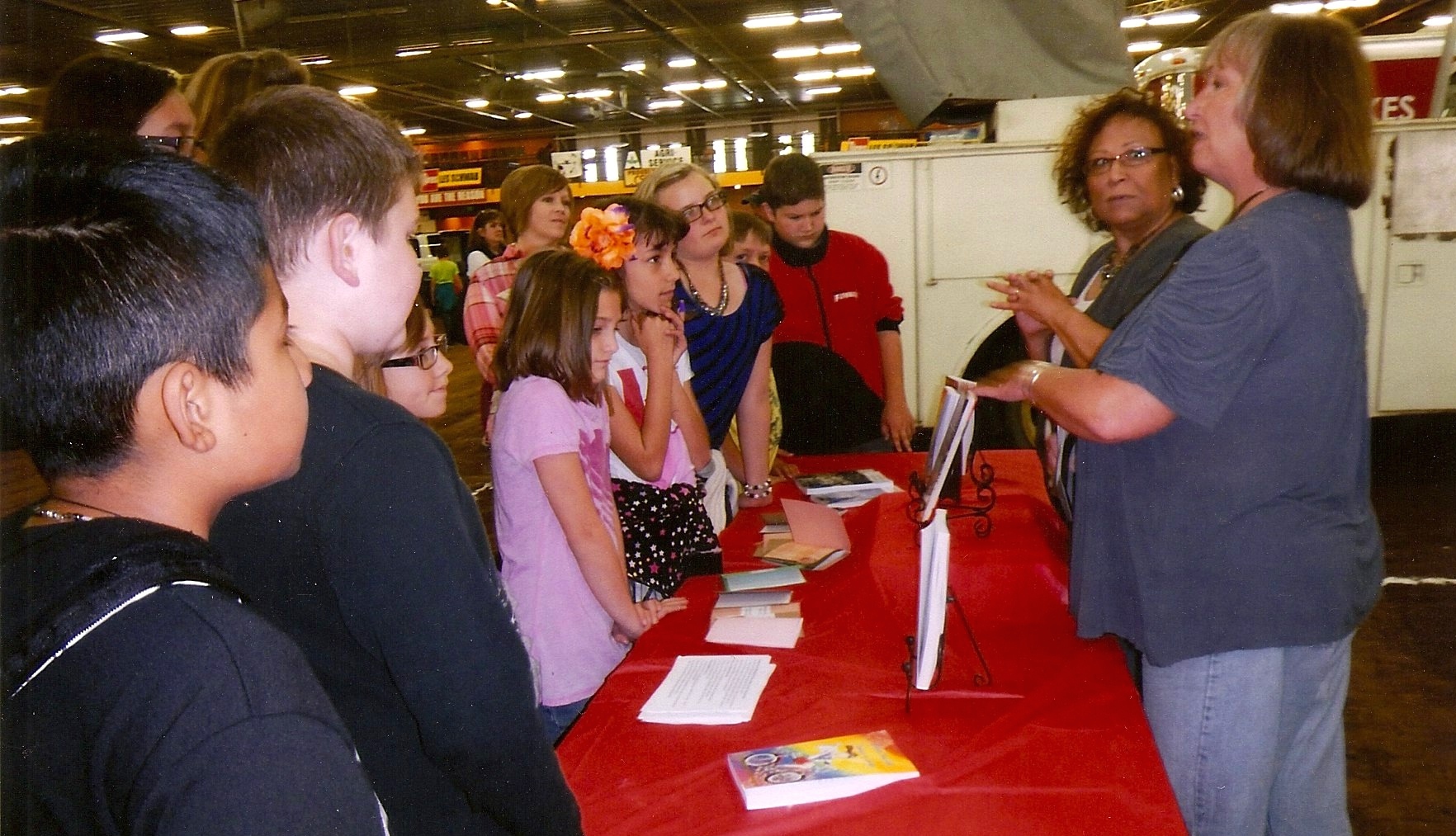
My writing partner and I had a great time speaking with more than three hundred fifth-graders at the annual Career on Wheels held at the Eldon Evans Expo Center in Twin Falls on May 21. One of these students might be the next Stephen King or Alice Hoffman.
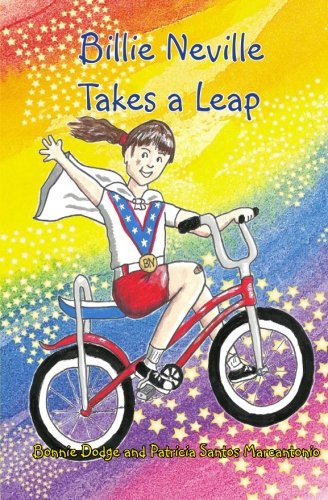
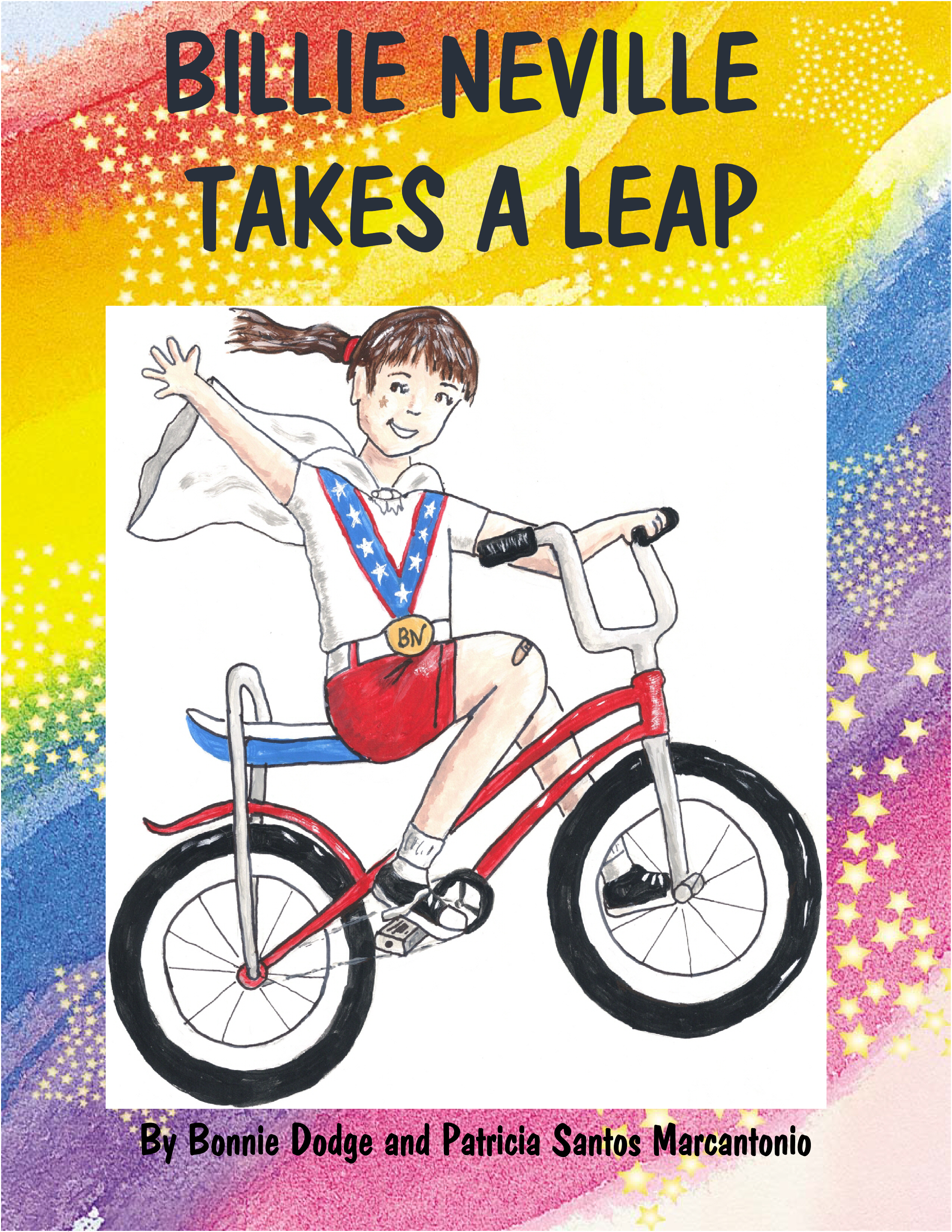
We had so much fun putting this book together. Take a tomboy with no friends with a dream to be a daredevil and you have little Billie Neville. Add a skycycle and the Snake River Canyon and there’s bound to be lots of action.
Hurry and get your copy now just in time to celebrate the 4oth anniversary of Evel Knievel’s failed jump of the Snake River Canyon.
Check out my new children’s book, “Billie Neville Takes a Leap.”
Ten-year-old Billie Neville wants to be a daredevil, just like her hero Evel Knievel. She also wants a best friend. Riding “the best bike in the whole world” Billie’s desperate to enter a bike jumping contest with three boys named The Meanies and show them her cool bike skills. When Evel comes to town to jump the Snake River Canyon, Billie learns she has to be a friend to make friends and that not all heroes have to soar over canyons.
Students entering the sixth grade are invited to write an essay entitled, “What is a Hero?”
There is no entry fee and the winner will receive $50. The contest is sponsored by River St. Press in conjunction with the release of its new children’s book, “Billie Neville Takes a Leap” by Bonnie Dodge and Patricia Santos Marcantonio. The book, which will be released in May, is about friendship and heroes.
Ten-year-old Billie wants to be a daredevil, just like her hero Evel Knievel. She also wants a best friend. Riding “the best bike in the whole world,” Billie’s desperate to enter a bike jumping contest with three boys named The Meanies and show them her cool skills. In the meantime, she also enters an essay contest in hopes of meeting Knievel. When the famous daredevil comes to Twin Falls to jump the Snake River Canyon, Billie learns she has to be a friend to make friends and that not all heroes have to soar over canyons.
The River St. Press contest is open to any student who will be in the sixth grade by September 2014. Essays must be typed or printed, and no longer than 400 words. They must include the entrant’s name and telephone number, and the name of the school the writer attends. The entry deadline is August 15, 2014. Entrants can email their essays to riverstpress@outlook.com or mail them to River St. Press, P.O. Box 5073, Twin Falls, ID 83303.
The winner will be announced at a book party in Twin Falls. The winning essay will be printed on the River St. Press website, riverstpress.com.
So kids, get busy. We’re hoping to see lots of entries.
This blog might fall under the topic of why you should attend writing conferences because that’s where I met Cheryl Strayed, at a writing workshop in Oregon. That was before Wild: From Lost to Found on the Pacific Crest Trail took off, before Cheryl appeared on Oprah, and before Cheryl revealed her identity as the author of the “Dear Sugar” columns in The Rumpus. Soft-spoken with a captivating smile, Cheryl looked anything but wild the day I met her.
That was a couple of years ago and today Cheryl’s coming to Idaho. For some of you lucky ticket holders, you’ll get to spend part of today and tonight with Cheryl, and I’m betting you’ll go home supercharged and eager to write. I know I was after hearing her speak about writing from a fearless place. She was inspiring, saying the best writers dare to tell the whole, complicated, beautiful and ugly truth. Write, even if you never get published. Write what’s in your heart. Stay true and stay genuine. Do what you can to support other writers.
Today Cheryl will be in Boise, Idaho. Tomorrow she’ll be in Helena, Montana. And then it’s on to Washington before she returns to her home in Portland. Since her memoir Wild took off, Cheryl’s been on the go talking with writers about writing and taking risks. If, like me, you can’t attend Cheryl’s reading today in Boise, go out and buy her books. Or make a trip to the library. She’s an author you don’t want to miss.
Ten-year-old Billie wants to be a daredevil, just like her hero Evel Knievel. She also wants a best friend. Riding “the best bike in the whole world,” Billie’s desperate to enter a bike jumping contest with three boys named The Meanies and show them her cool bike skills. When Evel comes to town to jump the Snake River Canyon, Billie learns she has to be a friend to make friends and that not all heroes have to soar over canyons.
It was 2009. I’d been working endlessly on my novel, pretty sure I was wasting my time. Convinced I’d be more productive in the garden or in the kitchen, I stopped writing. Until I picked up a copy of Therese Walsh’s debut novel, The Last Will of Moira Leahy. I loved the story, but more importantly I loved the writing. Here was a writer I could identify with. Our styles were similar, our word choices almost the same. And our story choices—stories about women and their relationships—were parallel. When I finished reading her book I was excited. If Therese could do it, so could I.
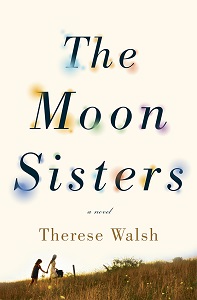
Well, Therese has done it again. Her fans have been “patiently” waiting for her next book and this year she delivered. Its working title Therese jokes, The Book That Tried to Kill Me, was published this year on my birthday.
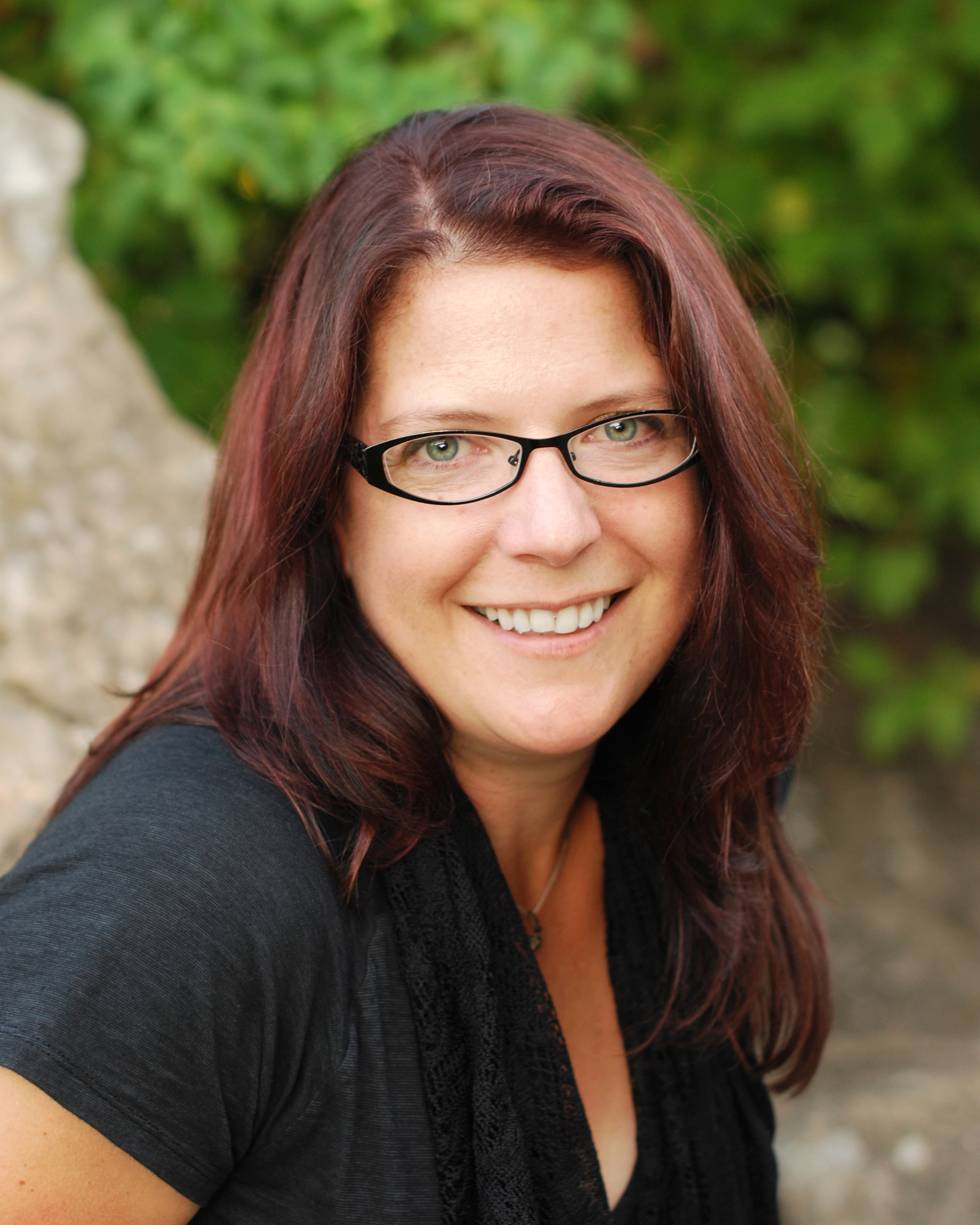
Therese Walsh’s second novel,The Moon Sisters, was published in hard cover on March 4th, 2014 by Crown (Random House). Her debut,The Last Will of Moira Leahy, was named one of January Magazine’s Best Books of 2009, was nominated for a RITA award for Best First Book, and was a TARGET Breakout Book. Therese is the co-founder ofWriter Unboxed, a site that’s visited daily by thousands of writers interested in the craft and business of fiction. She has a master’s degree in psychology. Aside from writing, Therese’s favorite things include music, art, crab legs, Whose Line is it Anyway?, dark chocolate, photography, unique movies and novels, people watching, strong Irish tea, and spending time with her husband, two kids and their Jack Russell.
15 things you may not know about Therese Walsh
1) Why did you become a Writer? How did you get started?
I started writing plays as a child, but it wasn’t until I had a child that I became intrigued with the idea of writing fiction. It began with writing children’s picture book text and eventually evolved into adult fiction. My first adult fiction manuscript became my debut novel, The Last Will of Moira Leahy.
2) What is your writing routine? How do you discipline yourself to keep at it?
I should have a writing routine, I’m sure, but I tend instead to write when the characters are very present in my mind and I have to write. The trick for me, to stay in that perfect zone, is to keep writing. It’s a little like water skiing, I suppose: Getting upright is the trick. Staying upright is less hard, and makes the whole thing fun.
3) How many drafts before you feel the book is finished?
As many as it takes! Probably three complete reworks, but with many reworkings of scenes and chapters throughout the story.
4) What was the best thing that happened with regard to your writing career? The worst?
The best thing that happened with regard to my writing career was finding my agent, Elisabeth Weed. She is a wonderful advocate, and enthusiastic about my stories and my future.
The worst thing was probably feeling the pressure of a two-book deal. Writing The Moon Sisters was often difficult for me because I was nervous about the deal, but ultimately I’m incredibly happy with the book.
5) What part of your job do you love the most? Hate or dislike the most?
I love it when I write something and feel that perfect balance that I’m looking for in storytelling, depth of meaning, and in the cadence of the sentence. Those moments make me so glad to be a writer.
I dislike the need to be so visible as a writer in this era of social media.
6) What do you like to read? Do you read while working on a novel? Favorite authors?
I like to read books that are unique, that have a great voice, and that really make me think more deeply about my own life.
I do read while writing. Not all of the time, but yes.
I have fewer favorite authors than favorite books, but I will say that I recently finished Brunonia Barry’s The Map of True Places. Between that book and her debut, The Lace Reader, I know I’ve definitely found a favorite author.
7) What was the best advice you received as a writer? The worst?
The best advice I received was to try to keep separate the craft of writing from the business end of things. It’s something I find difficult to do, but it’s important to work at that split.
Like every writer out there, I’ve received advice I didn’t think was right for my novel-in-progress. But it’s hard to say that any advice is bad advice; it’s just advice you decide not to take. I think it really taps into the importance of doing a gut check for everything that you do as a writer. Every bit of advice I receive has to go through my personal filter. If it doesn’t make it through, it wasn’t the advice for me.
8) Who has influenced you the most in terms of developing your personal writing style?
I don’t try to emulate anyone, but reading The Second Coming of Lucy Hatch by Marsha Moyer influenced the way I approach first pages. Marsha chose to begin that book with the following line: “I was thirty-three years old when my husband walked out into the field one morning and never came back and I went in one quick leap from wife to widow.”I loved that line. It made me feel for the protagonist right away. I try to do the same—look for ways to help the reader feel, right off the bat. Empathy is connection. It is my favorite hook.
9) Do you have a good luck charm or superstition?
I knock on wood, literally, every time I say something that might be predicting a good thing for myself or my books.
10) If you weren’t a writer, what would you be?
I don’t know. I do have a master’s degree in psychology, so perhaps I would’ve found my way into an occupation that would have been a help to others.
11) What quote or personal saying do you live by?
Write on!
12) What’s next up for you, writing-wise?
I have two story ideas vying for my attention. I’m playing hard to get; I’ve given a little to both but not enough to commit. Let them woo me.
13) If you could do anything over again, would you and what would it be?
I would like to take what I know now and give it to myself back in 2008, right after my debut sold in a two-book deal. The Therese Walsh back didn’t know what was going to happen, and felt unsettled. While I wouldn’t want to necessarily give her a crystal ball, I’d love to give her some words of encouragement and tell her some stories about the publishing industry—what’s normal and what to expect. My former lack of knowledge is part of the reason I like to help pull back the curtain for other writers, and why we spent the month of February focusing on Inside Publishing topics at Writer Unboxed.
14) What advice would you give beginning writers?
Try not to be offended by critique of your work. Criticism is simply someone taking the time to point out where things might be improved. Don’t take it personally. Take it professionally. Lean into it. Hunger for it. Learn from it.
15) Something we don’t know about you?
I once gobbled at a turkey so authentically that it gobbled back at me.
And: what’d you like us to know about your latest release:
The Moon Sisters took five years to write, and is the truest thing I’ve ever written. I am thrilled that Booklist recently awarded it a starred review:
“This magical, moving tale is not to be missed.” –Booklist (STARRED REVIEW)
Here’s a little of what the book is about:
After their mother’s probable suicide, sisters Olivia and Jazz attempt to move on with their lives. Pragmatic Jazz takes a job in the same funeral home that handled her mother’s body, while spirited, strong-willed Olivia—who can see sounds and taste words—wants to travel to the remote setting of their mother’s unfinished novel to see the will-o-the-wisp lights that she’d written about. A reluctant Jazz agrees to go with Olivia, and as they journey toward the wisps, their acceptance of their mother’s death becomes as important as their journey to understand each other and themselves.
Thanks for having me as your guest!
To celebrate her new novel, Therese is holding “A Taste of Hope Contest.” Describe what hope takes like and you just might win some cool prices. You can enter the contest here.
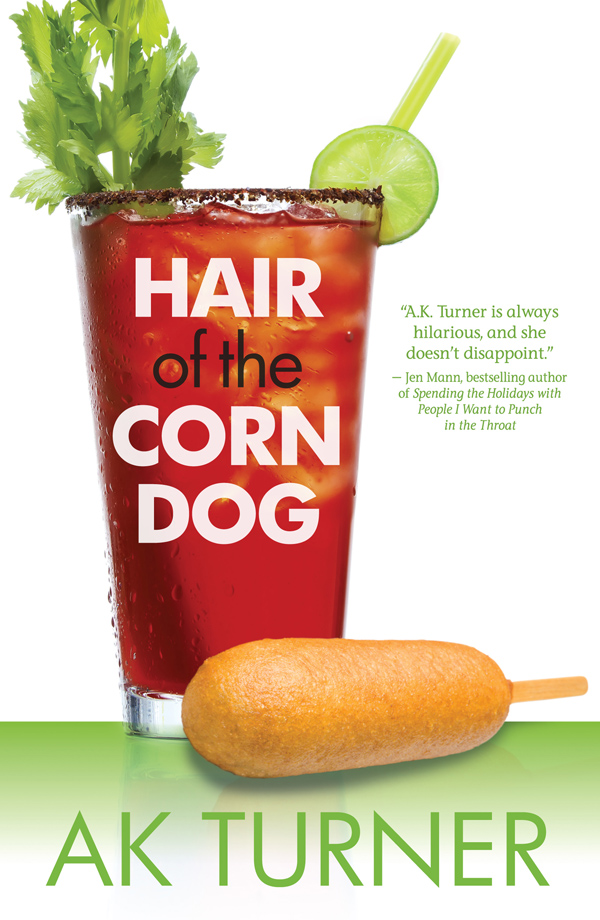
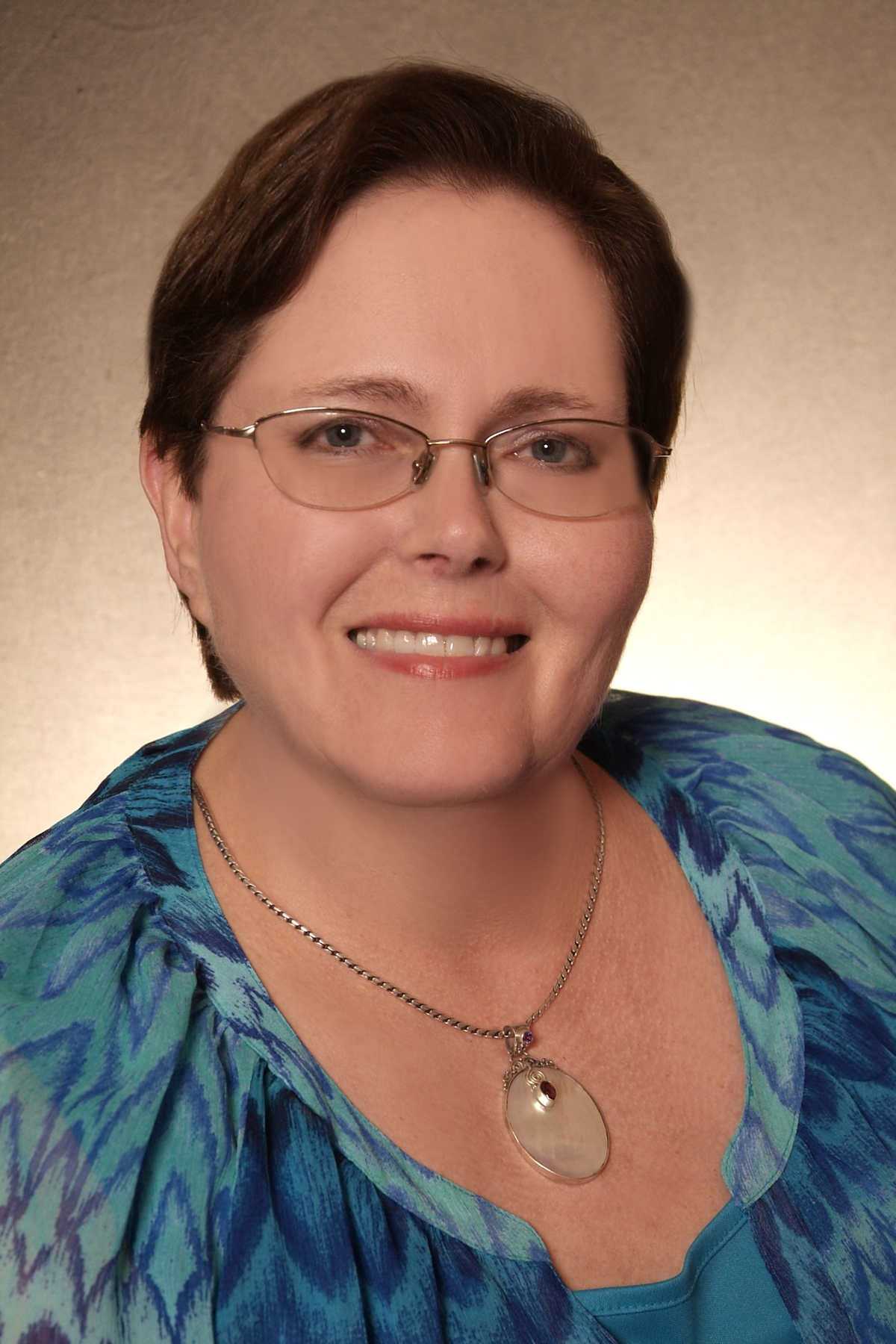
I write a lot of things, but humor isn’t one of them. Writing “funny” is hard work, but A. K. Turner makes it look so easy. Her latest book, Hair of the Corn Dog, releases today. Both members of the Idaho Writers Guild, we love to talk writing. Here’s something about Amanda you may not know:
15 things you may not know about A. K. Turner
1) Why did you become a Writer? How did you get started?
I don’t feel like I had much choice in the matter. My route may have at times been circuitous, but I think this is where I was always headed. My father is a writer, so I had a sense early on of the realities of the writing life. I still had to come to writing in my own way and in my own time, though, which meant a solid decade of the starving artist gig. I waited tables and cleaned houses for years before I found my genre and really started moving forward in my writing career.
2) What is your writing routine? How do you discipline yourself to keep at it?
I don’t work on a book every day, but when I do, it is regimented. I map out my progress on a calendar and I stick to it. When I’m writing a first draft, I write 5,000 words per work day. I don’t write on weekends. I have kids and they deserve my full attention during that time, though chances are I might write a little something, even if just an email to a friend or idea for a blog post. If it’s a day when I have a word goal, I don’t allow myself to do much else until that goal is met. The fact that I take breaks in between projects and take my weekends off helps me stay disciplined during my work days.
3) How many drafts before you feel the book is finished?
It varies for each book. I write my first draft very fast, then rewrite two or three times before sending it to my editor. She sends back what is by then a fourth draft. We volley it back and forth. It’s usually on its sixth draft when I send it to my beta readers. I incorporate their comments for an eighth draft that goes back to the editor. Hell, let’s just call it an even ten.
4) What was the best thing that happened with regard to your writing career? The worst?
The best thing for my writing career was impending motherhood. When pregnant with my first child, I felt terrified that I’d missed my chance, that now that I was going to be a mother, I’d never be a writer. That was the kick in the pants that I needed. I’m not sure I can think of the worst thing for my writing career. Even things that seem like they were negative (rejections, disappointments, typos) all help shape the present and future. There is no worst thing.
5) What part of your job do you love the most? Hate or dislike the most?
I love the excitement of beginning a new project, the sense of accomplishment at completing something, the space in the middle when you realize your project has legs. I also love that it no longer costs me money to be a writer, which is how it felt for the longest time. I hate horrible reviews and try not to read them. That’s a learned skill.
6) What do you like to read? Do you read while working on a novel? Favorite authors?
I like to read almost anything I can get my hands on. If you looked at my nightstand (but please, stay out of my bedroom) you’d see a collection of short stories, a book of essays, a nature narrative, an epic historical novel, and a lesson on craft. I recently finished books in sci-fi, mystery/thriller, a few that I’d consider literary fiction, and another book on craft. I hate assigning these labels, because most books fit more than one category. I always read, whether I’m working on a book or not. That said, I don’t usually read another female humorist while working on a humor project of my own. Favorite authors: Flannery O’Connor, John Irving, Wally Lamb, Jeffrey Eugenides. Other books I adore: Stephen King’s On Writing, Ann-Marie MacDonald’s Fall on Your Knees, Gillian Flynn’s Gone Girl, Angela Carter’s The Magic Toyshop.
7) What was the best advice you received as a writer? The worst?
Best advice: “Time is going to march on no matter what. In five years, you’ll be five years older. You can be five years older having written a book, or not having written a book, but you’re going to be five years older, either way.” Sometimes I think of this but play with the number. I make it one year or ten and think of what I want to accomplish in that time. Not that writing should be rushed, but life is short.
Worst advice: “You must write every day.” People take this too seriously. So what if someone else writes 2,000 words every day of the year? Every writer is different, so it makes no sense to latch on to rules that work for someone else. There are no rules, this isn’t football. Every writer whose habits you try to emulate had major faults of their own. Hemingway shot himself in the head. Instead of trying to be Hemingway, find your own path. It’ll likely be less messy.
8) Who has influenced you the most in terms of developing your personal writing style?
When I realized that there were people who actually made a living writing humor essays, I knew I’d found my genre. I read David Sedaris, Sloane Crosley, Bill Bryson, and Laurie Notaro, among others. In terms of developing my own style, my husband Mike and my editor Elizabeth Day have been and continue to be extremely helpful in identifying the strengths and weaknesses in my writing. Identifying those aspects and using that knowledge going forward is, in my mind, one way a writer develops her personal style.
9) Do you have a good luck charm or superstition?
I’m not superstitious at all, though I do believe I’ve been very lucky in life. Every writer needs talent, tenacity, and a little bit of luck.
10) If you weren’t a writer, what would you be?
I’d like to say Federal Agent or Homicide Detective. But if we’re talking about reality, I’d clean houses, something I did a lot of before writing full time. I can clean a toilet like nobody’s business.
11) What quote or personal saying do you live by?
Every day in which I read, write, laugh, and move is a good day.
12) What’s next up for you, writing-wise?
I want to continue writing humor, but replace the element of alcohol with travel. Don’t get me wrong, I still love a drink at the end of the day, but in terms of genre, the drinking mommy thing has been done, and I’m ready to move on to something else. We have a trip planned to Australia later this year and I’m working on some preliminary research. The working title is Tasmania with Children and Other Devils.
13) If you could do anything over again, would you and what would it be?
I’d write more and read more. Other than that, I think dwelling on what I could have done or should have done is a big waste of time. I’m always looking forward.
14) What advice would you give beginning writers?
Everything takes practice. A person practicing the piano doesn’t view that practice time as wasted music notes. Writers need to give themselves permission to write things that never go anywhere, pieces they’ll never show to anyone else. You need that practice and those are not wasted words. We battle this a lot when others ask us about our work. We feel compelled to answer that we’re working on something that is ultimately marketable: a book, magazine article, short story. There’s nothing wrong with working on the writing itself without an end goal in mind. When an athlete exercises, that’s as much a part of their job as playing in the big game. The same is true for writers, whether or not your friends, family, and acquaintances understand that.
15) Something we don’t know about you?
I took flying lessons in a Piper J-3 Cub for about a year when I was a teenager, but never got my license. I worked on two seasons of the television show Survivor. I also worked on a movie, during which I met a shirtless Matthew McConaughey, but who hasn’t?
And: what’d you like us to know about your latest release:
Hair of the Corn Dog is the third book in my “Tales of Imperfection” series. It’s a collection of essays that center on the adventures of family and motherhood, like going to a drag show with your in-laws. But again, who hasn’t? Fans of the first two books, This Little Piggy Went to the Liquor Store and Mommy Had a Little Flask, will enjoy it. Those offended by raw honesty and four-letter words will not. I’ll be reading and signing on Thursday, March 20th at 6:30 pm at Rediscovered Books in Boise.
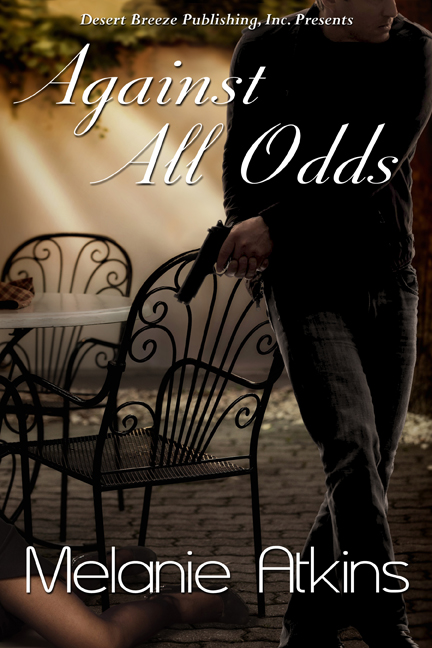
I asked Melanie Atkins to tell us about her latest release.
Against All Odds is a full length romantic suspense set in New Orleans, Louisiana. The book is the third in a trilogy after Blood Bound and Above Suspicion that came out in 2013. To quote Melanie, nothing like darkness, romance, and grit to get your blood pumping. Against All Odds releases February 21, 2014, from Desert Breeze Publishing.
I also asked her to share a little about her writing life.
15 things you may not know about Melanie Atkins
1) Why did you become a Writer? How did you get started?
I’ve always loved to write, even in high school, but never did much about it until I took a community enrichment creative writing class about 15 years ago that re-ignited my interest. I met some local writers, joined a couple of writing groups, and got busy at the computer.
2) What is your writing routine? How do you discipline yourself to keep at it?
Lately I haven’t had much of a writing routine because life got in the way, but normally I write a couple of hours in the morning and then three or four more in the afternoon. Just depends on what else is going on. I sometimes listen to music while I write, but most often have the TV on for visual inspiration. Or when the weather is good, I sit outside.
3) How many drafts before you feel the book is finished?
I don’t write in drafts. Once I’m done, I’m done, except for maybe weaving in a thread here and there and doing some minor tweaking. I write fast and clean.
4) What was the best thing that happened with regard to your writing career? The worst?
The best thing was selling to Desert Breeze Publishing. I’ve been extremely happy with them. The worst would be when my first publisher went bankrupt.
5) What part of your job do you love the most? Hate or dislike the most?
I love the writing itself. I’m not thrilled with book promotion.
6) What do you like to read? Do you read while working on a novel? Favorite authors?
I read suspense and romantic suspense, and yes. I do read while working, but only at the gym or when I take my mom to the doctor. I don’t read much at home. I’d rather write. Some of my favorite authors are Lisa Gardner, Linda Castillo, John Sandford, Linda Howard, Karen Rose, Tess Gerritsen, Joe Hill, Harlan Coban, and Stephen King.
7) What was the best advice you received as a writer? The worst?
The best is “All life is material”, a quote from my first writing mentor. The worst is the advice from a person who swore I had to follow certain rules to be published. Ha.
8) Who has influenced you the most in terms of developing your personal writing style?
My biggest influence was all the books I’ve read. I used to check out stacks at a time as a child. I’ve always read a lot, and that led me to narrowing my taste to certain genres and styles. Helped me to form my voice.
9) Do you have a good luck charm or superstition?
No. I’m not superstitious.
10) If you weren’t a writer, what would you be?
Bored.
11) What quote or personal saying do you live by?
Do unto others as you would have them do unto you. In other words, treat people with kindness.
12) What’s next up for you, writing-wise?
Finishing the single title suspense I’m working on, then diving into my next contracted manuscript, the second in my new Bayou Bounty Hunter series coming out at Desert Breeze. The first book comes out in July.
13) If you could do anything over again, would you and what would it be?
I would start writing to sell earlier in my life. Who knows what might have happened?
14) What advice would you give beginning writers?
Write every day.
15) Something we don’t know about you?
I’m terrified of heights.
Okay, everyone out there in blogland, if you didn’t laugh at Melanie’s answer to #10, you don’t have a sense of humor. She made me laugh out loud.
Here is a blurb for Against All Odds:
Sienna Wright has it all: an exciting career, a handsome husband who is an ADA, and two beautiful step-children… until a vicious murderer takes all away and sends her tumbling into a terrifying black abyss.
Detective Nate Lincoln’s job is his life, and he jumps at the chance to reclaim his gun and badge once the department reinstates him after a long suspension. His first order of business is to solve the murders of Jeff Wright and his two children, a case that fell through the cracks.
Still shell-shocked after nearly a year, Sienna at first refuses to help Nate. Then someone tries to kill her, and in order to survive, she is forced to break free of her quagmire of depression and trust the man she once loved. Nate isn’t sure he can solve the case, and yet he has to try. He would do anything for Sienna, even if she refuses to admit she still loves him.
And an excerpt:
“What else did the major say? We caught a case?”
“Yeah, a cold one. The murdered ADA — Jeff Wright. Remember that one?” Nate settled back in his seat and filled Jack in on the blood-soaked crime scene at the Wright’s upscale home as he negotiated the light Sunday traffic. “Our unit apparently hit a brick wall while I was gone, so Solomon handed it off to Cold Case — a colossal mistake, if there ever was one, because those guys sat around with their thumb up their asses, apparently. LeBlanc said Wright’s wife’s been calling headquarters at least twice a week for the past month, raisin’ hell about it.”
“Wait a minute.” Jack scowled. “I know Sienna. Didn’t you two date before she married Jeff?”
“Yeah, I was still seeing her when she met the bastard.” Nate gritted his teeth at the painful memory. He didn’t like to think about that depressing time in his life. He used to drink and party way too much. “She dated both of us for a while and picked him. Said she wanted someone steadier. Swore I was a bad influence.”
“Whoa.” Jack lifted his eyebrows. “That was cruel, man.”
“What can I say? She was right. And it was for the best, ’cause she loved Jeff.” Nate shook his head. “He made her happy. Two kids — a ready-made family — and a big, fancy house. He gave her a comfortable life. More than I could’ve ever given her. I didn’t have a pot to piss in, much less any kids.”
“Still, her choosing him must’ve gutted you.”
“Yeah, but not as much as losing Jeff and those kids did her. LeBlanc said she had a breakdown after the funeral and moved to Birmingham to live with her aunt. She’s still in Alabama, but right now she’s on the warpath with the DA and has threatened to sue the city ’cause we didn’t close the damned case. So the Major Crimes Section Commander turned it back over to us. He wants us to solve it yesterday.”
“You’d better talk to Solomon, find out why he tossed it to Cold Case.”
“Believe me, I will. I want to know why he gave up on it and has since refused to return Sienna’s phone calls.”
“Not a smart move. Give him my regards,” Jack said with a wry smile as he swung the sedan into the parking garage adjacent to the station.
Nate growled in response, but didn’t voice his true feelings about the case or Sienna. She’d broken his heart when she’d blown him off in favor of Wright, but he didn’t want Jack to know. All he needed was the facts. Sienna, a beautiful, headstrong woman, had been a popular reporter for the Times Picayune, yet she’d crumbled the night Jeff and kids had died. So much so, her doctor had hospitalized her after the funeral and kept her there until he’d found a family member willing to take care of her. Two days later, Sienna left Louisiana for Birmingham, Alabama. Nate had no idea how she was doing now but figured he ought to pay her a visit, even though it was the last thing he wanted to do.
“Save me from old girlfriends,” he muttered as he banged out of the car. He hated confrontations with women, thanks to his dealings with his own mother and the crappy way he’d ended his relationship with Sienna. Showing up drunk at her wedding had been the icing on the cake.
The pain of that day still gnawed at his soul.
Jack rounded the hood and clapped him on the back. “Talk to LeBlanc. He’s new, but he can probably unearth a lead or two for you. Something to help break the ice with Sienna.”
“Doesn’t sound like it.” Nate entered the squad room, lowered himself wearily into his chair, and tried to call the Cold Case detective, Alfred Lutz.
No luck. Lutz was out sick and didn’t answer either of his personal phones, home or cell.
Thanks, Melanie, for stopping by. Happy release day.
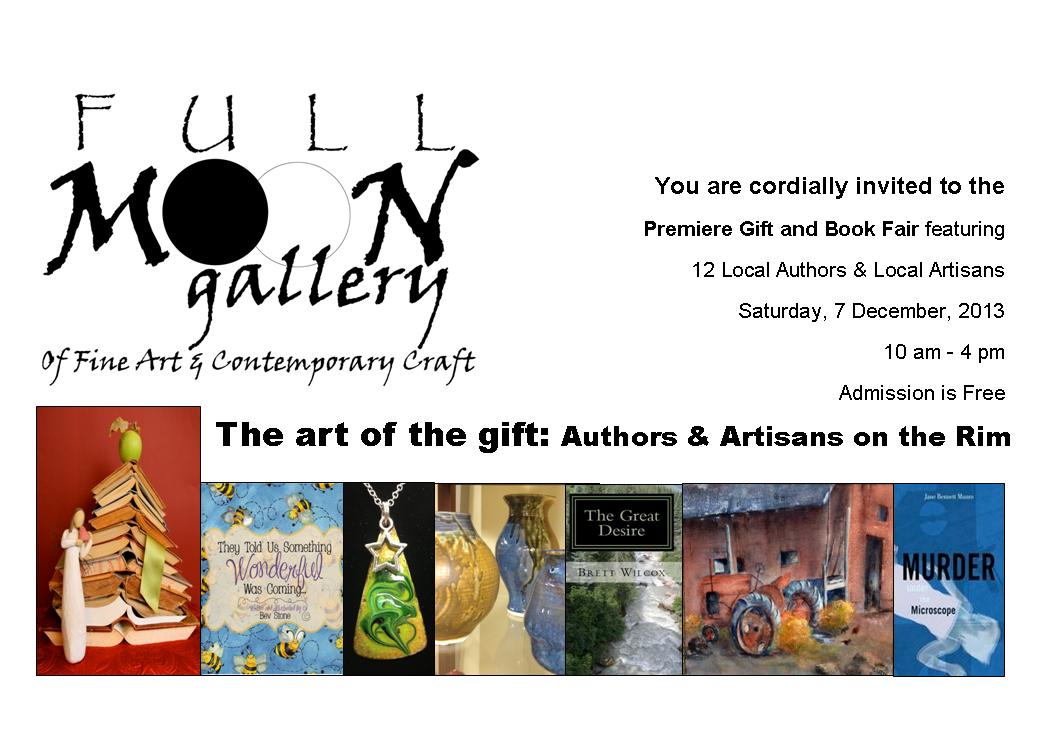
Please support local artists by joining us this Saturday for The Art of the Gift at The Twin Falls Center for the Arts. This gift and book fair features 15 Local authors & artisans. I will be there. Stop by and say hello.
1st place – “God is Pleased to Hear the Children Pray” by Ruby Murray
2nd place – “Coyote Calls Down the Gods” by Bruce Campbell 3rd Place – “The Bones of Pele” by Bonnie Dodge
A couple of years ago I was attending a writer’s retreat and our assignment was to write a Christmas vignette. When it came time to share, I was frustrated–to cop a cliche–to tears. I had no Christmas memories, no stories to share, and that left me feeling empty inside.
Because I watched the movie, I read the book. Because I read the book, I read his mother’s book. Then I wished I hadn’t, and here’s why.
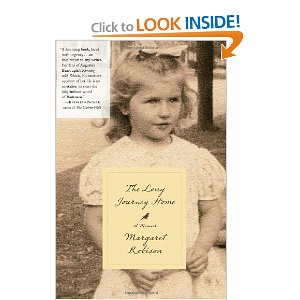
Running with Scissors by Augusten Burroughs and The Long Journey Home by Margaret Robison are billed as memoirs. The subject matter is dicey: gays, lesbians, adultery, alcoholism, and mental illness. Something most of us don’t encounter on a daily basis like this family did. Stuff great stories are made of, right?
One night when there was nothing else to watch on TV I flipped to the movie Running with Scissors. Annette Bening, Joseph Fiennes, Alec Baldwin, Gwyneth Paltrow, 116 minutes of comedy and drama. What’s not to like? The all-star cast held my attention. The movie was interesting, but it was a movie, right? I wanted to read the book to see how much of the story was actually true.
So I read the book, and when I finished Running with Scissors, I wanted to know more about this mother Margaret Robinson, a poet, teacher and writer I’d never heard of. With a college degree, someone who can probably put words on paper better than I can.
So I read The Long Journey Home, and wished I hadn’t. There is no doubt that there is a lot of talent in this family. All of them write well. Best sellers. But having watched the movie and read both books, I’m still no closer to the truth. Who is lying? Who is exaggerating? Does it even matter?
In most cases no. But in my case, it did. I am a mother. I have a son. I wanted to know why a mother would publicly call her son a liar. Why a son would change his name. I hoped to find the answers in the pages of the books, but when I was finished, I was depressed. Really, really depressed. So depressed I was in a bad mood for days. A mother tries to tell her side of the story, but can’t remember the details. An alcoholic husband and father shouldering most of the blame, is dead. His story remains untold. And the son and his brother are brilliant writers. Amen.
This brings me to why we read in the first place. Some read to escape, others for adventure. I read to understand human nature, and when I finished The Long Journey Home, I felt cheated. I was no closer to understanding the human nature of this family than I was knowing why my dog Emily growls at my husband all the while eating from his hand.
And maybe that’s okay. Maybe I don’t need to understand. But I did learn something. There are better ways to spend my time, better books to read.
Everything I write sucks. My characters talk like robots. No one’s going to read this crap. I need more coffee, something to eat. I could be hanging out with friends, but, no, here I sit in this chair and stare at this stupid blank screen. I’m never going to be a writer.
Sound familiar? If you’ve been writing as long as I have, I’m sure you’ve struggled with the same feelings. Self-doubt is a killer. It will eat you up and squash your creativity. Instead of feeling like a failure, I should be walking in the clouds. I should be dancing, laughing and singing. The book I’ve been working on forever is finished. I did it. An editor is looking at it now. But instead of celebrating, I’m second-guessing. What if my plot stinks? What if my characters lack depth? What if she hates it?
I’ve been writing for years. I’ve even had some of my work published, and yet, I still haven’t found a way to combat self-doubt. This week I discovered two things that help.
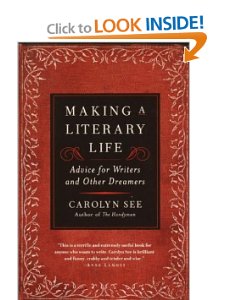
“Pretend to be a writer,” Carolyn urges. “Do Some Magic.” A writer and a teacher, Carolyn believes in practicing affirmations: I can. I am a good writer. This is going to be a great day. She got me thinking. What kind of magic could I create if just for once I believed I could instead of insisting that I can’t?
I have a picture on my desk a writing buddy gave me years ago. It says IMAGINE, and I have pasted a page from the New York Times Book Review of Best Sellers there, penciling my name in as number one. What a joke. I’m never going to hit the New York best sellers list.
No, I’m not. Not if I don’t try. Not if I believe I can’t. But what if I believed I could? Just today one of my friends hit #1 in free Kindle books. It can happen.
My other tool to combat self-doubt is Owen Egerton’s uplifting article in The Huffington Post, “Type So Hard You Bruise The Screen”,which you can read here: http://www.huffingtonpost.com/owen-egerton/type-so-hard-you-bruise-t_b_3052750.html. He begins his article, Write. Now. Go. In Jack Kerouac style, he offers a list of points for prose. Several of them speak to me including No. 16, which says: Do not write from answers. Write from questions. Discover more questions. Our work is not to explain the mystery, but to expand it. His No. 28 made me laugh because several years ago I quit my “day job” believing I could make a living as a writer. Owen says: If you write because you believe the world needs you, you’ll soon discover we don’t. If you write because you are so naturally talented you must, you’ll soon discover you are not. If you write for money… I’m chuckling at you. None of these reasons will sustain you. Listen. Are you called to write? Then write.
I particularly like No. 30: Writing is both holy and meaningless. That’s all the pressure and freedom you need.
Writing is so much harder than it looks. It’s exhilarating to create new worlds and characters, but it’s also exhausting. Are the commas in the right place? Who or whom? Am I showing and not telling? So many rules to follow, so many mistakes to make. But at the end of the day, I can’t fall asleep until I’ve faced the blank screen and did my best, because, in my heart, I’m a writer.
I’ve pasted Owen’s article to my monitor, and my copy of Carolyn’s book rests between my dictionary and thesaurus. I have a fresh cup of coffee, my butt’s in the chair and I’m looking at the screen. I’m ready to Write. Now. Go. This is a bright new morning. I’ve looked in the mirror and recited: I am a writer. I will have a productive day. I say it again. I am a writer. I will have a productive day.
It started me thinking. Why do some stories like Les Misérables, Jane Eyre, and Moby Dick have such staying power? They were written over a hundred years ago. What makes them so compelling artists find new ways to retell them, over and over again?
Bunting believes five elements make a story compelling.
Your character has to change. He calls this test transformation. We want to see how characters change, how they struggle to become better.
Write about something with historic significance like the revolutionary war, or some other life-changing event for a country, not just one person.
Have a big cast, many characters people can relate to. Instead of a story about one man’s journey, create a story about many character’s journeys.
Show what your characters want. Give every character an arc. This gives us more characters to root for. To use Bunting’s example: Jean Val Jean wants to be righteous. (man against self) Inspector Javert wants to catch Jean Val Jean. (man against man) Cosette wants a loving family. Marius wants both Cosette and the revolution. (man against society) Éponine wants Marius, and The Thénardiers want money.
Sacrifice Everything. In his book The Writer’s Journey, Christopher Vogler calls this rebirth. A character who risks everything for a virtuous goal, including his life, returns a hero and someone worthy of respect.
In school we’re taught there are three story types: man against man, man against society, and man against self. If a writer can incorporate all three, his story has a better chance of being compelling, one others will want to relate over and over again.
The next time you sit down to write, ask yourself, why is this story important? What can I add to make it more compelling? Then pick up your pen and begin to write.
Ghost stories seem most abundant in the backcountry, places already physically haunted by derelict farm machinery and the skeletal remains of residences past. Those structures radiate the energy of what once was, firing the imagination about what may remain. Idaho, a reserve of derelict mining camps and pioneer ghost towns, is the perfect setting for such stories, and a recently published book, Hauntings From the Snake River Plain, collects original stories, essays and poetry about those places in one volume. Released in August by Twin Falls-based The Other Bunch Press, the collection anthologizes 27 Idaho writers such as Elaine Ambrose, Bonnie Dodge and Boise Weekly’s Bill Cope. As with many things hyper-local, objective quality sometimes takes a backseat to regional celebration. Some stories could definitely have used that time-tested editor’s note: show, don’t tell. A story called “Lost Souls of the Lost Cave,” by Andrew W. Black, takes readers through an exploration of a cave, narrated with the verbose and melodramatic literary stylings of Kipling or Poe. “These pages cannot adequately express the horror,” Black writes, as the shadows bear down on his narrator. But there are some strong and concise depictions of place, as well. Patricia Santos Marcantonio uses Idaho’s supply of petroglyphs to craft a creeptacular, ghost-in-the-machine-style story rich with native imagery. Cope explores a family’s supernatural visit to a highway rest stop, while Dodge tells the story of a woman purchasing her dream house, which, of course, was on the market after being the scene of a mysterious death, something any movie-goer can tell you rarely works out. The anthology isn’t big on richly worded depictions of what the censors refer to as “graphic content.” For some horror fans, that might be a disappointment. For others, it is simply a choice to focus on more artful creeping senses of foreboding instead of ham-fisted blood and gore. As with all anthologies, readers will find some stories more to their liking than others. But it may also give some good reason to keep driving past that creepy roadside landmark they always wanted to stop at. —Josh Gross”
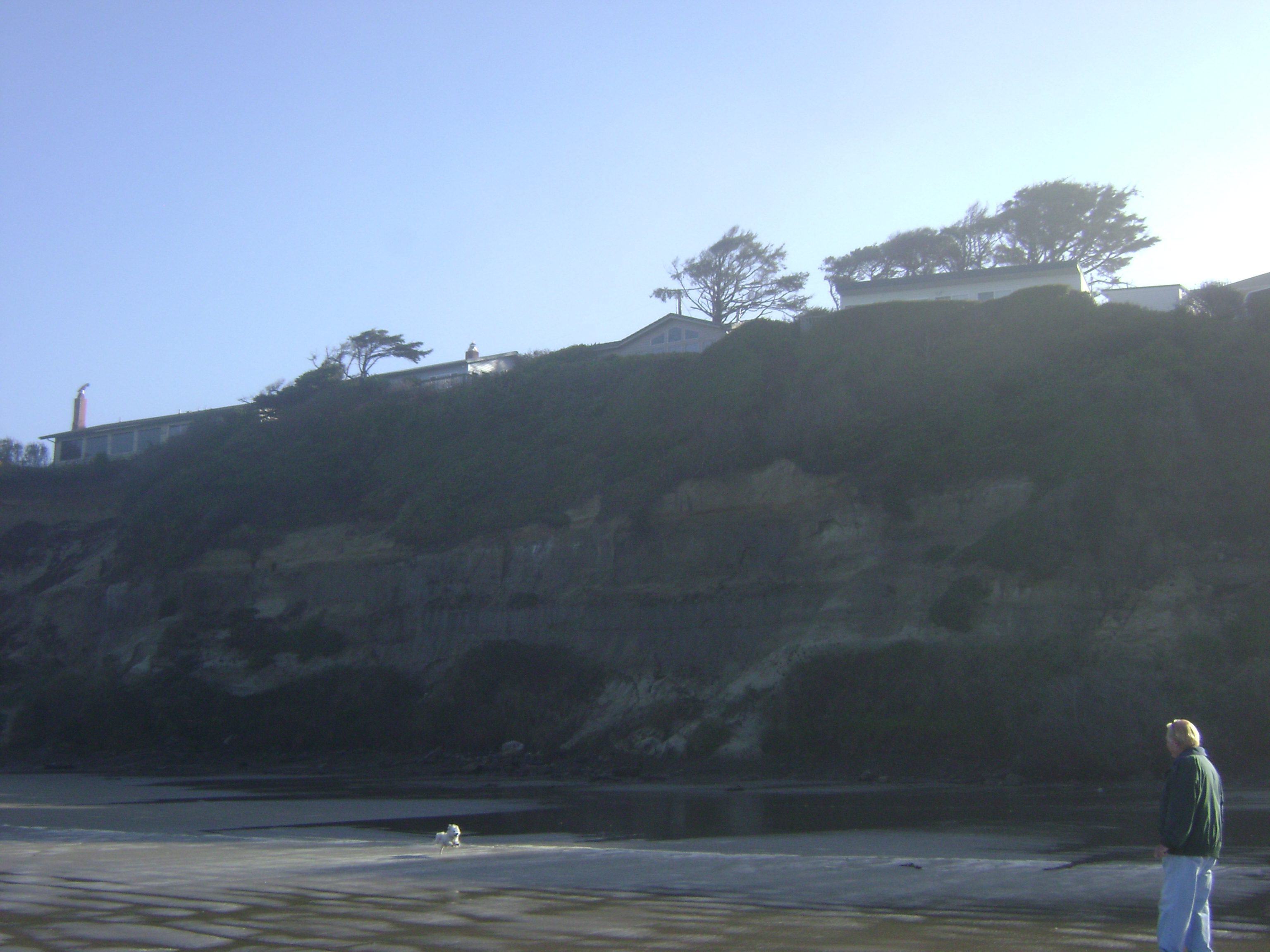
September and October are my favorite months in Oregon. This year it didn’t look like I was going to get to go, but we found a couple of free days and zipped over to see the ocean. Emily loved the beach, and so did we.
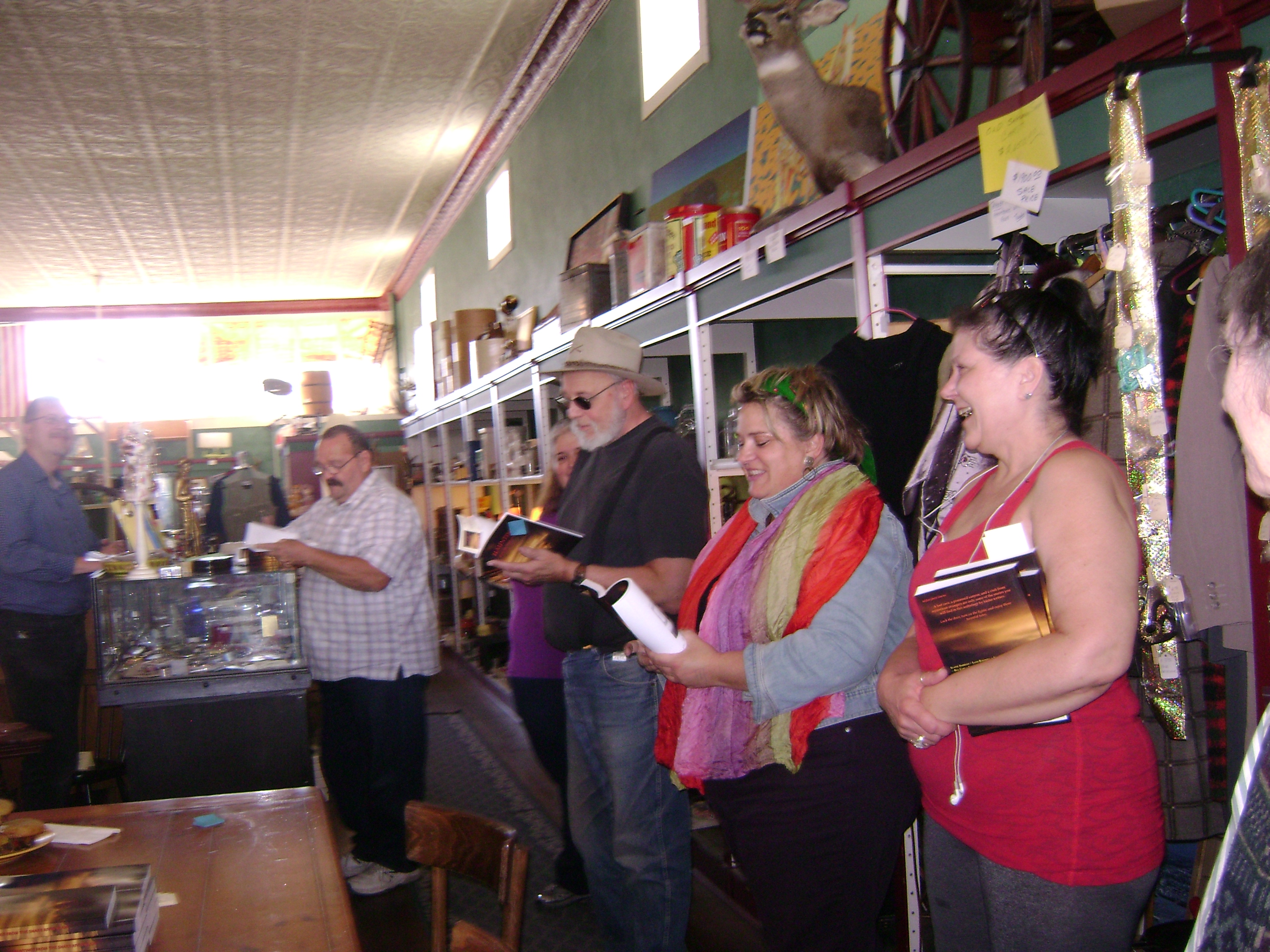
We had a great time in Shoshone signing books at an event hosted by Claudia Reese, owner of a cool antique store, 2nd Time Around Antique Mall. We read from Hauntings from the Snake River Plain and shared local ghost stories. A special treat was to see my brother Ron, who stopped by to say hello.