When my grandson Dmitri was four, and I told him about Decoration Day, he thought I was talking about Christmas. He’d get excited, thinking about all the things we would do: make and hang ornaments, bake and decorate cookies, tickle, tease, and laugh as we celebrated and enjoyed a family tradition.
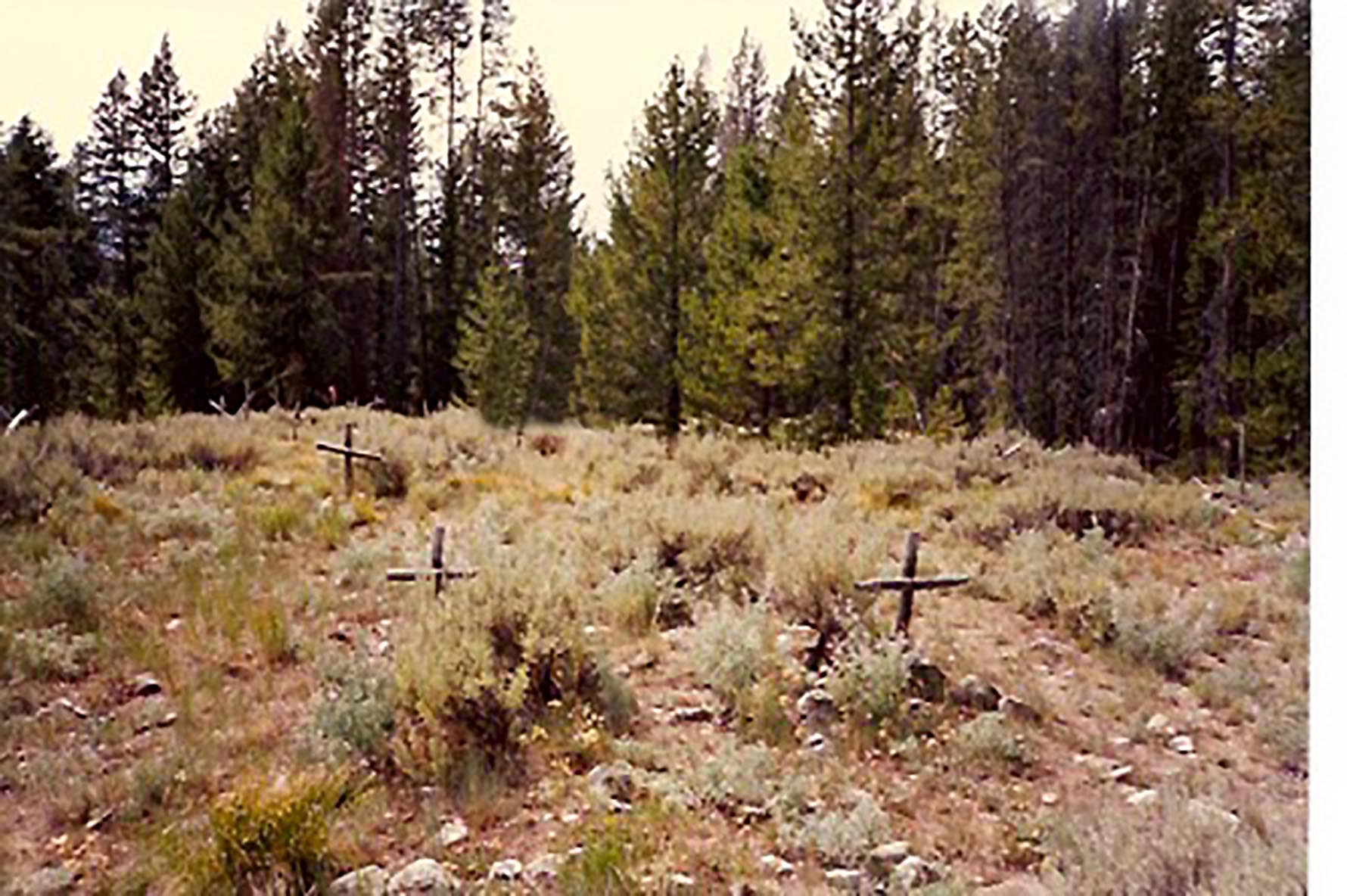
Decoration Day meant something else to my in-laws. Each year my father-in-law hibernated in his shop until he had dozens of little crosses to which his wife attached wreaths and flowers. The whole month of May was devoted to frequenting stores, gathering plastic carnations and roses, whatever she could find to adorn the wreaths. Early Memorial Day our extended families gathered and caravanned to graves scattered between Picabo and Shoshone where we erected the decorated crosses in remembrance. Along the way we’d stop for coffee, hamburgers, laughter, and tears.
Here in southern Idaho, Decoration Day often brings a parade of campers leaving town early Friday to get the best camping sites in the forest. To many it signifies the first three-day weekend welcoming summer with a promise of crackling campfires, roasted hotdogs, and s’mores.
Maybe Dmitri was right when he said Decoration Day was like Christmas. Camping by a stream or decorating graves, no matter what we do, Memorial Day is the perfect time to remember those we love, and celebrate the people we’ve been fortunate to have in our lives, a perfect time to enjoy a family tradition.
My son turns forty-two today. I’m filled with gratitude, but I’m also filled with confusion. How did this happen? How can he be forty-two when I am only forty in my head?
I realize each new birthday chokes many with terror. Just last week a friend and I were discussing milestone birthdays over lunch. Her son-in-law was turning thirty and having a really tough time. He didn’t want to celebrate. He didn’t want a party. He wanted to stay home, watch TV, and pretend it was just another day.
Maybe you know people like that, who face each birthday with angst. If you ask them how old they are, they change the subject. They never show their driver’s license, and they refuse to apply for senior discounts, even though they could save a bucket of money.
Not me, there’s gray in my hair for a reason, and that reason isn’t a box representative of the latest glamour fad.
I didn’t attain this age without a few battle scars. Years ago, when my son moved his family to Washington in search of better employment, I was my son’s worst nightmare. I didn’t want a long distance relationship with his family. I didn’t want my grandson growing up without me. Lee Ann Womack’s song, I Hope You Dance, was popular at the time and stuck in my head like a worm as I drove the many miles to see his new home. The day I had to leave, I hugged my son and whispered, “I hope you dance.” He gave me a confused look and said, “I’m a lousy dancer. I have two left feet.” Maybe he was trying to make me smile, or maybe he didn’t get it. Even so, I cried for an hour, tears blurring the lush Washington scenery, before I stopped feeling sorry for myself and pulled up my big girl panties.
I don’t face birthdays with trepidation. In my head, I’m a fearless fortyish female at the top of my game, eager for each new adventure. But sometimes my legs don’t move as fast as I’d like them to. Sometimes, if I spend too much time pulling weeds, it takes a while before I can stand up straight. I don’t eat chili before bed, or indulge in caffeine in the afternoon, and I gave up pretending I could read the fine print without glasses.
But I digress. Today is my son’s forty-second birthday. Perhaps in his mind, he’s still a teenager, eager to be on his own. He is a good father; he is a good son. As he faces each new day, I hope he will make time to dance.
I am thinking of the lilac-trees,
That shook their purple plumes,
And when the sash was open,
Shed fragrance through the room.
–The Old Apple-Tree by American novelist Mrs. Anna S. Stephens
Nothing smells more like heaven than lilacs. Maybe that’s why Manet and Van Gogh were moved to capture their likeness on canvas, and writers like Walt Whitman, Emily Dickinson, and Louisa May Alcott were inspired to put pen to paper. There is something about the sweet-smelling flowers that takes me outside myself, transporting me into a world where I’m reminded of my past, and my future.
As a child, I would lie under the lilac trees in our backyard and inhale deeply while I plucked the sweet blossoms from the branches. One by one I sucked the nectar from the tiny flowerets and nibbled on the petals while I read a book and watched my brothers chase each other. Their heads were in their game, while mine was in the flowers, dreaming of summer clouds and rhubarb pie.
Emily Dickinson wrote,
The Lilacs — bending many a year —
Will sway with purple load —
The Bees — will not despise the tune —
Their Forefathers — have hummed —
My mother died in May, just when the lilac trees were bending with purple blooms. That year the fragrance filled my yard with sadness I could taste, just like the sweetness I sucked from the flowers as a child.
I cannot bring back my childhood days anymore than I can bring back my mother. But as bees hum around the lilacs in my yard, I can remember those days with a smile in my heart and inhale deeply. Perhaps that’s what the artists experience when they put brush to canvas and pen to paper. A fine spring day, fragrant with eternal love.
I’m not an educator, nor did I have a burning desire to go to Minneapolis in the spring, knowing winter storms ground planes and make life in general just plain miserable
but
I couldn’t attend AWP 2014 in Seattle, which is closer to my home state
and
my son had two readings scheduled and invited me along. Being a writer myself, there was no way I was going to say no.
We arrived a day early, and I’m glad we did. I have Meniere’s disease, and any form of travel can set my head spinning. The added day gave my body time to settle down as well as some extra time to get my bearings.
On Wednesday, the first day of registration, the hotel and convention center was like the inside of a beehive. With over 13,000 registrants, the place was abuzz as writers arrived and networked. It was almost like being in the middle of a great movie.
THE GOOD:
One of the biggest literary writer conferences in the United States
Opportunities to meet editors, pitch story ideas, and listen to other writers talk about craft
Over 500 panels to choose from, consisting of readings, discussions, or pedagogy running consecutively from 9 am to 5 pm every day
A gigantic bookfair manned by every conceivable literary small press including Tin House, The Rumpus, and Prairie Schooner, not to mention the university presses looking for new voices
Some of the best writers in the United States
Some of the best educators in the United States
Offsite readings, book signings, and events
Karen Russell, Lance Olsen, Pam Houston, Kim Barnes, Robert Wrigley, Lidia Yuknavitch, Cheryl Strayed, Claire Davis, Stephen Graham Jones, and Trevor Dodge, to mention only a few
THE BAD:
Over 500 panels to choose from, running consecutively with fifteen-minute breaks. Impossible to settle on just one
A gigantic bookfair with conference specials, writer guidelines, and bling. Extra totes to carry everything home
Offsite readings, book signings, and open bars wherein you crawl into bed at 2 am too wired and over-stimulated to sleep
Long lines, incessant chatter fueled by all that writerly energy
No genre discussions, no Alice Hoffman, Margret Atwood, or Charles Frazier
THE UGLY:
Me the day I leave Minneapolis to fly home, exhausted, my head spinning with thousands of ideas
In this world there’s two kinds of people my friend – those who attend conferences, and those who stay home. You dig?
THE END
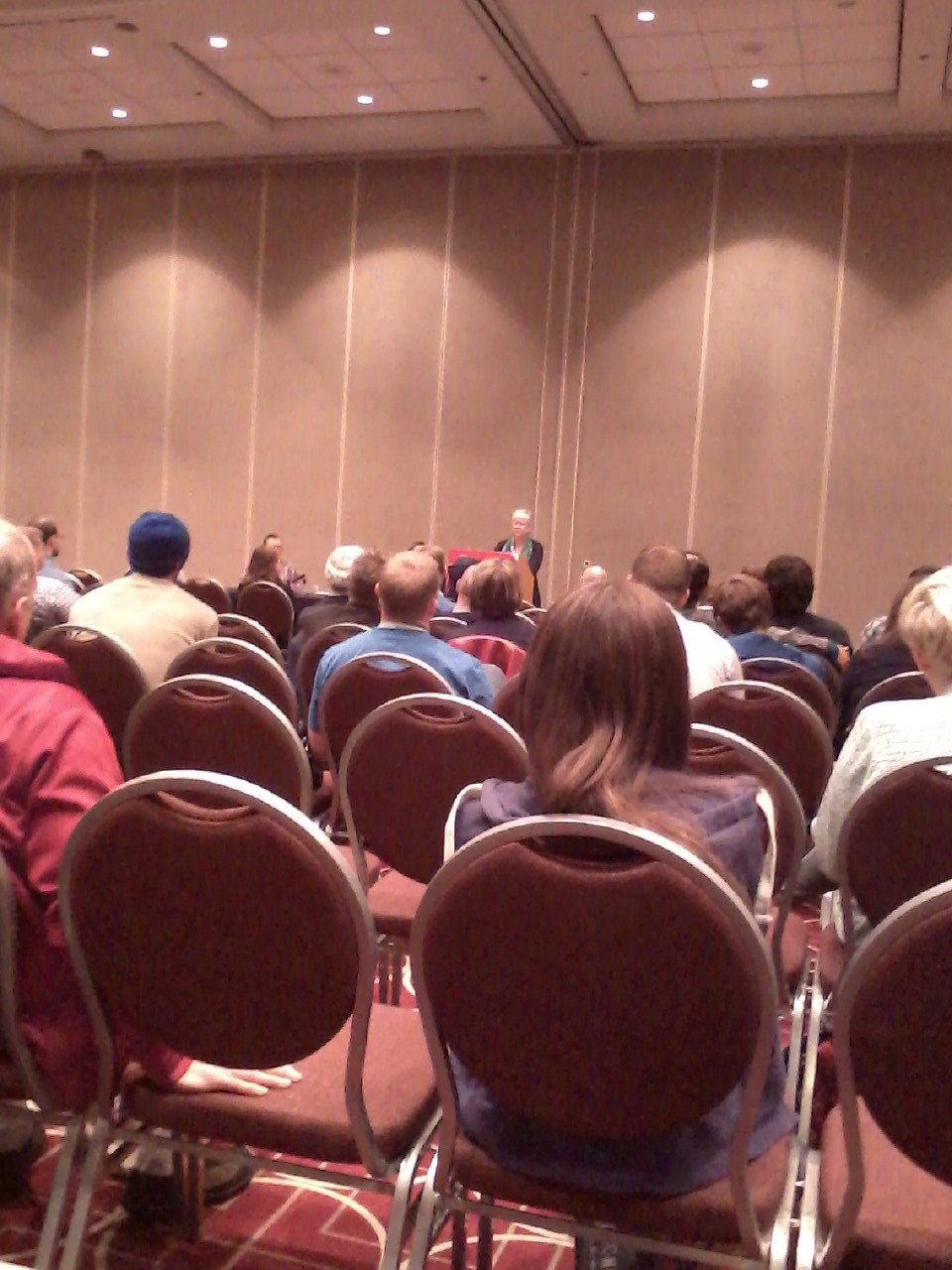
Kim Barnes discussing No Country for Good Old Boys
Kathy and I met years ago on an on-line writers’ group called GIAM. The writers in this group are my go-to pals when I get stumped or need writing advice. It is my pleasure to introduce Kathleen Irene Paterka, a prolific writer, even with a day job.
1) Why did you become a Writer? How did you get started?
I can’t remember a time that I didn’t want to be a writer. My mother got me my own library card when I was six years old. I remember being fascinated with having all those books available to me, and I couldn’t imagine a better world than being surrounded by books. When I was about 8 years old, I fell in love with the Trixie Belden series. I decided then and there that I would grow up and write more Trixie Belden books. My parents got me a typewriter for Christmas, and I was hooked.
2) What is your writing routine? How do you discipline yourself to keep at it?
I’m up early every morning, at 5 am. By 6:30 am, I’m at the computer and my timer is set. For the next two hours, I concentrate on my current work-in-progress. Marketing and social media also take a considerable amount of time, but I prefer to do that in the evening hours. I do have a day job, just as most writers do (95%, in fact). Mine is rather unique: I’m staff writer at a real American castle where I’m surrounded by romance and royalty. It’s a wonderful life.
3) How many drafts before you feel the book is finished?
My rough draft is where the story magic happens. I am a pantster. When I start writing the rough draft, I’ve done research on my characters, but plot-wise, I usually only know the beginning, the ending, and ‘something-that-happens-in-the-middle’. The rough draft normally takes me 8-12 months (for a 400 page novel), and it’s very complete. I’ll end up with perhaps another 3 drafts, normally done to edit and polish.
4) What was the best thing that happened with regard to your writing career? The worst?
The best AND the worst thing are actually the same thing; it was a rejection letter I received from a well-known editor at a highly respected publishing company. She told me that while she and her assistant editor loved my novel For I Have Sinned, she had to turn me down; the company’s marketing department had informed her that they couldn’t figure out ‘how to sell the book’ because it crossed genres (women’s fiction, inspirational, romance, Christian fiction). When I initially received the rejection letter, I was devastated… but only for a few moments. I realized that the editor had actually given me some very good advice. She told me that many novels which were excellent works had crossed her desk, but ultimately had to be turned down for one reason or another. The editor urged me to find a home for the novel; she felt it was that good, and she suggested that I think seriously about indie-publishing the book. That was the beginning of my career as an indie-author, and I have never looked back. My novel For I Have Sinned went on to final in a few prestigious writing contests, and has received numerous five star reviews on Amazon and Goodreads. For I Have Sinned is the book of my heart and I am very proud of it.
5) What part of your job do you love the most? Hate or dislike the most?
I love the rough draft, getting to know the characters, and falling in love with the story line. Being a pantster, I don’t have things plotted on a story board (that would bore me to tears!). So when I’m writing and something exciting or unexpected happens on the page, I’m as thrilled as the reader who’s seeing it for the first time. The thing I hate the most about writing is the editing process. I subscribe to the theory of ‘more is better’, which means I usually end up having to cut lots of words (read: ‘redundant’) from my latest work. I hate seeing words, phrases, paragraphs, and sometimes whole scenes that I worried over eventually end up deleted from the final draft.
6) What do you like to read? Do you read while working on a novel? Favorite authors?
I love a good, emotional read. When searching for a new book, I turn to women’s fiction authors such as Jodi Picoult, Jennifer Weiner, Elizabeth Berg, and Eileen Goudge. All of them are superb storytellers. I also love anything by Stephen King. He is, without doubt, a living literary icon. His masterpiece 11/22/63 is one of my favorite books of all time. When I’m writing a rough draft, I’m careful not to read the type of work that I’m writing (I don’t want to fall under the influence of my favorite writers, and be accused of plagiarism). I often turn to biographies instead.
7) What was the best advice you received as a writer? The worst?
The best advice? “Never, never never quit” (from an author friend, who was quoting Winston Churchill). This is a devastatingly hard business, and you have to find the courage deep inside to keep going, even when those around you are urging you to give it up. The worst advice I ever got came from an editor at a publishing company who told me that I should quit writing… that while I had considerable talent, my voice was ‘scattered’ and unmarketable, and that I should give up and quit wasting my time. Her words served to inspire me to be even more determined to prove her wrong.
8) Who has influenced you the most in terms of developing your personal writing style?
The author Stephen King, because he is not afraid to take chances. He writes for himself; he tells himself a story, and then sets it free in the world for readers to embrace (or not). I like the idea of telling myself a story. I’m writing for myself. If I’m not interested in what’s happening on the page, why should I expect that my readers would be?
9) Do you have a good luck charm or superstition?
The bottom of my computer monitor is lined with scribbled sticky-notes and quotes clipped from inspirational books. They keep me going when my spirits flag. My favorite quote: “Do your work well. Write the stories you were meant to tell.”
10) If you weren’t a writer, what would you be?
People fascinate me. I always wanted to be a talk show hostess. When I was growing up, I used to practice by interviewing myself.
11) What quote or personal saying do you live by?
“Hope and keep busy.” I don’t think we can do more than that. The quote is from Marme, of Little Women (by Louise May Alcott), which is one of my all-time favorite books.
12) What’s next up for you, writing-wise?
I’m currently researching for my next book, which will be a return to James Bay, the fictional resort community, which is the setting for my first four books (Fatty Patty, Home Fires, Lotto Lucy and For I Have Sinned). The book is about Chuck’s Tavern and Grill, and centers on the restaurant owner, Chuck, who was featured in the other James Bay novels. Each chapter in the new book will feature its own recipe. I’m excited about being able to play with the customers who frequent the restaurant, and involving characters from my earlier James Bay novels.
13) If you could do anything over again, would you and what would it be?
Nothing. I don’t believe in do-overs. I think that we all are given one chance, at each particular moment of our lives, and everything we are, everything we become, hinges on the choices we have made in the past. I am very content with the woman that I am, and the life that I lead. I surround myself with positive people, and I love my life. If I’d had a do-over, I wouldn’t be the same ‘Kathleen Irene Paterka’ that I am today…. But I love who I am. I wouldn’t want it any different.
14) What advice would you give beginning writers?
Don’t give up. Work hard, work smart, work tirelessly. Be tough, be brave and be persistent. All clichés… but when they apply to you and how much you want to realize your dream, they are very appropriate.
15) Something we don’t know about you?
I have a newsletter which hosts a monthly contest (a free giveaway) for subscribers. Sign up for my newsletter (I promise not to flood your In-box with emails!), and you could win a print copy of any of my books.
And: what’d you like us to know about your latest release:
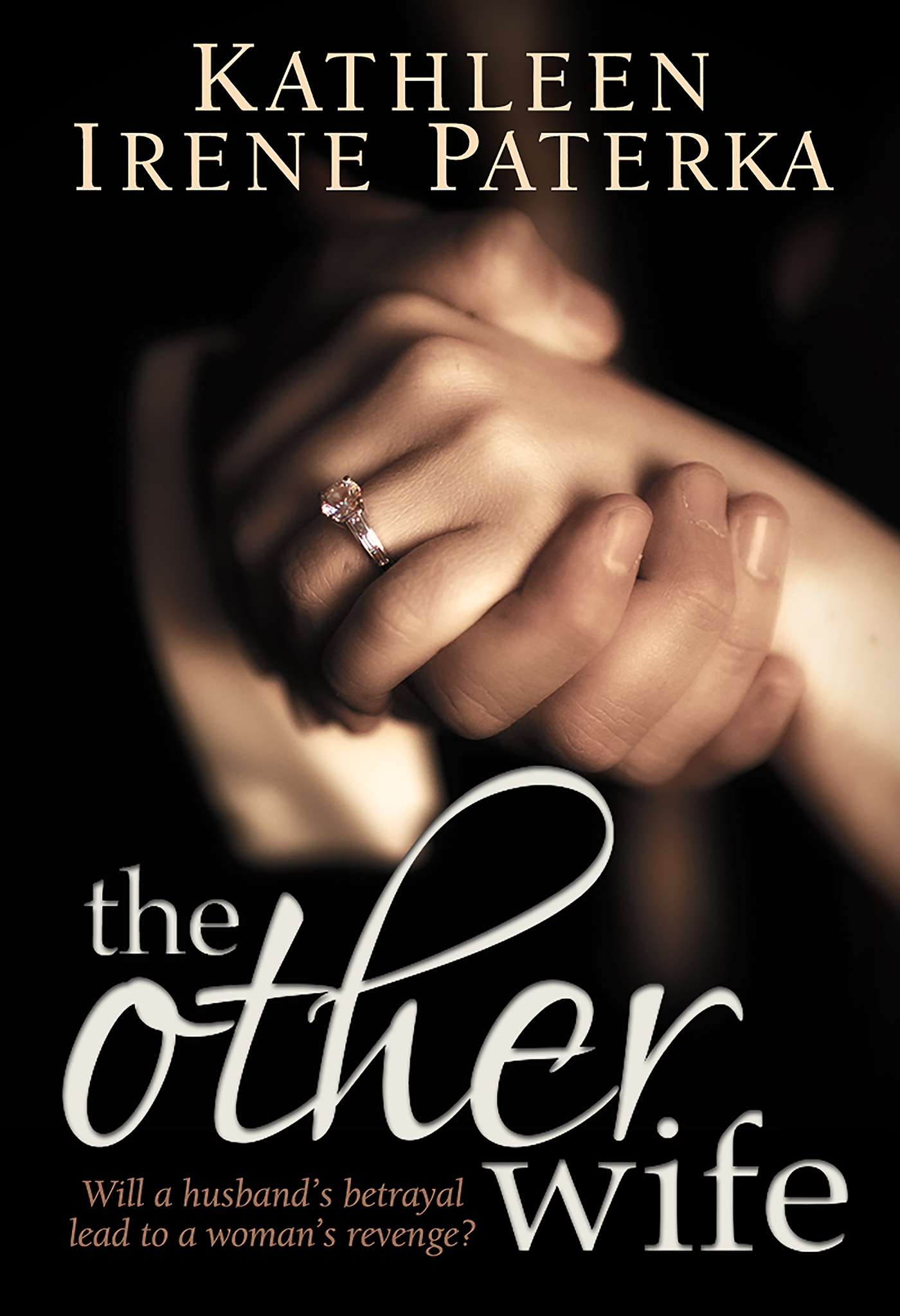
The Other Wife is a women’s fiction novel that deals with issues of death, grief, resentment and revenge. It tells the story of Eleanor and Claire, two women who are horrified to find themselves both married to the same man. The novel begins in Eleanor’s point of view who wakes to find her husband Richard dead in bed beside her. Eleanor, married to Richard for 38 years, is devastated by the discovery. She’s even more horrified to discover, at the end of Chapter One, that Richard was keeping a deep dark secret, and has left all his money to another woman. In Chapter Two, we meet Claire, a 30ish professor of psychology at the University of Chicago. It’s not long into the book before Claire learns that her husband Richard has died… and not only is he dead, he left behind an earlier wife… a valid marriage to another woman. The discovery that her marriage is a sham is a horrible blow to Claire. While Richard has left her all his money, Eleanor is the one who has the title of Richard’s wife, something Claire thought was hers alone. How these two women come to terms with ‘the other wife’ is the basis for the story.
I’m excited to be part of the Historical Novel Blog Tour hosted by writer Tiffani Burnett-Velez. Thanks, Tiffani, for inviting me to participate.
Who you are, where you’re from, your writing credits.
I’m a “farm” girl, raised in North Dakota until age nine, and then moving to southern Idaho. When I say farm girl, I don’t actually live on a farm, but I know how to milk a cow, and I do live on ten acres, mostly pasture. The only animals I keep are three small dogs that I love to pieces. For several years I played with the idea of keeping bees but my husband just retired and we don’t want to take on anything that will keep us from travelling, so that idea is on hold. I’m organic and love to play in the dirt, earning the name Mother Earth from close friends. For twenty-some years I worked in a bank, and when I left my “day job,” I started writing professionally. I started freelancing with mostly nonfiction, then took on a column for AG WEEKLY that I wrote for six years. I’ve written a bit of poetry, but my love is fiction, and particularly women’s fiction. When my hometown turned 100, I published a book of essays commemorating that event. I’ve co-authored several anthologies, a children’s book, and just recently published a book called Waiting, which won the 2014 Idaho Author Awards Top Ten in fiction. My newest novel, Goldie’s Daughter, will be published by Booktrope this summer. I’m excited to talk about this book and its development.
What is your latest historical fiction piece?
Goldie’s Daughter begins in the Idaho mining camps in 1882. Goldie was the town prostitute and the story is actually about her daughter, Emily, and how Emily overcomes her reputation as a prostitute’s daughter.
Why did you choose to write it?
We have a cabin in Featherville, Idaho, near the mining camps of Rocky Bar and Atlanta. Featherville was actually near a mining camp too named Esmeralda. As we spent summer vacations there, we wandered the mountains and learned more about the mining history. I heard about a woman named Peg Leg Annie. That started me thinking. What if I was Peg Leg Annie’s daughter? What if I had to grow up in a mining camp? That’s how the idea for the novel evolved.
What about that era appeals to you?
I love everything Victorian, and this is just at the end of the Victorian age. My favorite pastime is haunting old cemeteries and Victorian mansions. I love the West and the open spaces and how where a person lives affects the way they live. My character Emily has a tough time in the mining camps and thinks things will get better once she travels to a more civilized town. But when she gets to St. Louis, she discovers civilized society can often be harder to navigate then the gritty mining camps.
Are your characters real or fictional? If they’re real, how did you fictionalize them?
All of my characters are fictional. I did use the real person, Annie Morrow, as the inspiration for Goldie McIntyre, but everything is fiction. I did use real names for the towns to ground the story.
What kind of research is involved in writing your novel?
Tons. I read everything I could find about the Idaho mining camps and transportation in the late 1800s. I visited local libraries. For libraries I couldn’t visit, like in St. Louis, I corresponded through mail and email. I even purchased an old Webster’s dictionary to make sure I was using words common to the era, words my characters would use. I also conducted interviews and read old newspapers.
How do you organize the fictional aspects of your writing vs. the historical facts?
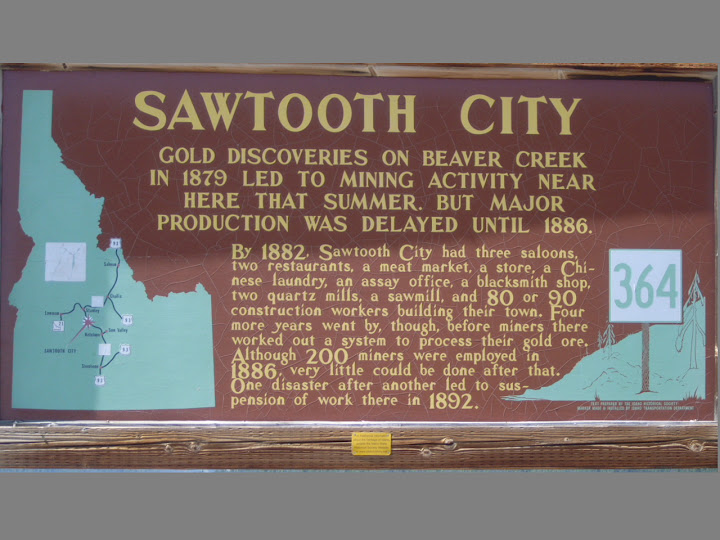
I kept historical dates accurate but I changed some of the names, like Sawtooth City became Saw Tooth City. I studied historical events and made sure the same things happened in my story. For instance, an article I read about a Forth of July parade in Rocky Bar became material for a scene in the book. Traveling troupes were popular at that time, and I made sure a travelling troupe visited the mining camps.
How does the historical timeline move your plot along or influence the actions of your characters?
One of the things I wanted to do was show the differences between people who lived in “polite society” vs those growing up in the mining towns. Dirt roads vs roads paved in brick. Full pantries vs the meager food found in mining camps, especially in winter when supplies couldn’t be delivered. And how transportation impacted the way people lived and moved about the country, much of which was still undeveloped.
How do you feel about writers taking creative license with historical facts? Or, does it bother you when facts area changed to fit the story in a movie or a book?
It used to. I don’t like it when authors put words into the mouths of famous people. For instance, I read a novel recently about nurses during the Civil War. The author had President Lincoln interact with the characters, carrying on conversations that “might” have happened. It didn’t make the scenes more real for me, in fact, they felt false. I can be a purest sometimes and I don’t like it when authors rewrite history to serve their stories, but I understand why they do it. I think they risk offending their audiences when they do because some people are unwilling to suspend their disbelief, especially if they are staunch historians.
What’s next for you after this present work?
I have several projects in the works. A novel set on the Oregon Coast, a collection of short stories in a rural setting, and a book with regional stories and recipes. I’m always working on something. Goldie’s Daughter will be out this summer, please watch for it.
Spring in southern Idaho can be treacherous, or it can be beautiful. Usually the wind blows so hard you think you are in Kansas, but today it is beautiful, so beautiful I wandered down to Shoshone Falls.
Sometimes called the “Niagara of the West,” Shoshone Falls is 212 feet high—45 feet higher than Niagara Falls—and flows over a rim 1,000 feet wide. Because water is diverted for irrigation and hydroelectricity, water levels diminish in the summer and fall making spring the best time to view the falls. Here is what it looked like today. As soon as the snow melts in the mountains, the water pouring over the falls will double.
This high desert isn’t always dry and boring. Today it is splendid and boasting of spring.
January is a month for new beginnings. While everyone is setting goals and making resolutions, I have a few of my own I’d like to share. Years of writers’ conferences, workshops, and book signings have taught me what to do as well as what not to do as I try to present myself as a professional writer.
Professional writers listen and observe. At workshops, they don’t talk unless they are the keynote speaker. They respect the presenter even if they think they know more than the speaker. They don’t hog the time or offer their opinions unless they are specifically asked.
Dress appropriately. Professional writers don’t show up in pajamas even if they write most of their books in pjs. They pay special attention to their appearance and put their best self forward. They brush their teeth, comb their hair and wear clean conservative clothes at presentations and book signings.
Be courteous. At book fairs, professional writers don’t shout out, “Hey you, buy my book.” Nor do they interrupt other authors talking about their own books by saying, “Hey, I’m a writer too.” Or “Hey, I take credit cards.” They wait their turn and are considerate.
Don’t gossip or complain. Professional writers are mindful of what they say in public. They don’t gossip or burn bridges. They know that the writer they pan today may be the best-selling author they’d like a back cover blurb from tomorrow. They know that the writer they berate may be the person they may have to chair a committee with some day.
Be on time. Professional writers realize that time is a precious commodity. They don’t make others wait. They call when they know they are going to be late and stick to schedules, no matter what.
Continue to learn. Professional writers know that writing is an ever-changing industry and that what worked five years ago isn’t going to work today. They read, study, and attend meetings and conferences to stay current in their industry.
Don’t brag. Professional writers check their egos at the door. They realize that everyone has an opinion or something to boast about. They don’t pontificate or shove their personal opinions on others.
Be dependable. Professional writers keep their promises. If they sign on to do something, they do it. They are honest and reliable. They finish what they start.
Exercise self-control. Professional writers control their emotions. They realize that writing is a subjective career. They know how to handle rejection. They don’t shout or scream in public if their feelings are hurt, or if they have a problem with another writer. They settle disputes privately with discretion.
Be present and give your all. Professional writers believe in themselves and write even when the writing is going badly. They believe in the process and they always do their best, knowing that their audience deserves only the best.
And lastly, professional writers know the difference between work and play, and count themselves blessed that they get to do something they love every day. As you begin the New Year, put your best foot forward. Be professional and enjoy the journey.
Today is Elvis Presley’s Birthday. He was born in Tupelo, MS on January 8, 1935. Maxine Foster’s dream was to visit Graceland on his birthday.
Excerpt from Waiting:
January brought with it more than snow. For the first time in along time, January filled Maxine’s house with excitement as she plannedher trip to Graceland. She waited until the last possible moment totell her family that she was going. She was settled at Grace’s kitchentable the night before, sharing a rare cup of coffee with her daughterand granddaughter.
“Graceland?” Grace said, her mouth hanging open. “By yourself?Mother, that’s not like you.”
“I know,” Maxine said. “And don’t try and talk me out of it. Thisis something I’ve wanted to do all my life. And now I’m going to.”
“Does Daddy know?”
“No, and I don’t want you to tell him. He’ll ruin it. I haven’t had a vacation in years. I think it’s about time I got to do something I wanted.”
Does Maxine go? Find out in Waiting. Get your copy here.
Cassie stood at the kitchen window, her hands wrapped around a coffee cup for warmth. Outside, snow swirled in a series of mini tornadoes, not that she’d ever seen a tornado, or snow, either, for that matter. A snow tornado, that’s how she’d describe it to her mother back home in Seattle. Between the steam from the coffee fogging her glasses and the swirling snow outside it was impossible to see the corral let alone her husband Jim.
“I need to put Ole Henry in the barn,” he had said as the snow started to fall. That was thirty minutes ago. She was sure the horse was no longer outdoors, but that gave Cassie little comfort as she watched the sky thicken with snow. She shivered while upstairs the twins squealed as they wiggled into their new snowsuits.
“Hurry up,” Tracey said. “We need to build a snowman before the snow goes away.”
Cassie smiled. As if this snow was going anywhere, not if you believed the meteorologist on Channel 7. If she’d been more of an outdoors’s girl she’d button her coat and join her children. But she was a city girl, more in love with Seattle than the Idaho prairie, so she let them enjoy the excitement of their very first snowfall without expressing her discontentment.
She turned as the door squeaked opened flooding the kitchen with cold blustery wind. Jim was covered in snow, his face redder than the barn. He warmed his hands over the wood stove and called upstairs. “Girls? What are you waiting for, Christmas?”
They giggled their way toward the kitchen. Tracey had her stocking hat on inside out and Stacey had her scarf wrapped so tight around her neck all Cassie could see were her eyes.
“Yes,” they cried in unison. “We can’t wait for Christmas in Idaho.” Tracey pointed to the calendar. “Only twenty more days.”
It was hard to believe Christmas was less than three weeks away. In the four short months they had been on the Camas Prairie, Cassie’s sickly-looking six-year olds had blossomed into sturdy pioneer stock. Freckles bridged their noses, and their once pale faces were now the golden color of honey. If only their grandmother could see them, Cassie thought. She wouldn’t believe their transformation.
“Cass?” Jim straightened Tracey’s hat and tugged the twins’ zippers tight. “Aren’t you going to join us?”
Cassie shook her head. “No thanks. I can watch from the window.”
Tracey pulled at her mother’s hand. “Awe, come on, Mom. It’ll be fun.”
Cassie gave her daughter a hug. “I’ll come out later and take pictures to send to Nana.”
Closing the door behind them, Cassie brushed at the tears threatening to fall. The thing she wanted most wasn’t going to happen. She wouldn’t be spending Christmas with her mother in Seattle. She wouldn’t see the city decked out in holiday fare from the top of the Space Needle, or stop for hot cocoa at the Fairmount Olympic after riding the Holiday Carousel at Westlake Park. She would miss the hubbub at Pike Place Market and the horse-drawn carriage rides. Just last week she had begged, even pleaded. “Please, Jim. Can’t we go home for Christmas?”
“This is our home,” he’d said without looking up from his newspaper. “I want to have Christmas here. So do the twins.”
Cassie bristled. This stupid farm was driving a wedge between them. What did they think they were doing anyway, a Seattle attorney and accountant on a run-down farm in the middle of nowhere? Her poor attempt at a garden had proved a disaster. Mending fences filled her hands with calluses and broken fingernails. And the grasshoppers and rabbits ate better than she and her children.
“It will bring us closer as a family,” Jim had promised as he transported them from Washington to Idaho. Fairfield, Cassie thought the moment she saw the farm. Nothing was fair about Idaho or the abandoned ranch either where cell phone reception was spotty at best. Four months, but it felt like years.
She finished her coffee, then pulled her camera from the top of the closet, buttoned up her coat and joined her family outside.
“Watch out, Mom!” Tracey said, as a snowball whizzed over Cassie’s head. Before Cassie could duck, another hit her square in the face. Cold and icy, the snowball fight was anything but fun.
She brushed the snow from her eyes and interrupted their game by pulling a carrot from her pocket. “Here. Frosty needs a nose.”
“Thanks!” Stacey’s cheeks were red; her eyes sparkled like fairy dust. The only thing that would make them shine brighter was Tinker Bell appearing with her magic wand.
Positioning her twins beside the finished snowman, Cassie said, “Say, Cheese.”
“Cheese.” Her twins smiled as Cassie clicked the camera.
“Wait. One more. So I can put it in a frame for Nana so she’ll have something to admire this Christmas.”
Jim looked pointedly at her. Without a word he walked toward the barn.
Go, she thought. Go talk to your stupid horse.
That night at dinner she tried again. “Please. One week. Surely you can spare one lousy week.”
Jim put his fork down and kept his voice even. “I promised Roger I’d help reroof his barn.”
Cassie scoffed. “Who roofs a barn in the middle of winter?”
“Farmers since they’re too busy any other time of the year.” She looked at her plate, and they finished the meal in silence.
While Cassie cleaned up the kitchen and washed the dishes, she made a decision. She was going home for Christmas, even if she had to go alone.
The next morning, after the twins were safely in school, Cassie stopped at the library. A large sagebrush sprayed white and decorated as a Christmas tree stood in the middle of the lobby making everything smell pungent instead of like pine.
“Isn’t it lovely,” the librarian said when she saw Cassie looking at the tree. “Just last week the first grade elementary kids helped decorate. Look. Aren’t these just the sweetest?”
All the decorations were homemade, including the paper garland and tissue paper snowflakes. Ornaments in the shapes of stars and candy canes cut from paper plates hung from the twisted branches. Pretending to admire the artwork, Cassie turned a glittery pink star over, startled to see her child’s name written in bold red letters: Tracey Ann Mink – 1st grade.
She searched until she found the other, a candy cane colored red and green: Stacey Marie Mink – 1st grade. Beside her name, Stacey had added a smiley face wearing a Santa’s hat. They hadn’t mentioned decorating a sagebrush, had they? No, she would have remembered. Cassie chewed the inside of her cheek while she waited for her computer to connect to the Internet. Why was she the only one who couldn’t seem to bond with this stark Idaho landscape?
As soon as she was on the Internet, Cassie purchased three plane tickets to Seattle. After checking email and her Facebook page, she turned off her computer and drove the ten snowy miles home, all the while humming, “I’ll Be Home for Christmas.” The storm had passed, leaving everything glittering white. The contrast between the blue sky and the white trees was striking she had to admit, prettier than the dreary gray skies she knew her mother was experiencing in Seattle.
That night as they settled around the kitchen table slurping tomato soup and devouring grilled cheese sandwiches, Cassie broke her news. “Jim,” she said, “I’m going home for Christmas, and I’m taking the twins with me.”
Everyone stopped eating. The only sound in the kitchen was the refrigerator running.
“I thought we were staying here for Christmas,” Tracey said. “That’s where I told Santa to bring my presents.”
“He can still bring your presents here. That way you can celebrate Christmas twice,” Cassie negotiated.
“It won’t be the same,” Tracey pouted.
Stacey folded her arms across her chest. “I’m not going. I promised Miss Miller I’d help hang the star at our Christmas pageant.”
“I’m sure someone else can help her out,” Cassie coaxed.
“Maybe they can,” Stacey said. “But I said I was gong to do it. And I am.”
Cassie looked at her husband. “Jim, help me out here.”
He pushed away from the table and grabbed his coat. “You’re own your own,” he said. “I need to check the livestock.”
Stacey finished her sandwich and said, “ I’m staying here for Christmas.”
“Me too,” Tracey said.
“But what about Nana?” Cassie said. “She will miss you.”
“No, she won’t,” Tracey said. “She already said it would be all right. Don’t you remember, when we talked to her on the computer?”
“Fine.” Cassie was disheartened but she wasn’t defeated. The following Monday she drove into Fairfield. Again using the library Internet, she cancelled the twins’ tickets and changed her ticket from a week to a long weekend. She’d spend Christmas Eve with her mother at Westlake Park and fly back Christmas day in time to wish her children Merry Christmas.
With Christmas coming the twins were so excited their happiness was contagious. All week long they practiced the songs they would sing in the Christmas assembly at school. What Cassie had convinced herself would be easy, was proving hard to do. She didn’t want to be away from her children at Christmas, but she didn’t want her mother to be alone, either. As she backed out of the driveway and pointed the car toward Boise, she tried to mimic the twins’ holiday spirit. “Oh Christmas tree,” she sang as she maneuvered the icy roads. “I’ll be home for Christmas.” In spite of the happy songs, her heart was heavy. But the surprised look on her mother’s face would make the sacrifice worthwhile. She’d be back soon. She wouldn’t miss their Idaho Christmas.
Her parting with Jim had been icy at best. He didn’t kiss her goodbye; he didn’t wish her a Merry Christmas. “Watch the roads,” he’d said before walking off to the barn. She knew in her heart if something didn’t change soon her marriage was doomed. But she would worry about that next week after the holidays. Next year was soon enough to decide how to resolve their differences.
Arriving early for her flight, Cassie stopped at Starbucks in the Boise Airport and enjoyed a real cup of coffee. Along with their festive display Starbucks was selling holiday coffee cups: Snowmen, candy canes and reindeer. She selected two cups, each painted green and red to look like elves’ shoes. She envisioned filling the cups with hot chocolate on Christmas Eve and settling down to a movie on TV, maybe “It’s a Wonderful Life” with her mother. The thought made her smile. Why, then, was she so close to crying?
Christmas was everywhere, in the corridors, on the escalators, and especially in families reuniting again. Cassie watched as family members greeted holiday travelers with hugs and kisses. She almost cried when a young woman holding a baby embraced her husband returning from active duty. She kissed her husband repeatedly, “This is the only thing I want for Christmas. I’m so glad you made it home. Just like you promised.” The soldier smothered the baby with kisses and Cassie had to look away to stop her tears.
Finally they called her flight. As she stood in line to board the plane the anticipation in the air was catching. Everyone was headed home for Christmas.
Cassie squared her shoulders. My mother needs me.
She dug through her purse and found her ticket. My husband needs me.
Ticket in hand for scanning, Cassie knew instantly no matter how much she hated Idaho, no matter how much she missed her mother, she loved her husband and children more.
“Miss?” The attendant said. “Your ticket?”
Cassie fumbled with her purse. “Oh, I think I lost it.” She picked up her carryon and stepped out of line.
As Cassie passed Starbucks she stopped and picked up two more coffee mugs. She’d fill them with hot chocolate Christmas Eve after they decorated the tree. It could even be a scrawny sagebrush sprayed white, it wouldn’t matter as long as they were all together. She’d be home to hear Tracey sing and to see Stacey hang the star. She’d be home in time to kiss her husband good night and tell him how much she loved him.
Cassie pulled away from the airport and onto the interstate highway. She wouldn’t wait to see their faces. “Oh Christmas tree,” she sang. Only two more hours. She’d be home in time for Christmas.
Promotional Pricing: Free 12/02/2014 to 12/05/2014 Pricing: $1.99 (after 12/05/2014)
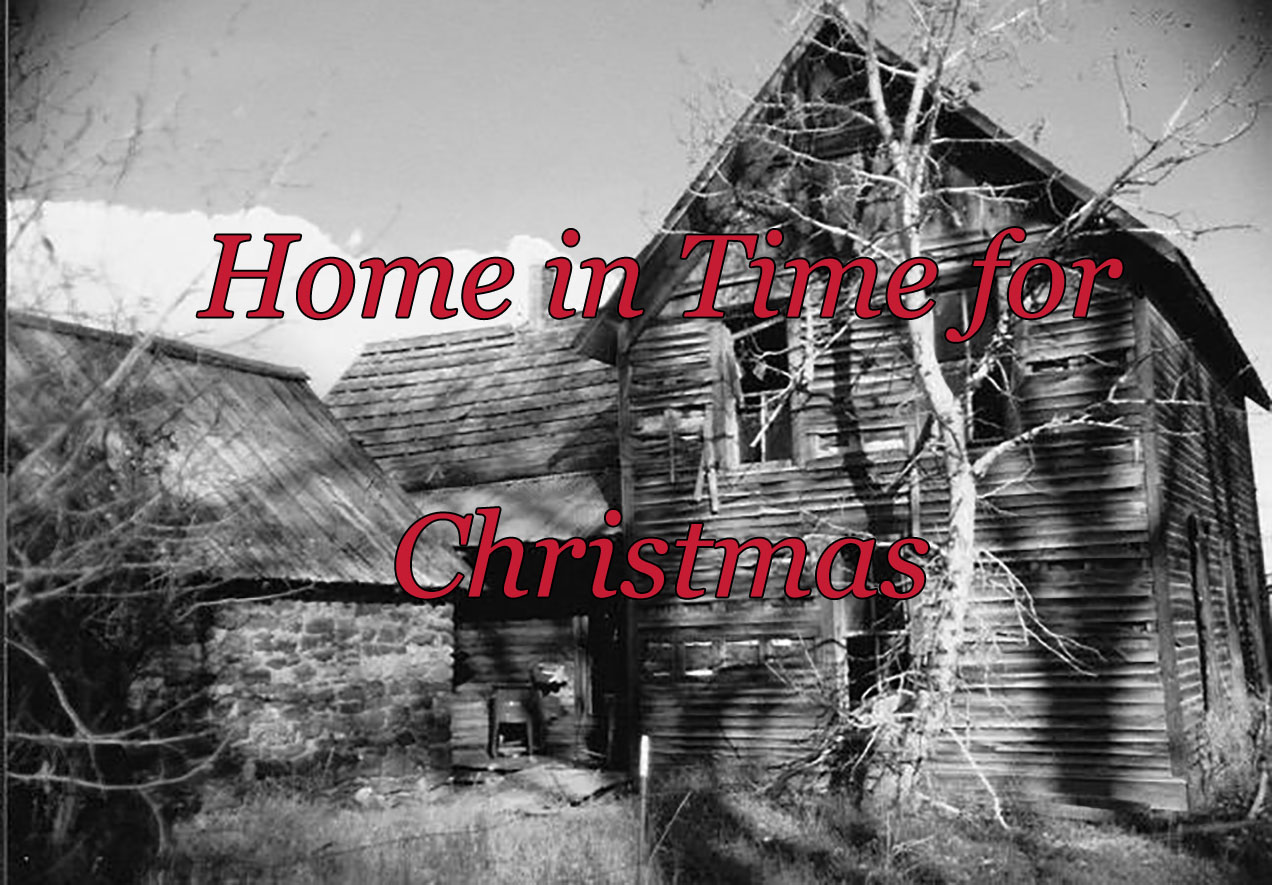
A Cup of Christmas is a lovely mixture of award winning authors. My story, “Home in Time for Christmas” is a story about Cassie and Jim Mink from my Fairfield, Idaho, collection. Cassie wants to return to Seattle to spend Christmas with her widowed mother while Jim wants his family to experience their first Christmas in Idaho. Other stories include Christmases remembered through the years and family traditions. Just how did Daddy shoot the Christmas tree? Romance, an urban fantasy, a mysterious ethereal boy, an elderly man with a new lease on life, a dog wedding, Santa in love, a Texas beauty pageant, Rich’s Department Store remembered, a Vietnam Christmas, and a fairy tale about wanting your heart’s desire . . . the list goes on.
All proceeds from the sale of A Cup of Christmas will be donated to the children’s literacy charity, First Book. First Book addresses one of the fundamentals affecting literacy with children – access to books. To date, they have distributed over 120 million new books to children in both the United States and Canada. (www.firstbook.com)
Contributing authors to A Cup of Christmas include: Kimberly Brock, Jackie Bouchard, Karen E. Martin, R. Leonia Shea, Jane-Ann Heitmueller, Renea Winchester, Audrey Frank, Tori Bailey, Cynthia Graubart, Morgen Bailey, DJ Thomason, Beth Crews Rommel, Jackie Rod, Georgia Lee, Rosemary Dixon, Jamie Salisbury, Kerry Alan Denney, Lane Sebesta, Ramsay Brown, Doug Dahlgren, Penny White, Amie Ray Davis, Bonnie Dodge, Michael W. Paul, Deborah Myers Lewis, Tara Joyner Haussler, Rena Blain, Helen Ross, Howard Johnson, Karen Brown and Barbara Barth.
DON’T MISS OUT. MARK YOUR CALENDARS TO GRAB YOUR FREE COPY NOW!
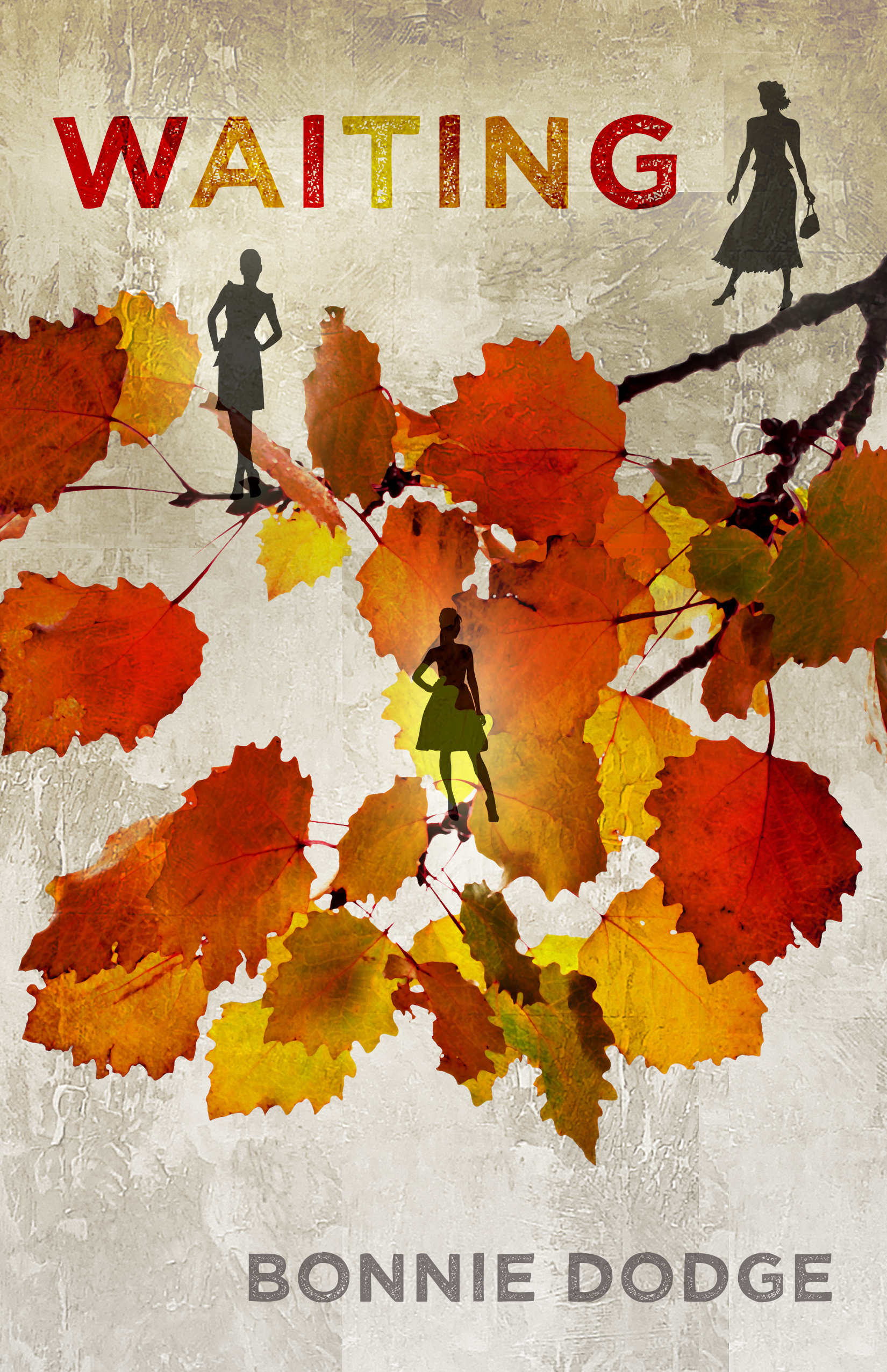
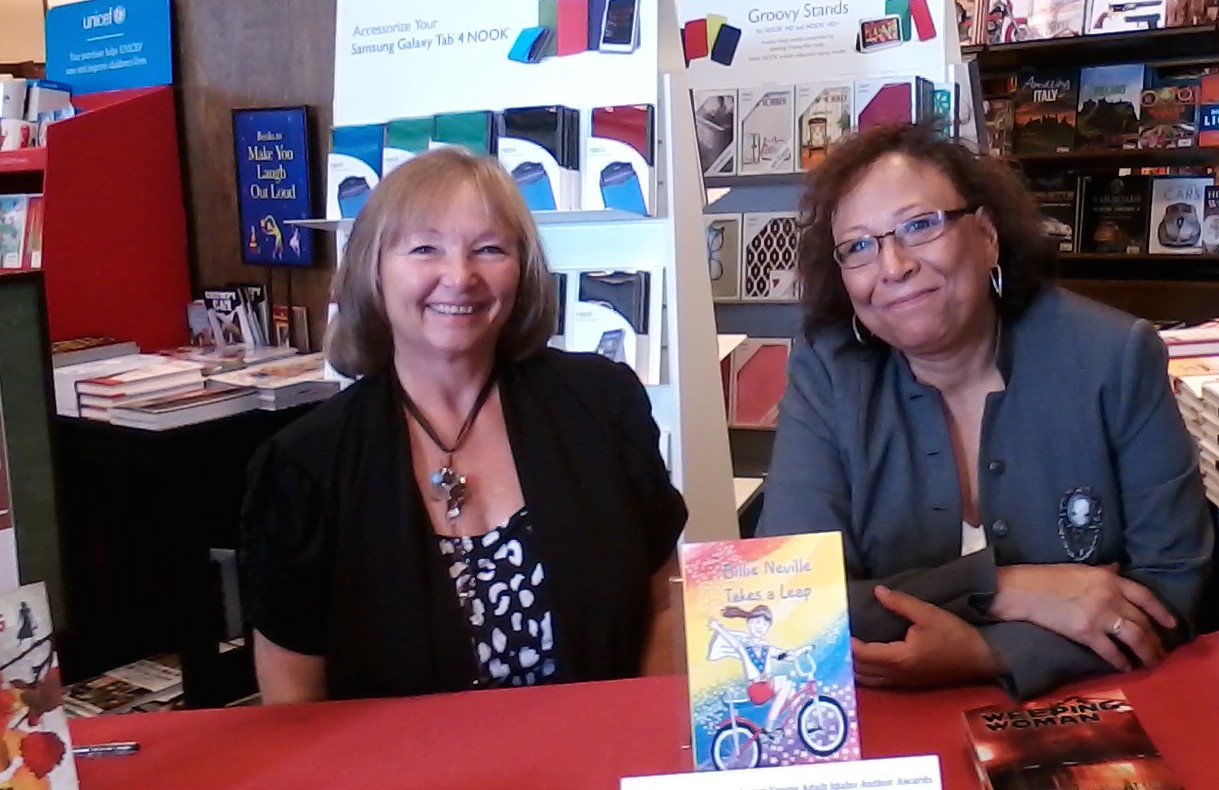
My book Waiting,a novel about three generations of Idaho women, was named one of the 2014 Top Ten Fiction books the Idaho Book Extravaganza last week in Boise, Idaho.
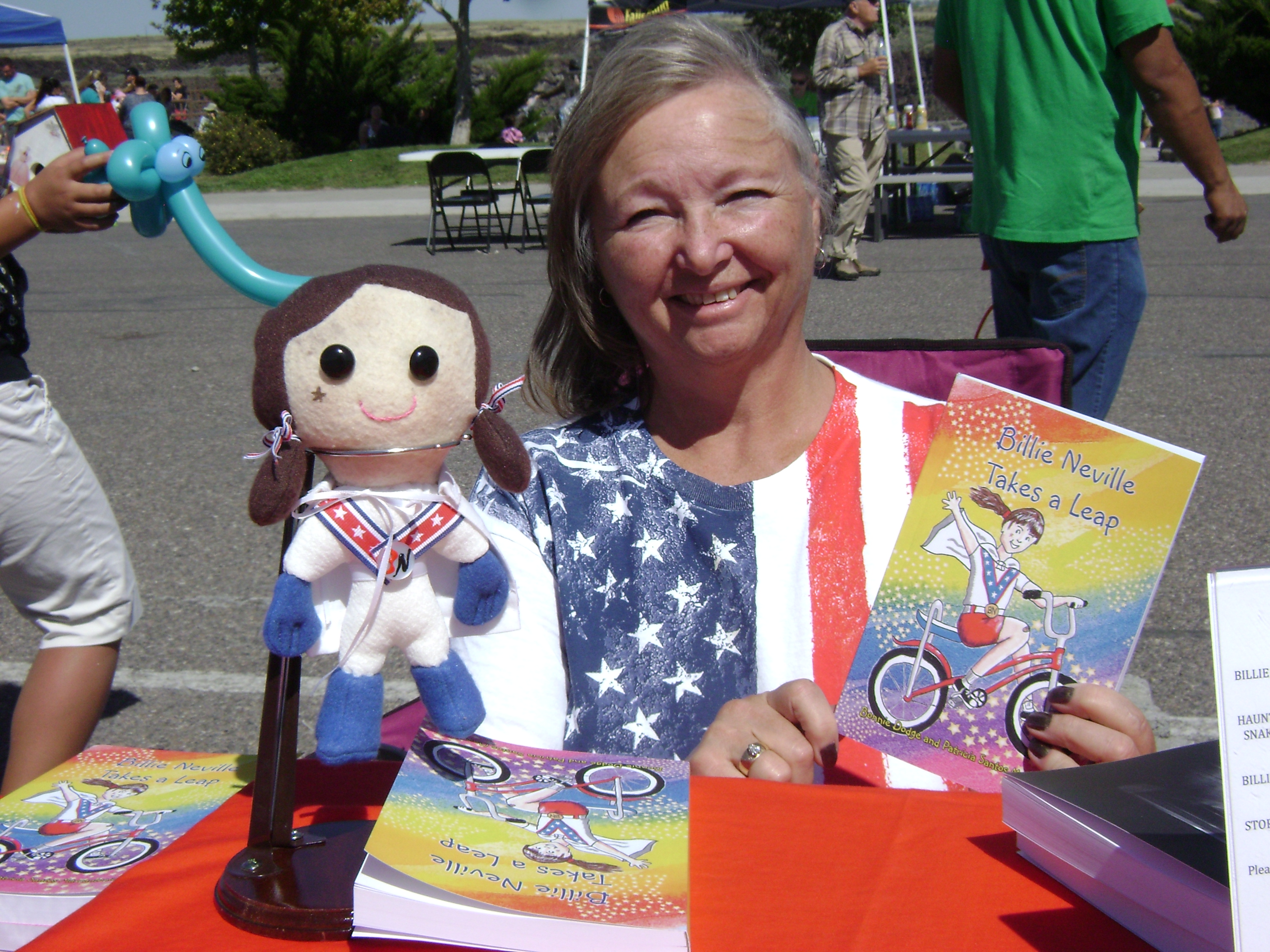
Also, Billie Neville Takes a Leap, a book about a girl who dreams of being a daredevil amidst the excitement of Evel Knievel’s jump over the Snake River, that I co-wrote with Patricia Santos Marcantonio published by River St. Press, won second place in the young adult category.
To celebrate Waiting‘s new book award, Top Ten Fiction 2014 Idaho Author Awards, I am giving away three copies of Waiting on Goodreads. Don’t miss out, enter today!
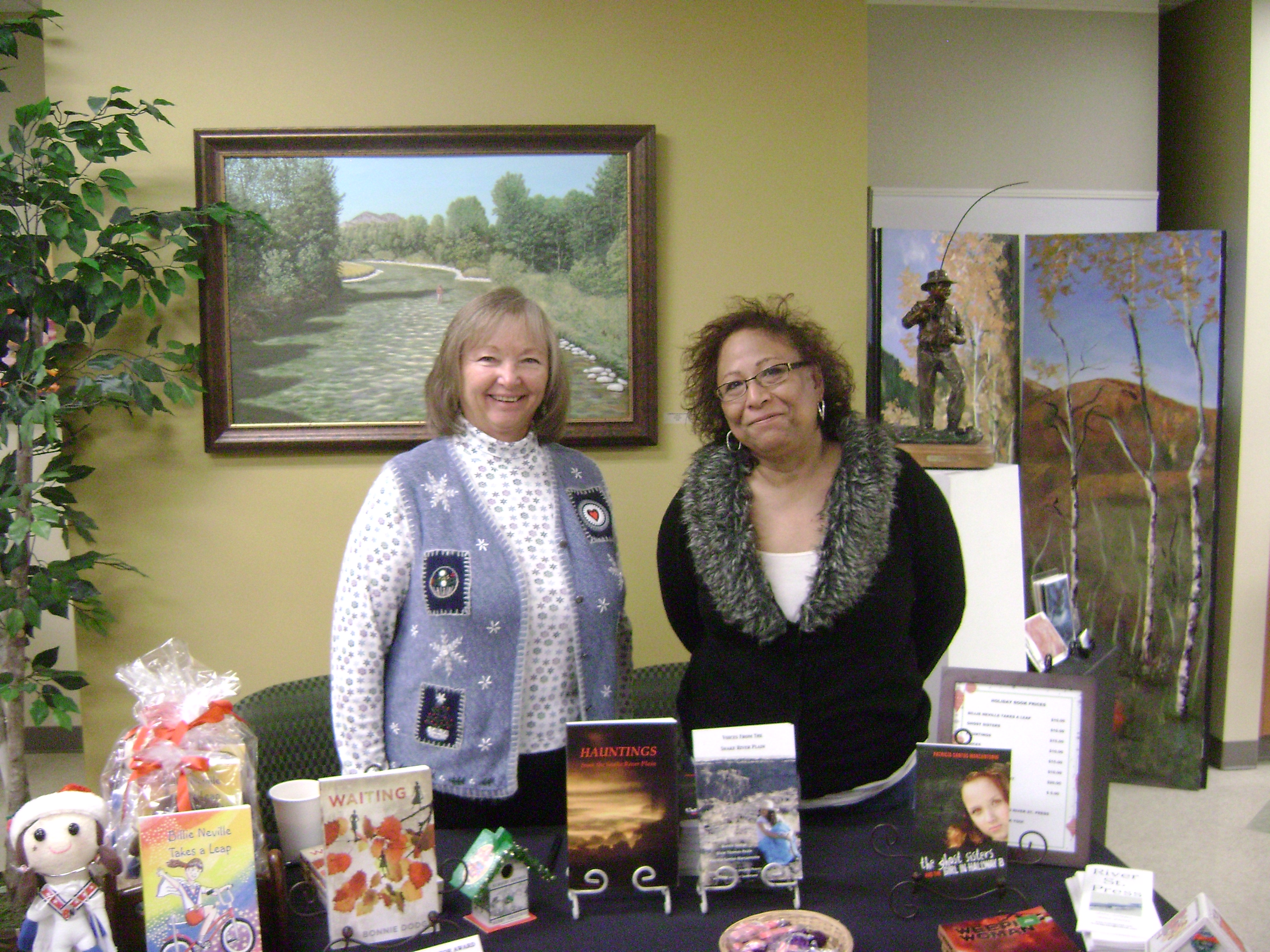
Every day I give thanks that I live in such a nurturing community. Thank you Magic Valley and Barnes & Noble for a great afternoon talking about books and writing. I love my job.
I have a cast-iron bathtub I’ve converted into a water garden. It’s heavy and ugly but makes the best place for lilies to bloom and fish to swim. For ten years it’s graced my flower garden, the sound of the fountain soothing on many summer nights. Years ago when I planted my water garden, I added ten goldfish. Nothing fancy, just ten small feeder fish from my local WalMart. I didn’t know if I had males or females, nor did I care. If they made it through the season I’d consider myself lucky. Being optimistic, I bought some fish food and as soon as the fish were acclimated to the water, I dumped them into the tub.
Since I live on ten acres and have more than a water garden demanding my time, I didn’t hover over the fish. Most of the time I forgot about them, stopping occasionally to check how they fared. One—two—three I’d count anxious to know how many adapted and survived. Quickly I discovered they weren’t interested in the store-bought food. They were more interested in the organisms growing in the roots of the water hyacinths and the insects hovering over the water. So much better than the tanks at Wally World, my fish were happy in their new environment.
Because I didn’t want my water lilies to freeze I purchased a water stock heater and placed it in the bathtub once the outside temperatures neared 30°F. The lilies didn’t freeze that first winter and neither did the fish. I’d read that goldfish eat their young so I wasn’t worried about the tub overflowing with new fish each year. Every spring I’d count the fish to see just how many had survived. The first year I lost three. The following year I lost two more.
Yesterday I was outside getting the yard ready for winter. Still too early to install the water stock heater, I stood over the tub and watched, hoping to catch a glimpse of the fish. The water rippled and I started to count. One—two—three—four—five. Wait a minute. Six—seven—eight—nine—ten. Oh my gosh. My fish had multiplied. My fish had had babies and some of them didn’t get eaten. Like a happy child I clapped my hands. My heart was full of wonder.
I watched the water garden a long time before I went on with my yard work. Nothing that day compared to the joy and surprise I felt as I counted those fish. Reproducing miracles. A ray of surprise and sunshine on a typically ordinary day.
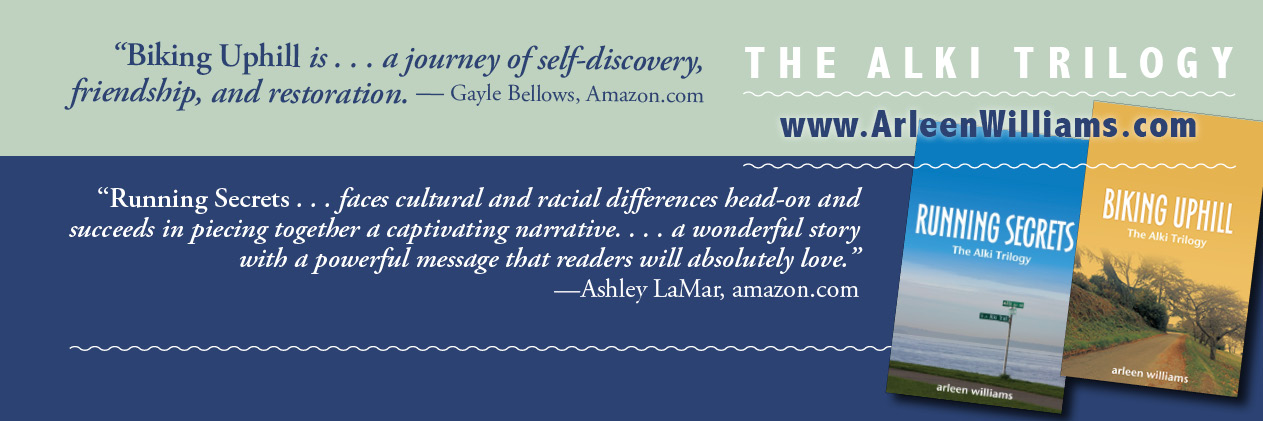
I’m delighted to have as a guest today Arleen Williams from Seattle, Washington. Her book, Biking Uphill was released this fall by Booktrope. Please say hello to Arleen.
Fall quarter starts with a bang and I am reminded once again why I write. Or more specifically, why I am writing The Alki Trilogy.
When I’m not writing, I’m an English as Second Language instructor at South Seattle College, a large urban school which is among the most diverse colleges in the country. The average student age is 31.5, 54% are first generation, 41% do not speak English as their first language and there are 35 languages spoken on campus on any given day. (2012 statistics http://www.southseattle.edu/campus-information/student-statistics.aspx)
This is my twenty-eighth year working with refugees and immigrants at this college. I’ve been teaching ESL for almost forty. When I introduce myself, when I tell my students these numbers, they inevitably ask me why. My response is always the same: I love to teach because I learn as much as they do. These are not empty words. The classroom has given me a world-view that does not stem from news stories but from the people who have lived the experiences that fill our headlines.
The Alki Trilogy began with a story about suicide, a topic I wanted to understand more completely. The character of Gemila Kemmal appeared to me unbidden but understandable: I work with African immigrants eager to gain the language skills necessary to enter our college nursing program. I did not plan to write three novels about the immigrant experience in the U.S. In fact, I didn’t plan to write a trilogy at all. But there we go. I fell in love with Gemila in Running Secrets. When I began Biking Uphill, a novel loosely based on a teenager I met years before when I was a lonely college student, I decided to hold tight to Gemila and Carolyn. Now, I’m working on Walking Home, the final novel in the trilogy, where the reader will meet new characters and revisit those who came before.
So I suppose the old adage, write what you know, guides my work just as it shapes the person I am. As I enter the classroom and greet the students before me, I wonder about the experiences they’ve lived, the things they’ve seen, the sacrifices they’ve made to come to class each morning hoping to glean the skills they need to build a new home in America. It is humbling. It is an honor. It scares the crap out of me … even after a lifetime of the same.
Arleen Williams is the author of three books. Running Secrets (Booktrope, 2013), the first novel in The Alki Trilogy, is about the power of friendship in helping overcome the dysfunction of family and life. Biking Uphill (Booktrope, 2014), book two of The Alki Trilogy, invites the reader into a world of undocumented immigration, where parents are deported, and a young girl is abandoned to face life on her own. The Thirty-Ninth Victim (Blue Feather Books, 2008) is a memoir of her family’s journey before and after her sister’s murder.
Arleen teaches English as a Second Language at South Seattle College and has worked with immigrants and refugees for close to three decades. Arleen lives and writes in West Seattle. To learn more, please visit http://www.arleenwilliams.com.
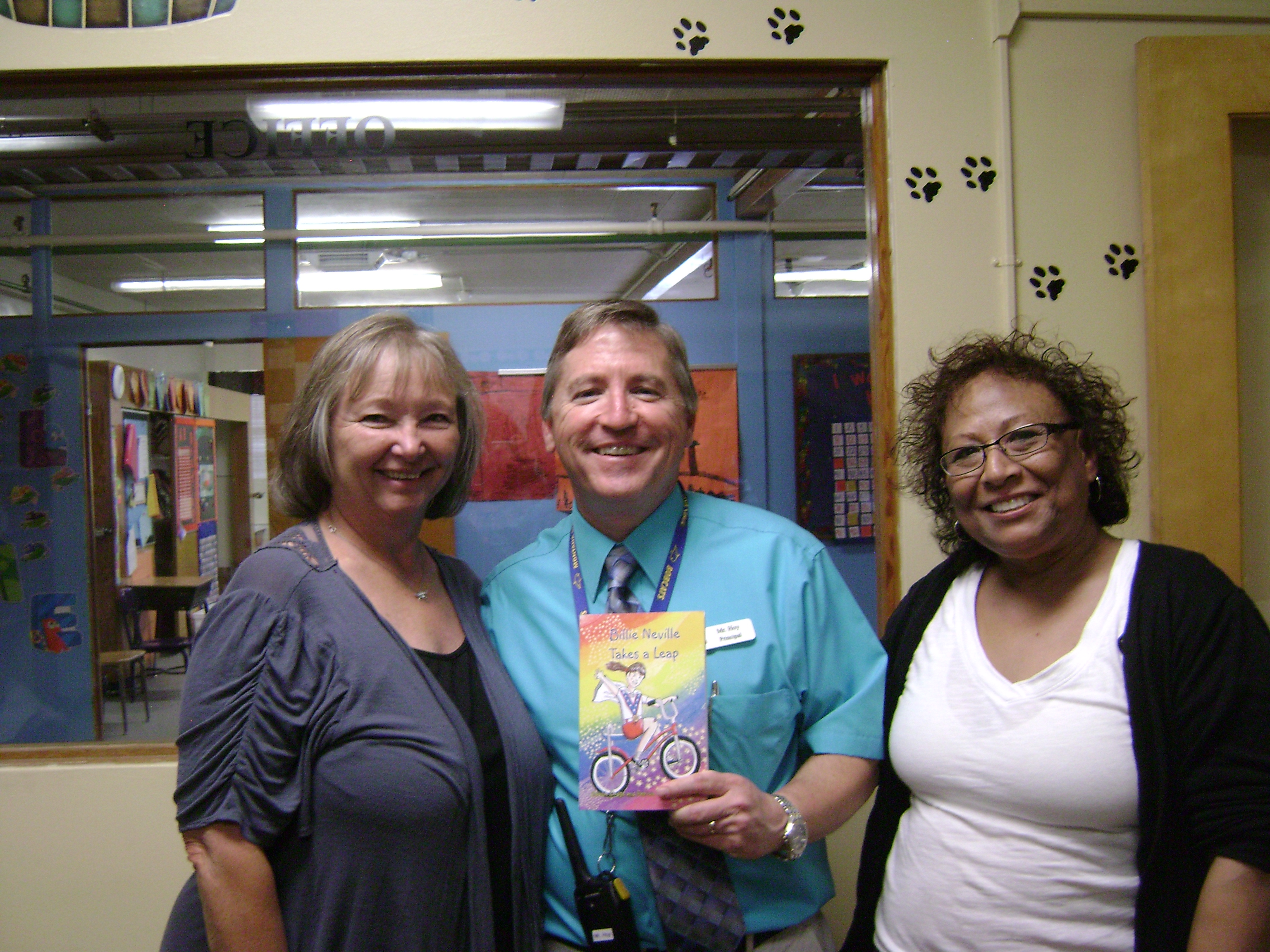
Today we stopped by Morningside Elementary in Twin Falls and presented the Principal, Steven Hoy, a copy of our book, Billie Neville Takes a Leap. Billie attended Morningside in 1974, the year Evel Knievel attempted to jump the Snake River Canyon. Thank you, Morningside Elementary for letting us wander your halls. You have a great school.
Summer leaves today, which reminds me of a recent trip to the mountains. It was the weekend before Labor Day. My husband and I were enjoying the summer weather at our cabin near Featherville. It was one of those gloriously quiet weekends. Soon enough the roads would be thick with dust and campers eager to celebrate the last summer hurrah with the upcoming three-day weekend. But that weekend the only thing stirring was the Feather River and an occasional chipmunk scampering over logs in the woodpile.
“Let’s go for a ride,” my husband said, wanting to take advantage of the nice weather. So we hopped in the truck and meandered over the back roads following the river.
We passed horses, we passed sheep. Gravel skipped under our tires as deer bounded across the road in front of the truck. We slowed down and Emily sniffed the air while Boo and Riley barked.
“Wow, did you see that big dog,” I taunted my pets. They all wagged their tales.
“Stop.” I pointed to the hillside. “Look at that.” I opened the door and walked over to the shrubs, thick and plump with purple chokecherries.
“I can’t believe it. They’re usually gone by now.” I popped one in my mouth, enjoying the tart fruit. “If we had some bags, I would pick these. They are delicious, just perfect.” I popped one more in my mouth, spit out the pit, and jumped back into the truck.
Farther on down the road, I made my husband stop again. This time I didn’t leave the truck, but peered at the hill beside me.
“Last year’s forest-fire didn’t devour everything,” I said. “Look at the elderberries.”
They were everywhere. Some green, some purple, some powdery white meaning they needed picking soon. I was beyond tempted, immediately imagining my juicer full of fruit, the kettle on the stove humming. We studied the hills for a while and then traveled on, empty-handed.
As we rounded the road back to our cabin we pulled over and stared down at the small pond Fish and Game stock in the spring. No one was angling, and as we watched fish jumped at insects, leaving concentric circles on the water.
“I’ve never seen the pond this low,” my husband said. “Look. You can see clear to the bottom of the dredge.”
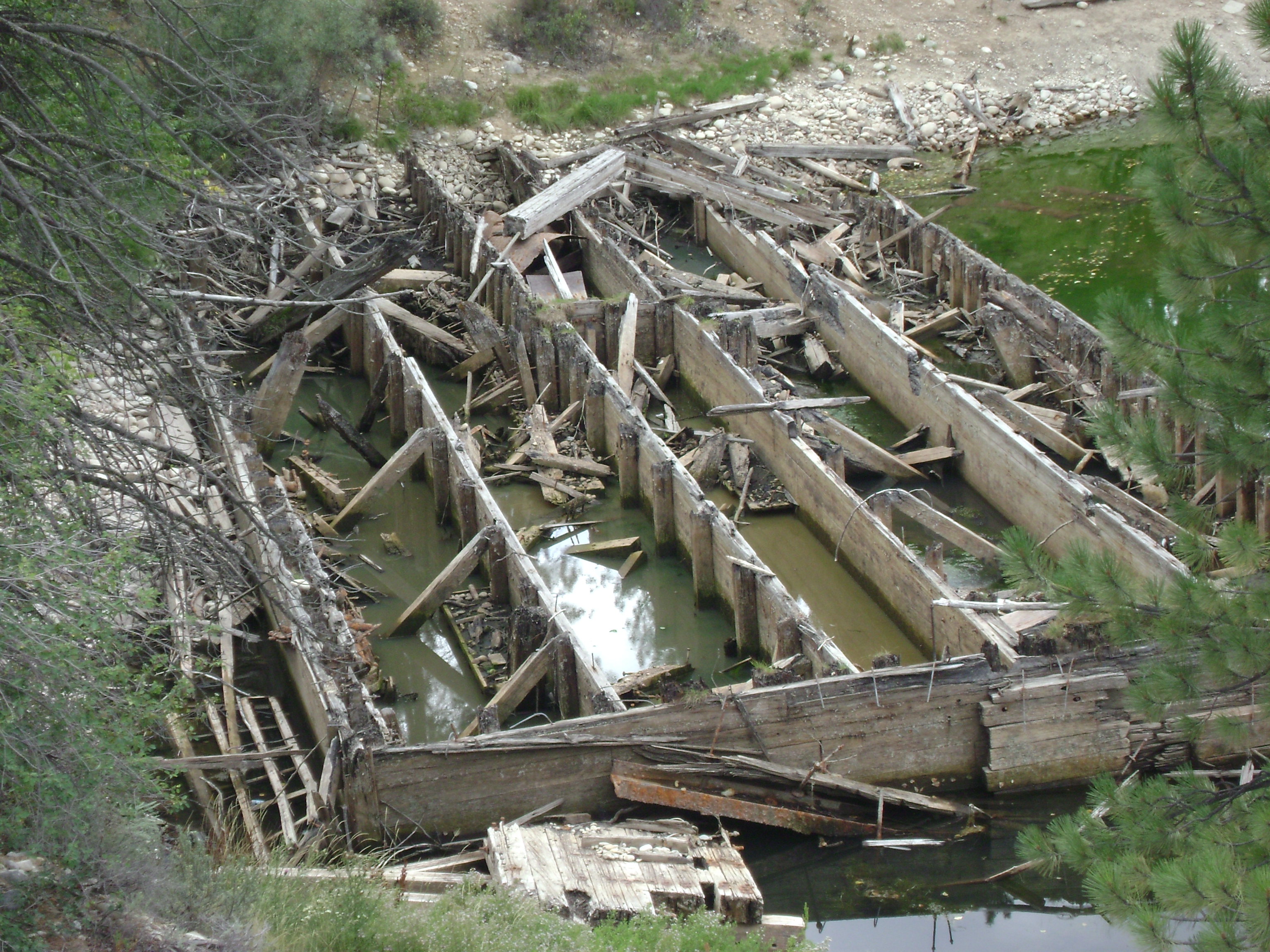
I aimed my camera at the abandoned machine, a dredge that years ago chewed up the riverbed, spitting it out into odd-shaped Cairns. Carnage the dredge left behind. From where we stood we could see river-bottom, the place where the dredger finally stopped to rest. It was impressive. It was sad.
“Well,” my husband said as we pulled into our driveway. “Are we getting a bucket and going back for those berries?”
“Naw,” I said, even though I was tempted. “We’ll leave them for all the berry-pickers coming to the hills next weekend.”
“You’re sure?”
I nodded. I’d leave them for someone else to enjoy.
“Okay.” He settled into a chair on the back deck. Enjoying cool drinks, we listened to camp robbers chatter and watched hummingbirds dive-bomb the feeder.
“This is nice,” I said. One simple day filled with summer wonder and all the things we left behind.
There is nothing as glorious as Fall in southern Idaho. The days are warm, the skies clear. The colors on the trees start to change as leaves flutter to the ground.
On such a dazzling day my writing partner and I arrived at Rock Creek Park to shoot video for a book trailer. Mid-afternoon, it was warm and we were having trouble with one of our props.
“Move it to the left,” my writing partner said.
A young boy, perhaps six or seven approached. “What are you doing?”
“We’re making a film.”
“For what?” He watched as she aimed the camera and pushed the lever.
“For a book.”
He gave her a funny look and continued to watch until he realized no superheroes where going to jump out of the tree.
“Now what, director?” I said.
Bored, the young boy drifted away.
“I’m too short,” I said as I tried to straighten the prop, now lodged in the tree. “I wish I had something to stand on.” As I looked around for a log or a rock, a teenager scaled the tree and unlodged our prop.
“Thank you,” I said, extremely grateful.
Curious but silent, he watched. Then as quick as he appeared, he was gone.
Fussing with the prop, my writing partner said, “I wish I had a piece of wire.”
Just like that, the teenager reappeared, this time with a rusty piece of wire.
“That’s great,” she said as she adjusted the prop.
He stood back and watched as she filmed the video.
“Check this out.” She hit the playback button.
I waved him over. “Come see.”
Silently we bent our heads over the screen.
She shot it again. Again we peered at the footage.
“That’s a wrap,” she said satisfied.
“Thanks for your help,” she said as the teenager walked towards his little brother. “You make a great director’s assistant.”
He didn’t say goodbye. He didn’t vandalize our car, or glare at us with drug-hazed eyes. He didn’t ask for money. I didn’t see his face, but I know he was smiling.
For one brief moment on a Sunday afternoon, three strangers converged. Silently we touched something in each other. Heart-stopping, it was beautiful.
We had so much fun today at the Perrine Bridge Festival. It was a little windy, but, then, this is Idaho. Thanks, everyone, for stopping by and saying hello!
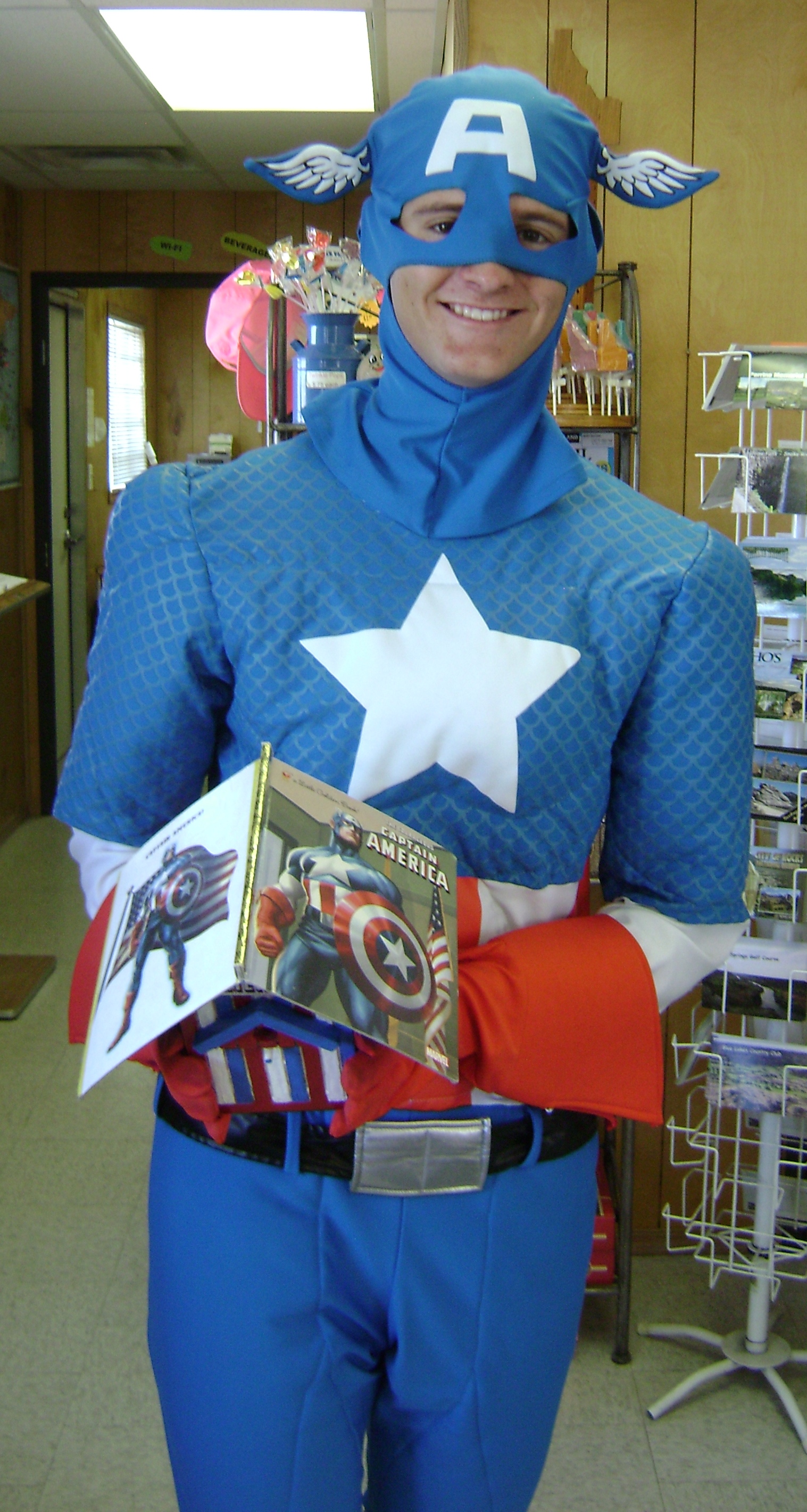
And a famous superhero holding one of our storybook houses!
There’s a picture of a little girl looking out to sea by Kiana Llanos floating around Facebook. The picture caption reads: Don’t forget to love her. The little girl you used to be. Perhaps she lies within you. Untucked. Sleeping peacefully.
The picture brings back memories of my writing partner Dixie Thomas Reale who passed away a year ago from cancer. Dixie was a fighter, and at first blush she had a chip on her shoulder bigger than Mount Rushmore. Feisty, she refused to let anyone boss her around. I can barely remember the last time she laughed, but I remember the last time I saw her cry.
The first time I saw tears in Dixie’s eyes was when she described how she rescued a kitten in her rock shop in King Hill. The kitten had been abandoned by its mother and would have died if Dixie hadn’t stuffed that kitten into her shirt to keep it warm. Fostering the kitten, which she named Ice Cube because it was so cold, Dixie wrote a story about her “Christmas” kitten and planned to include it in a future issue of our Snake River Plain books. The second time I saw Dixie cry was one day at lunch when we were critiquing her memoir. Dixie had a keen sense of humor and had been working on a novel about a corrupt minister. She stated that she couldn’t finish the novel until she wrote her memoir, so she put the novel away and started pounding out the pages. That day at lunch we read about a little girl who was shoved in a corner while her family struggled to raise Dixie’s mentally-challenged brother. Since he was younger than Dixie a lot of responsibly fell on Dixie’s shoulders. In those pages she described the details of some of the escapades, but she rarely described the emotion. She’d been taught to swallow her feelings. When I said, “My heart breaks for that little girl,” tears spilled down Dixie’s 68-year old cheeks. She was still a child inside seeking validation. The last time I saw Dixie cry was when I visited her in a nursing home and bragged to a fellow writer about Dixie’s memoir. Dixie cried knowing she’d never get to finish it.
It’s because of women like Dixie that I wrote Waiting, a novel about three generations of Foster women for wait for love, for attention, for life, for death. Women like Dixie helped me form my character Maxine, who waits all her life to be happy. Who, like so many of us, ignore the fact that we alone are masters of our own happiness. Too many of us wait until it’s too late.
Dixie offered valuable insight as I labored over Waiting. As I get ready to celebrate the release of my novel, part of me does so with sadness. I will never be able to place a signed copy in her hands and thank her for all of her suggestions.
Take time to tell the Dixie’s in your life how much you love and appreciate them, even when they gruff back at you, pretending they don’t care. There’s still a little girl inside each one of them that needs a hug before they fall asleep.